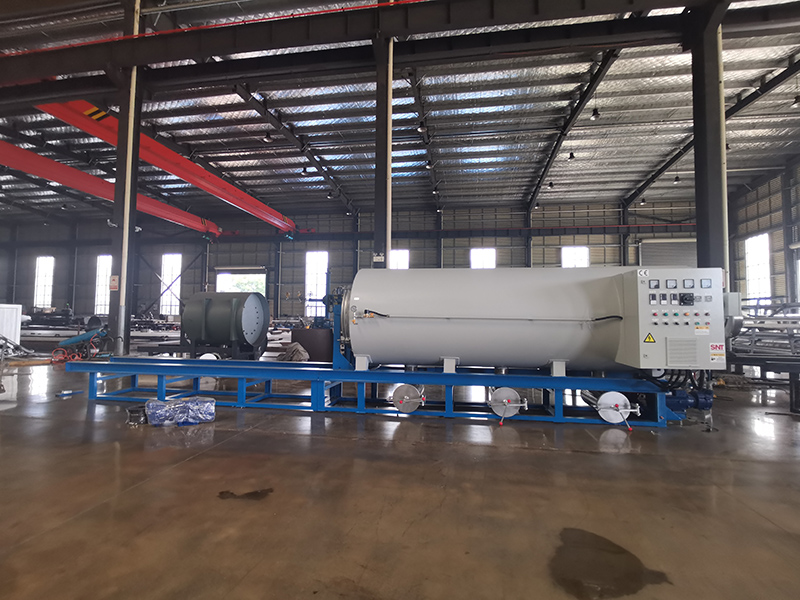
Screw Cleaning Furnace Environmental Standards: What You Actually Need to Buy
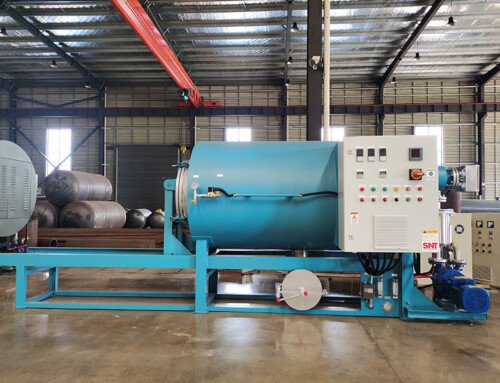
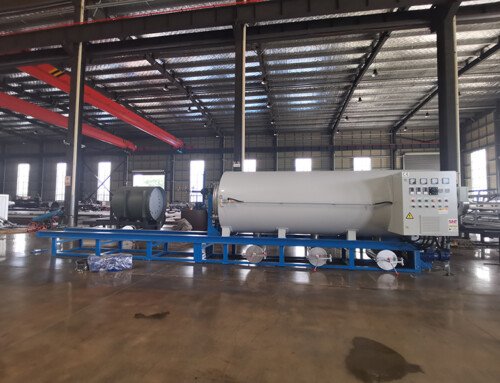
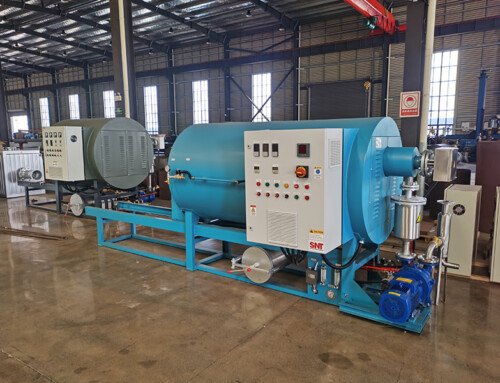
Buying a vacuum cleaning furnace for screws without understanding the environmental standards it must meet is like building a house without checking the foundation. The equipment might look impressive on paper, but if it cannot clear regulatory hurdles, it becomes an expensive paperweight sitting in your facility. Environmental compliance is not optional anymore — it is the first filter every procurement decision has to pass through.
The Emission Standards That Actually Matter
VOCs Limits Are Non-Negotiable
When a screw cleaning furnace processes polymer residues at high temperature, volatile organic compounds get released. The question is whether those emissions stay under the legal ceiling. Under the Volatile Organic Compounds Emission Standard for Organic Chemical Industry (DB37/2801.6-2018), organized VOCs emission concentration must not exceed 60 mg/m³, and the emission rate must stay at or below 3.0 kg/h. The factory boundary concentration limit sits at 2.0 mg/m³. These are hard numbers, not suggestions.
For facilities in key regions, the requirements tighten further. If your VOCs initial emission rate hits or exceeds 2 kg/h, you are not just required to meet concentration limits — you must also achieve a removal efficiency of no less than 80%. This means the cleaning furnace itself needs to integrate with an end-of-pipe treatment system like activated carbon adsorption with catalytic combustion, where adsorption airflow typically runs around 6000 m³/h and desorption around 2000 m³/h.
In regions enforcing special emission limits, such as those under the Synthetic Resin Industry Pollutant Emission Standard (GB31572-2015), non-methane hydrocarbon concentration at the exhaust outlet must stay below 60 mg/m³ with a unit product emission rate under 4.2 kg per ton of product. Check which tier your facility falls into before you even talk to a supplier.
Wastewater and Noise Cannot Be Ignored
The cleaning process generates wastewater that must meet the Discharge Standard of Sewage into Urban Sewerage System (GB/T31962-2015) at Grade B level before entering municipal treatment. The receiving facility then processes it to Grade A standard under the Discharge Standard of Pollutants for Municipal Wastewater Treatment Plant (GB18918-2002). Parameters like COD, pH, BOD5, SS, and ammonia nitrogen all have specific ceilings.
Noise at the factory boundary must comply with the Emission Standard for Industrial Enterprises Noise at Boundary (GB12348-2008), Class 2 for most industrial zones — 65 dB(A) during the day, 55 dB(A) at night. A furnace that meets thermal performance but violates noise limits creates a compliance headache you did not budget for.
Technical Parameters That Define Environmental Performance
Temperature Control Precision Determines Everything
A furnace that cannot hold temperature within a tight band produces inconsistent cleaning results, which means more repeat cycles, more energy waste, and more emissions. The benchmark for environmental compliance is temperature control precision at or below ±3°C. Some older specs cite ±5°C, but that margin is too wide for modern environmental audits. Tighter control means more complete pyrolysis of residues at lower peak temperatures, which directly reduces VOCs generation.
For screw cleaning specifically, the processing temperature for polylactic acid sits around 240–250°C, while short fiber production runs at 100–150°C. The furnace must handle these ranges without overshoot, because overshoot means unnecessary decomposition and unnecessary emissions.
Vacuum Level Is the Silent Compliance Factor
Vacuum degree directly impacts oxidation and cleaning efficiency. The standard requires vacuum level at or below 10 Pa, with some high-performance systems reaching 5 Pa or lower. Pull-down time should not exceed 30 minutes. Why does this matter environmentally? Higher vacuum means oxygen is almost entirely removed, so organic residues decompose cleanly without forming secondary pollutants. Lower vacuum leaves oxygen behind, creates partial combustion byproducts, and defeats the purpose of having a vacuum system in the first place.
A furnace rated at 10 Pa that actually runs at 25 Pa under load is not meeting spec. Demand performance curves, not just nameplate numbers.
Zero Exhaust Gas Is the Real Target
The best vacuum cleaning furnaces produce zero direct exhaust gas. All volatiles get trapped inside the sealed chamber, condensed, or adsorbed. This is not a marketing claim — it is a measurable environmental outcome. When evaluating equipment, ask for emission test data from third-party labs, not just supplier self-reports. A furnace that vents anything to atmosphere needs an afterburner or carbon adsorption system, and that adds complexity, cost, and another point of failure.
What the Equipment Must Actually Do to Stay Compliant
Integrated Emission Collection Is Mandatory
Standalone cleaning with no emission capture is not acceptable under current policy. The principle is simple: convert unorganized emissions into organized ones, then treat them. For screw cleaning, this means the furnace exhaust must connect to a collection hood with airflow designed at 120% of the calculated emission volume. For a typical screw extruder with a 105mm diameter barrel, the hood size should be around 500mm x 500mm, with minimum wind speed at the farthest point no less than 0.3 m/s. Calculated airflow per unit should be no less than 330 m³/h.
Without proper collection, even a furnace with excellent internal cleaning performance fails the environmental audit the moment it vents.
Automated Control Reduces Human Error
Manual operation introduces variability. A furnace with PLC intelligent control supports multi-stage programmed heating, automatic constant temperature, automatic slag discharge, and cooling linkage. This reduces operator intervention by up to 80% and keeps the process within the environmental envelope every single cycle. Real-time monitoring of temperature, vacuum level, and run duration with automatic alarm on deviation is not a luxury feature — it is a compliance safeguard. When vacuum leaks or temperature spikes, the system should shut down automatically rather than letting a non-compliant cycle run to completion.
Explosion-Proof Rating for Certain Environments
If the facility handles flammable solvents or operates in a classified hazardous area, the heating elements must meet explosion-proof standards under GB3836.1–3-2021. The furnace may need to achieve Ex d II C T4 or higher, with protection rating IP66. This is common in chemical fiber and new energy sectors where residual solvents on screws create flash points. Skipping this check during procurement can result in a furnace that cannot legally operate in your building.
The Hidden Environmental Cost of Getting Specs Wrong
Undersized Furnace Means More Cycles, More Emissions
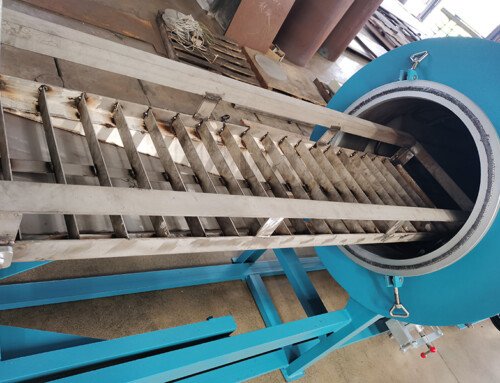
A furnace with insufficient chamber volume forces you to run more batches to clean the same number of screws. More batches mean more heating cycles, more vacuum pulls, more energy, and more cumulative emissions. Match the chamber size to your daily cleaning volume. For medium-scale operations handling 50–100 pieces per day, a 500L chamber is the floor. Above 100 pieces daily, step up to 1000L or larger.
Poor Insulation Means Wasted Energy and Excess Heat
Furnace walls using 310S stainless steel resist corrosion and coking, which means less residue buildup and fewer aggressive cleaning cycles over the equipment lifetime. Cheap insulation degrades fast, lets heat escape, and forces the heating system to work harder. The energy penalty compounds over years, and in regions with carbon emission caps, that excess energy consumption becomes a regulated cost, not just an electricity bill.
Maintenance Neglect Destroys Compliance Over Time
Vacuum pump oil must be changed every 500 hours using ISO VG100 grade oil. Pump airtightness should be tested every 1000 hours. Temperature sensors need quarterly calibration with error no greater than ±1°C. Heating element surfaces need monthly cleaning. These are not optional maintenance tasks — they are the actions that keep the furnace operating within its certified environmental parameters. A furnace that drifts out of spec due to neglected maintenance is operating illegally, even if it was compliant on day one.