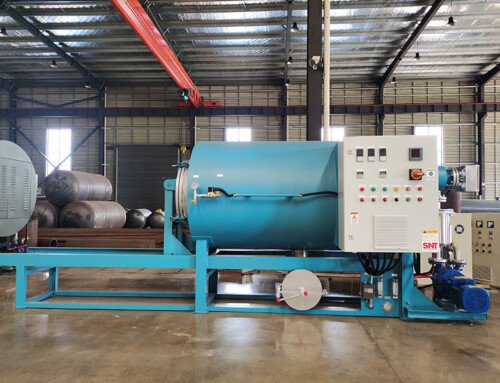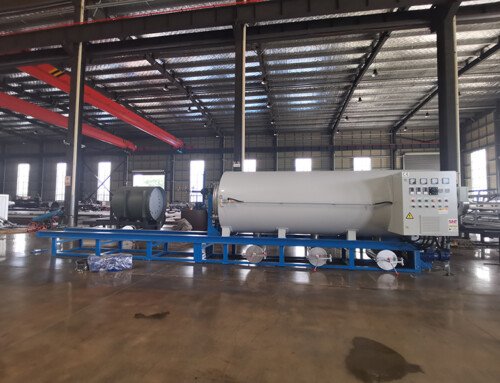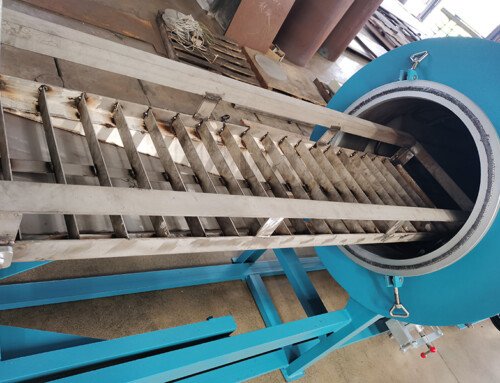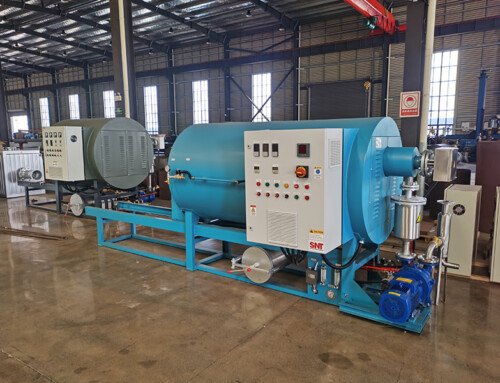
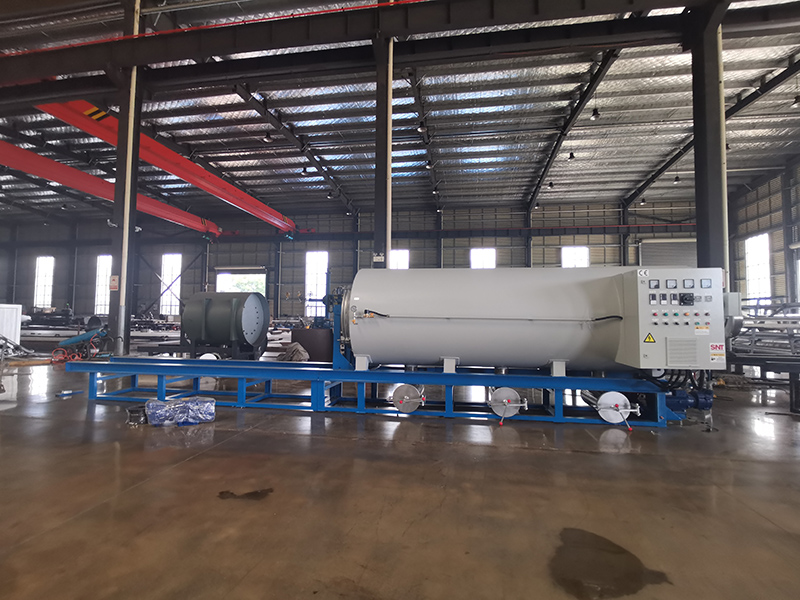
Screw Cleaning Furnace Workshop Site Selection: How to Match the Machine to Your Floor Before You Buy
Buying a screw cleaning furnace is not like buying a printer. You cannot just set it on a desk and plug it in. These machines run at 400 to 500 degrees Celsius. They burn off polymer residue from screws and barrels. They produce fumes, heat, and ash. If the workshop floor is not ready for them, the machine sits idle for weeks while you figure out ventilation, power, and loading logistics. Worse, you install it wrong and the fumes back up into the rest of the plant, triggering a fire alarm on day one.
The furnace itself is only half the purchase. The other half is making sure your workshop can actually run it. This is not about finding the biggest machine or the cheapest one. It is about finding the one that fits the space you already have, the power you already pay for, and the workflow you already run.
What a Screw Cleaning Furnace Actually Demands From a Workshop
Most buyers look at the furnace specs — temperature range, chamber size, cycle time. Nobody looks at the floor plan. That is a mistake. The furnace imposes physical constraints on the room around it. If those constraints do not match your workshop, nothing else matters.
Floor Load and Vibration Isolation
A screw cleaning furnace weighs anywhere from 800 kilograms to over two tons depending on chamber size and insulation thickness. That weight sits on a relatively small footprint. The floor must support concentrated point loads, not just distributed weight. A standard concrete slab in a light industrial building is usually fine. But if you are in an older building with a suspended timber floor or a mezzanine, you need a structural engineer to sign off before you roll the machine in.
Vibration is the other hidden issue. The furnace has a blower or a fan that runs during the cleaning cycle. At full speed, it creates low-frequency vibration that travels through the floor and into adjacent equipment. If your granulator or extruder sits within three meters of the furnace, that vibration can throw off tolerances on sensitive machinery. Install the furnace on a vibration-isolating pad or a dedicated concrete pad separated from the main workshop floor by an expansion joint.
Clearance Around the Machine Is Not Optional
The furnace needs breathing room. Not for aesthetics — for safety and maintenance. The front of the machine needs at least 1.5 meters of clear space so the operator can load and unload screws without backing into a wall or a forklift. The back needs at least one meter for exhaust ducting and electrical connections. The sides need 600 millimeters minimum for access to the control panel and the ash drawer.
If your workshop is tight — and most recycling workshops are — you need to measure before you buy. A furnace that is 100 millimeters too wide for the allocated space will block the emergency exit or force the forklift to take a longer route that slows down the entire shift. Measure the doorway, the aisle width, and the turning radius of any vehicle that needs to pass the machine. Then subtract 200 millimeters from every dimension for safety clearance. That is the maximum footprint you can buy.
Ceiling Height and Overhead Obstructions
The furnace exhaust rises. It needs a duct that goes up and out through the roof or through the wall. That duct takes up vertical space. If your workshop has low ceilings with sprinkler heads, light fixtures, or cable trays running across, the exhaust duct might not clear them.
Measure from the floor to the lowest overhead obstruction at the planned furnace location. The duct needs at least 500 millimeters of clearance above the furnace top. If the ceiling is only 3.5 meters high and the furnace is 2 meters tall, you have 1.5 meters left. That is enough for the duct, but only if there are no obstructions. Plan the duct route before you buy the furnace, not after.
Power Supply and Electrical Infrastructure
A screw cleaning furnace does not run on a standard 110-volt outlet. It needs three-phase power, and it needs a lot of it.
Three-Phase Power Requirements
Most industrial cleaning furnaces draw between 15 and 40 kilowatts depending on chamber size and heating method. That requires a three-phase 380-volt or 440-volt supply with a dedicated circuit breaker. You cannot share this circuit with the extruder or the granulator. If the furnace and the extruder trip the same breaker, you lose both machines at once, and the recovery time costs more than the electricity savings.
Check your workshop electrical panel before buying. If the panel is already near capacity, you will need an upgrade before the furnace can be installed. Electrical upgrades take four to eight weeks to permit and complete. Factor that into your timeline. Buying the furnace before confirming the power supply is like buying a car before checking if you have a driveway.
Control Wiring and Signal Integration
If you want the furnace to integrate with your existing production control system — auto-start when the extruder changes screw, auto-stop when the cycle ends — you need signal wiring. That means running low-voltage control cables from the furnace to the main PLC or HMI panel.
Plan the cable route during the site assessment. Running control cables through a wall that is already full of power conduits is a headache. It is cheaper to drill the hole once, during the initial installation, than to chase it out later. Mark the cable path on the floor plan before the furniture arrives.
Ventilation and Fume Management: The Dealbreaker
This is where most workshop selections fall apart. A screw cleaning furnace burns off polymer residue. That residue becomes fume. The fume contains volatile organic compounds, particulate matter, and in some cases, hydrogen chloride if you are processing PVC. If that fume does not leave the building, you have a health hazard, a fire risk, and a code violation.
Exhaust Duct Sizing and Routing
The exhaust duct must be sized for the volume of fume the furnace produces at peak cycle. A general rule: the duct cross-section should be at least 150 millimeters in diameter for furnaces under 20 kilowatts, and 200 millimeters or larger for anything above that. Undersized ducting creates back pressure. Back pressure reduces the blower efficiency, which means the furnace takes longer to clean, which means lower throughput.
Route the duct as straight as possible. Every 90-degree bend adds resistance. Every meter of duct adds friction loss. If the duct has to go up, then turn, then go horizontal through the roof, you are losing significant exhaust capacity. Use smooth-wall ducting, not corrugated. Corrugated ducting creates turbulence that slows the fume and lets particulate settle inside the duct. Within six months, the duct is clogged and the furnace is running with restricted exhaust.
Make-Up Air and Negative Pressure Balance
When the exhaust fan pulls fume out of the furnace, it creates negative pressure inside the workshop. If there is no make-up air, the furnace starves for oxygen, the combustion efficiency drops, and the cleaning cycle takes longer. Worse, negative pressure pulls fume from adjacent areas — the extruder hood, the material storage bin — into the furnace exhaust stream, contaminating it.
Install make-up air intakes on the opposite side of the workshop from the exhaust. The intakes should be at floor level, filtered, and sized to match the exhaust volume. A simple motorized damper on the intake, linked to the furnace blower, keeps the pressure balanced automatically. When the blower runs, the damper opens. When the blower stops, the damper closes. No manual adjustment needed.
Filtration Before Discharge
The fume cannot go straight to the atmosphere in most jurisdictions. It needs filtration. A cyclone separator catches the heavy particulate — the ash and char from burned polymer. A bag filter or a cartridge filter catches the fine particulate. An activated carbon bed handles the VOCs.
The filtration system adds to the footprint. A full fume treatment train for a mid-size furnace can take up two to three square meters of floor space. Plan for it. If you do not, the filtration system ends up crammed into a corner where nobody can service it, and it becomes a fire hazard because the filters never get changed.
Workshop Layout and Workflow Integration
The furnace does not exist in isolation. It sits inside a workflow. Screws come from the extruder. They go into the furnace. They come out clean. They go back to the extruder or to storage. That loop must fit into the workshop layout without creating bottlenecks.
Positioning Relative to the Extruder
The ideal placement is within five meters of the extruder. Screws are heavy. Carrying them across the workshop wastes time and risks injury. A short walk between the extruder changeout area and the furnace loading station keeps the cycle time tight.
If the furnace is more than ten meters from the extruder, you need a cart or a conveyor. A cart works for low-volume shops. A conveyor works for high-volume shops. Either way, the path between the extruder and the furnace must be clear of obstacles. No forklift parking. No material piles. No pallets. A clear path means fast screw turnover, which means the extruder spends less time waiting and more time running.
Ash Handling and Waste Disposal
Every cleaning cycle produces ash. The ash is mostly carbon black and inert mineral filler. It is not hazardous in most cases, but it is a waste product that needs to go somewhere. The furnace has an ash drawer or a bottom outlet. That outlet must have a bin or a hopper underneath it.
The ash bin needs to be accessible from the front or the side. If it is behind the furnace against a wall, the operator has to climb over the machine to empty it. That does not happen in practice. The ash overflows, the operator ignores it, and eventually the ash blocks the furnace door. Place the ash bin where it can be emptied without moving the furnace.
Cooling Zone Downstream
Screws come out of the furnace at 400 degrees. They cannot go back into the extruder immediately. They need to cool. A dedicated cooling rack or a conveyor with a forced-air cooling section gives the screws time to drop below 80 degrees before they are handled.
If you do not plan a cooling zone, the operator drops hot screws on the floor to cool them. That is a safety hazard and it damages the screw threads. A simple wire rack with a fan costs almost nothing and prevents the most common injury in screw cleaning operations — the burn.
Environmental and Code Compliance Checklist
Before you sign the purchase order, walk through the compliance items. These are not suggestions. They are the things that get the installation shut down by the fire marshal or the environmental agency.
Fire Separation Distance
Most fire codes require a minimum separation distance between a high-temperature furnace and any combustible material. That includes plastic pellets, cardboard packaging, wooden pallets, and oil-soaked rags. The typical minimum is three meters, but check your local code. If the furnace is closer than that to a storage area, you need a fire-rated barrier — a metal sheet or a fire-rated wall panel — between them.
Emergency Stop Accessibility
The emergency stop button must be reachable from the furnace loading position and from the main workshop aisle. It cannot be behind a locked door or behind the machine. If the operator has to walk around the furnace to hit the e-stop, it is not an e-stop. It is a suggestion.
Noise Levels and Worker Exposure
The furnace blower and the exhaust fan generate noise. Continuous exposure above 85 decibels requires hearing protection. If the furnace is in an enclosed room with no acoustic treatment, the noise reflects off the walls and can exceed 90 decibels at the operator position. Install acoustic panels on the walls near the furnace or provide enclosed operator cab with filtered air supply.
The Site Assessment You Should Do Before Buying
Do not rely on the supplier to tell you if the furnace fits. They will say it fits. They want to sell it. Do your own assessment.
Walk the floor with a tape measure. Measure the available space. Measure the doorway. Measure the ceiling height at the planned location. Check the electrical panel for available capacity. Check the roof or wall for exhaust duct routing. Talk to the fire marshal about separation distances. Talk to the environmental agency about fume discharge limits.
Write it all down. Bring the numbers to the supplier. Ask them to confirm the machine fits those numbers. If they hesitate, walk away. A supplier who cannot confirm fit on paper will not save you when the machine arrives and does not fit in reality.
The screw cleaning furnace is a workhorse. It keeps your extruder running, your screw inventory clean, and your material quality consistent. But a workhorse that does not fit in the stable is just an expensive obstacle. Measure twice, buy once, and make sure the workshop is ready before the truck shows up.