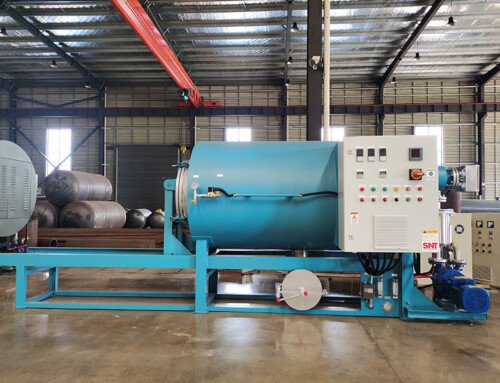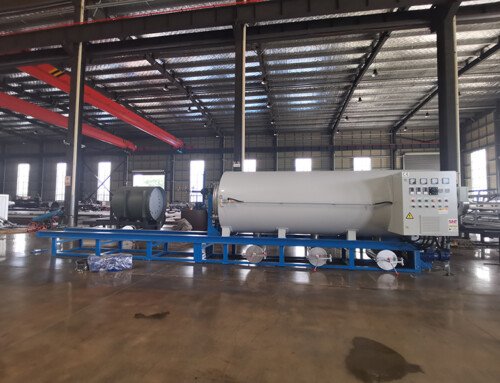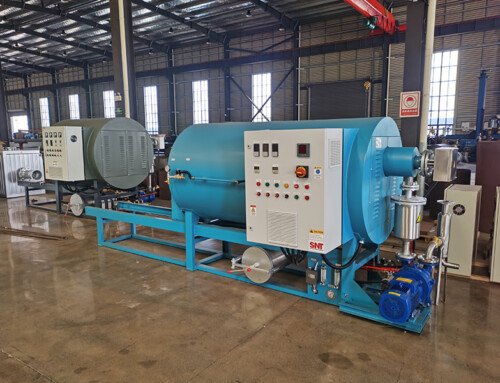
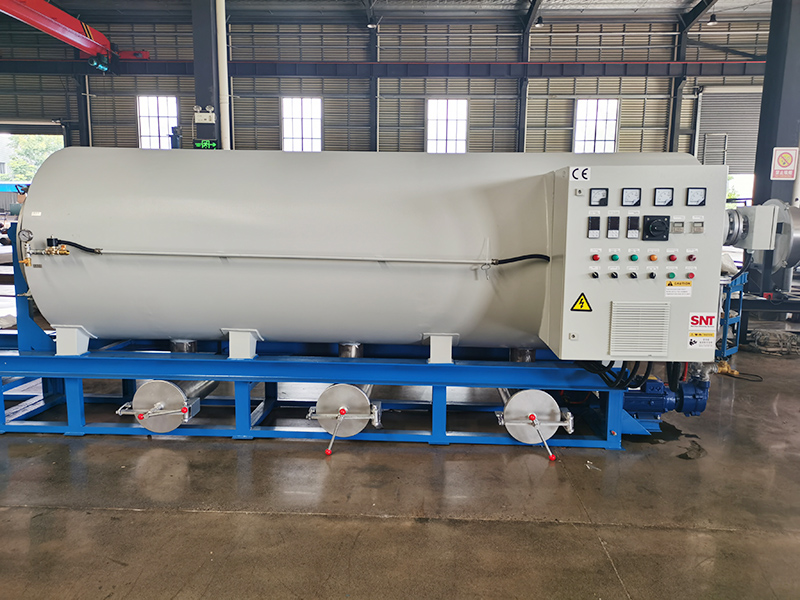
Screw Cleaning Furnace Cleaning Efficiency: How to Pick the Right Machine for Your Throughput
Nobody buys a screw cleaning furnace to look at it. You buy it because dirty screws kill your output. Every minute spent on a failed color change is a minute your extruder sits idle. Every black speck from incomplete cleaning is a scrap part that should not exist. The cleaning efficiency of the furnace is not a spec sheet number. It is the difference between a two-hour changeover and a six-hour nightmare.
Getting the efficiency right starts with understanding what actually determines how fast and how clean the machine works. Then it becomes a matter of matching those parameters to your specific screws, your polymers, and your production schedule.
What Cleaning Efficiency Actually Means in Practice
Cleaning efficiency is not one number. It is a bundle of interrelated performance metrics that together tell you how much usable production time you get back after every cleaning cycle.
Residue Clearance Rate: The Number That Matters Most
The residue clearance rate measures what percentage of contaminant gets removed in a single cycle. A furnace that clears 95 percent of residue sounds decent until you realize that five percent of carbonized polymer on a precision screw will still produce black specks in your next run. High-efficiency vacuum cleaning furnaces achieve residue clearance rates below 0.05 percent. That is not a marketing claim. It is what you need when you are running engineering-grade polymers or producing optical-clarity parts.
The gap between 95 percent and 99.95 percent clearance is the gap between a good enough clean and a production-ready clean. Do not confuse the two.
Cycle Time Versus Cleaning Quality Trade-Off
Shorter cycles mean more throughput. But shorter cycles at the wrong temperature or vacuum level mean incomplete cleaning. The relationship is not linear. Temperature is the biggest lever here. For every 10 degrees Celsius increase in cleaning temperature, the chemical reaction rate between the cleaning medium and the contaminant increases by 1.5 to 2 times. That means you can cut cleaning time roughly in half for every 10-degree bump — up to a point.
Past the polymer degradation threshold, you are not cleaning faster. You are creating new contaminants. The sweet spot sits where the residue softens and volatilizes without the base polymer breaking down. Finding that window is what separates a well-tuned furnace from a guess.
Vacuum Level and Its Direct Impact on Speed
Vacuum cleaning furnaces work by lowering the boiling point of the cleaning medium. At 10 to 100 Pa of vacuum, most volatile contaminants flash off at temperatures far below their atmospheric boiling points. The deeper the vacuum, the lower the temperature needed, and the less thermal stress on the screw.
A furnace that pulls 10 Pa will clean faster than one that stalls at 50 Pa because the contaminant removal happens more aggressively at deeper vacuum. For precision screws with tight tolerances, deeper vacuum also means less risk of thermal distortion. The screw comes out clean and dimensionally intact.
The Five Factors That Control Cleaning Efficiency
Efficiency does not come from the machine alone. It comes from how the machine interacts with your specific cleaning challenge. These five factors determine whether a furnace delivers on its spec sheet or disappoints on the floor.
Contaminant Type Sets the Baseline Difficulty
Not all residue is created equal. Fresh polymer residue softens and volatilizes easily. Carbonized black specks from degraded material require significantly more energy to break down. Colorant residue from a previous run sits somewhere in between — stubborn but not indestructible.
A furnace optimized for fresh residue removal will struggle with carbonized buildup. A furnace built for high-temperature pyrolysis will waste energy on simple color changes. Match the furnace capability to the hardest contaminant you regularly face. If carbonized residue is your main problem, you need a machine that can hit 500 degrees Celsius in vacuum, not one that tops out at 300.
Temperature Uniformity Across the Screw Length
A screw is long. If the furnace heats the center of the screw to 450 degrees but the tip only reaches 350, the tip stays dirty. Temperature uniformity along the full screw length is non-negotiable. The best furnaces achieve temperature control within plus or minus 1 degree Celsius across the entire chamber. Some premium systems push that to plus or minus 0.8 degrees.
Poor uniformity means you either run the cycle longer to compensate for the cold spots, or you accept incomplete cleaning. Neither option is acceptable in a production environment.
Mechanical Action Inside the Chamber
Heat alone does not clean everything. The cleaning medium needs to physically contact the contaminant. In vacuum pyrolysis furnaces, the volatilized gas creates internal pressure that helps lift residue off the screw flights. In water-based cleaning systems, rotating water jets provide the mechanical force.
The rule of thumb from cleaning science is straightforward: higher mechanical force compensates for lower temperature or lower chemical concentration. If your furnace has weak internal circulation, you need to crank up the temperature to compensate. That costs energy and risks screw damage. A furnace with strong internal gas flow or water turbulence cleans faster at lower temperatures.
Screw Rotation Speed During Cleaning
This one surprises people. The screw should not sit still during cleaning. Rotation keeps the cleaning medium in contact with fresh surface area and prevents localized overheating. For resin-based cleaning, the recommended speed is 15 to 25 revolutions per minute. For commercial purging compounds, the range is 70 to 120 rpm.
Too fast and you create shear heat that degrades the cleaning compound before it works. Too slow and the cleaning medium pools in one spot while the rest of the screw stays dirty. The right speed depends on the cleaning method, but some speed is always better than none.
Cleaning Medium Selection and Concentration
The medium does half the work. Commercial purging compounds are proven to remove resin four to five times faster than solvent-based methods, and they leave no toxic residue. Water-based cleaning agents work well for fresh contamination but cost more per cycle. Chemical cleaning agents penetrate dead zones that mechanical methods cannot reach.
Concentration matters as much as type. Too dilute and the reaction rate drops. Too concentrated and you waste material without gaining cleaning speed. Follow the medium manufacturer’s recommendations for your specific polymer and furnace temperature.
Selecting for Efficiency: What to Look For Before You Buy
The spec sheet tells you what the machine can do. The selection process tells you what it will do for you.
Heating System Determines Ramp Speed
How fast the furnace reaches cleaning temperature directly impacts cycle time. Electric resistance heating is common but slow to ramp. Thermal oil circulation systems heat faster and maintain temperature more uniformly, with thermal efficiency above 95 percent compared to 70 to 80 percent for standard electric heaters. The energy savings add up — a furnace with superior thermal efficiency can save significant electricity costs over a year of daily operation.
Segmented heating zones let you apply different temperatures to different sections of the screw. The feed section runs cooler. The compression section runs hotter. This targeted approach cuts cycle time by 15 to 20 percent compared to uniform heating because you are not wasting energy heating sections that do not need it.
Automation Level Affects Real-World Throughput
A manual furnace requires an operator to watch every cycle. An automated furnace with PLC control runs the same program every time with the same results. Automated systems include multi-stage temperature profiles, vacuum ramp control, and automatic cooling sequences. The cooling phase matters — you should not break vacuum until the temperature drops below 40 degrees Celsius, or thermal shock damages the furnace components.
Automation also enables overnight cleaning. Load the screws before you leave. Wake up to clean screws. That is real efficiency — not faster cleaning, but cleaning that happens while you are not paying attention to it.
Chamber Size Relative to Your Batch Volume
Oversizing wastes energy. Undersizing forces multiple batches. The chamber should accommodate your largest screw with at least 100 millimeters of clearance on all sides for proper gas flow. If you run mixed batch sizes, look for a furnace with adjustable internal fixtures rather than buying two machines.
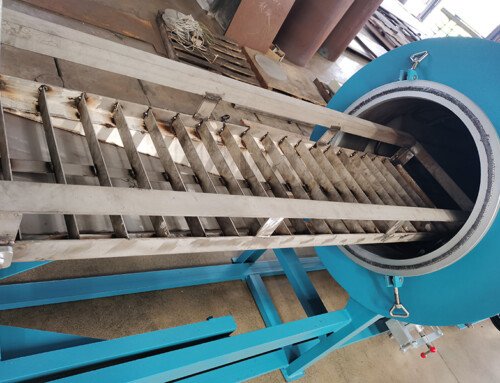
The loading and unloading process eats cycle time too. A furnace with a side-loading door and a rolling cart system cuts handling time by half compared to top-loading designs where you lift heavy screws over the edge.
Matching Furnace Type to Your Cleaning Challenge
Not every cleaning problem needs the same furnace. The type you choose should follow the contaminant, not the other way around.
Vacuum Pyrolysis for Carbonized and Stubborn Residue
When the screw has black specks, degraded polymer, or cross-contaminated material from a material change, vacuum pyrolysis at 450 to 500 degrees Celsius is the most effective method. The vacuum environment prevents oxidation, so the residue cracks and volatilizes without creating new contaminants. Cycle times range from 4 to 8 hours depending on the severity of buildup. This is the heavy artillery of screw cleaning.
Low-Temperature Vacuum Cleaning for Sensitive Polymers
For screws that run heat-sensitive polymers or have tight dimensional tolerances, low-temperature vacuum cleaning operates below 60 degrees Celsius. The deep vacuum lowers the boiling point of the cleaning solvent, so it works at temperatures that will not warp or stress the screw. Cleaning efficiency is lower than pyrolysis, but the screw comes out undamaged. Use this for routine color changes, not for heavy carbon buildup.
Water-Based and Chemical Cleaning for Routine Maintenance
Water-based cleaning with rotating jets works well for fresh residue and is the most environmentally friendly option. Chemical cleaning with commercial purging compounds gives the fastest turnaround for standard material changes. These methods are not as thorough as pyrolysis for stubborn residue, but they are faster and cheaper for daily operations.
Hybrid Systems for Maximum Flexibility
Some furnaces combine vacuum pyrolysis with water rinse and chemical injection in a single chamber. The pyrolysis breaks down the heavy residue. The water rinse removes the volatilized contaminant. The chemical stage handles any remaining film. This three-stage approach gives the highest overall cleaning efficiency but adds complexity and cost. It makes sense for high-volume operations where every minute of downtime costs real money.
The Efficiency Math That Justifies the Purchase
Run the numbers before you sign anything. A furnace that cuts your cleaning cycle from 6 hours to 3 hours gives you 3 extra hours of production per changeover. If you change materials 4 times a week, that is 12 extra production hours per week. Over a year, that is over 600 hours of recovered production time.
Energy cost matters too. A furnace with 95 percent thermal efficiency versus one at 75 percent saves roughly 20 percent on electricity. At 300 operating days per year, that difference pays for itself in reduced utility bills within the first year.
Factor in the cost of scrapped parts from incomplete cleaning. If your current process produces 2 percent scrap due to contamination, and a better furnace cuts that to 0.2 percent, the material savings alone can justify the upgrade. Do not look at the furnace cost in isolation. Look at the total cost of the cleaning problem it solves.