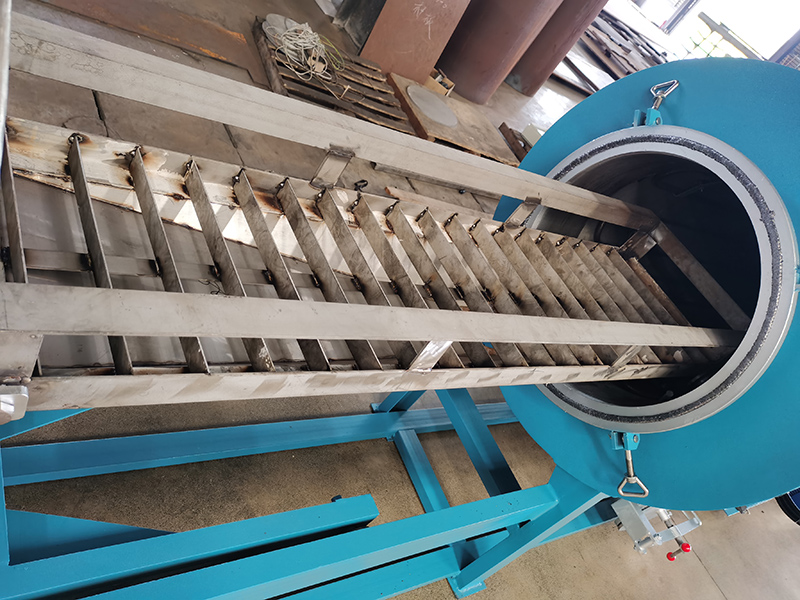
Multi-Station Screw Cleaning Furnace: How to Pick the Right Configuration for High-Volume Operations
Running a single-station furnace works fine when you are cleaning three or four screws a week. But the moment your extrusion line demands ten, twenty, or thirty cleaned screws per day, a single-station unit becomes a bottleneck you cannot afford. That is where multi-station screw cleaning furnaces come in. They let you load, clean, and unload screws in parallel instead of in sequence — and for busy compounding shops, reactive extrusion operations, and color-change-heavy environments, this is not a luxury. It is a necessity.
The problem is that multi-station furnaces are not all built the same. Some have two stations. Some have four. Some rotate on a turntable. Some use a linear conveyor. Picking the wrong configuration for your workflow wastes money, eats floor space, and still leaves you short on throughput. This guide walks through what actually matters when you are comparing multi-station models.
How Multi-Station Furnaces Differ From Single-Station Units
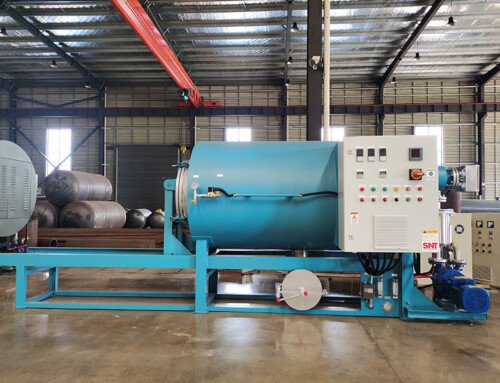
A single-station furnace has one chamber. You load a screw, run the cycle, unload the screw, then repeat. A multi-station furnace has two or more chambers — or one chamber with multiple loading positions — so that while one screw is heating, another is cooling, and a third is being loaded or unloaded. The cycles overlap. Your effective throughput multiplies without multiplying your cycle time.
This sounds simple. But the way those stations are arranged changes everything about how the machine fits into your shop floor, how your operators interact with it, and how much maintenance it demands over its lifetime.
The Two Main Layouts: Carousel Versus Linear
Most multi-station furnaces fall into one of two categories.
The carousel layout puts all stations around a central rotating platform. The platform turns, moving each screw from the loading position to the heating position to the cooling position and back. This design is compact — it takes up less floor space than a linear system — and the rotation is smooth and mechanical, which means fewer things go wrong.
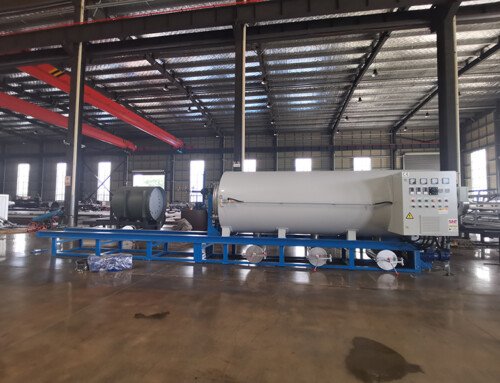
The linear layout stations the chambers in a row. Screws move from one end to the other on a conveyor or slide rail. This design scales better — you can add more stations without making the machine wider — but it takes up more floor space and has more moving parts that need maintenance.
If your shop is tight on space, go carousel. If you need maximum throughput and have the floor area, go linear.
The Specs That Separate a Good Multi-Station Furnace From a Bad One
Every supplier will hand you a spec sheet full of numbers. Most of those numbers are irrelevant. These are the ones that actually determine whether the machine will perform or disappoint.
Station Count and Cycle Overlap
The number of stations sounds like the obvious spec — and it is — but it is not the whole story. What matters is how much the cycles overlap. A four-station furnace where each station runs a full independent cycle gives you four times the throughput of a single-station unit. But a four-station furnace where stations share a single heating zone does not.
Look for independent temperature control per station. Each chamber should be able to run its own program at its own temperature without waiting for the others. Shared heating zones create a queue — you are not running four screws in parallel, you are running one screw while three wait.
Rotation Speed and Indexing Accuracy
For carousel machines, the rotation speed and indexing accuracy are critical. If the platform stops slightly off-center every time, your operators will spend minutes fiddling with screw alignment before every load. That wasted time adds up fast.
Good carousel systems use servo-driven indexing with positional accuracy under one millimeter. They stop exactly where they need to stop, every time. Cheap systems use simple motor-driven rotation with mechanical stops that drift over time. You will feel the difference the first week you use the machine.
Vacuum System Architecture
Here is where multi-station furnaces get complicated — and where most buyers get burned. Each station needs its own vacuum pump, or the stations need to share a central vacuum system with fast-switching valves.
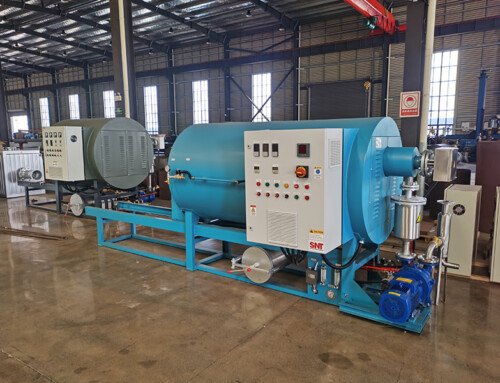
Dedicated pumps per station are simpler and more reliable. If one pump fails, the other stations keep running. A shared vacuum system with solenoid valves is cheaper upfront but creates a single point of failure. When the central pump goes down, every station stops.
For high-volume operations where downtime costs real money, dedicated pumps are the safer bet. The extra capital cost pays for itself the first time a pump fails on a shared system and your entire line sits idle.
Matching the Furnace to Your Actual Workflow
A furnace is only as good as the workflow it fits into. Buying the most expensive multi-station unit on the market means nothing if it does not match how your shop actually runs.
Color Changes and Frequent Cleaning Cycles
If your operation runs dozens of color changes per week — injection molding compounds, masterbatch production, reactive extrusion — you need a furnace that can handle short, rapid cycles. Not every resin requires a four-hour burn. Some color changes only need a quick vacuum bake at moderate temperature to remove residue.
Look for furnaces with programmable short-cycle modes. A machine that can do a 45-minute quick clean and a 4-hour deep clean gives you flexibility. A machine that only runs one long program forces you to either under-clean or waste time on every cycle.
Large Screws and Heavy Loads
Multi-station furnaces are often marketed for standard extrusion screws. But if you run large-diameter compounding screws, mixing screws, or twin-screw barrels, the station size matters enormously.
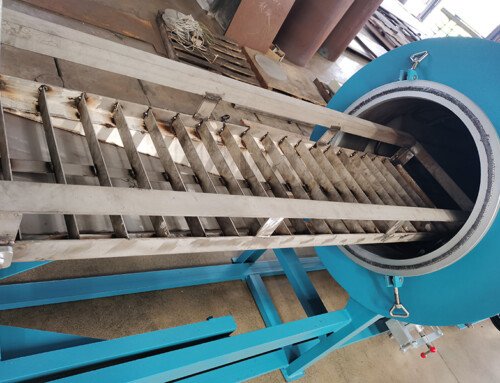
Measure your largest screw. Then measure the chamber opening of every furnace you are considering. A screw that is 10 millimeters too long for the chamber will not load, no matter how good the rest of the machine is. This sounds basic, but it is one of the most common reasons multi-station purchases go wrong.
Operator Count and Skill Level
A four-station carousel with PLC automation needs one operator. A four-station linear system with manual loading at each position might need two or three. Factor in your labor costs when comparing configurations. A cheaper machine that requires more operators is not cheaper.
Also consider skill level. If your operators are not comfortable with PLC touchscreens and program selection, a machine with simple push-button controls and preset programs will get used more consistently. A machine that requires programming every cycle will get bypassed and the screws will go back to being cleaned with a torch.
The Maintenance Reality of Multi-Station Machines
More stations means more components. More components means more things that break. This is not a reason to avoid multi-station furnaces — it is a reason to plan for maintenance from day one.
Vacuum Pump Scheduling
Every vacuum pump in the system needs a service schedule. Write it down. Put it on the wall. If you have four pumps, you have four service schedules. Missing one pump service means that station underperforms, which means inconsistent cleaning, which means scrap.
Use the correct oil grade. Check pump filters monthly. Run a vacuum hold test quarterly. This takes thirty minutes and prevents a pump failure that could take days to repair.
Heating Element Rotation
In multi-station furnaces with shared heating zones, the elements take more abuse because they cycle on and off constantly. In independent-zone systems, each element runs its own program and wears at its own pace.
Independent zones are easier to maintain because you can service one station without shutting down the others. Shared zones mean one element failure takes the whole machine offline.
Seal and Gasket Replacement
Every vacuum chamber has seals. Every door has a gasket. These wear out. In a multi-station machine, you have multiple seals and gaskets — which means multiple replacement schedules.
Stock spare seals and gaskets on-site. A seal failure means that station loses vacuum, which means the cycle fails, which means you lose a cleaning slot. Having a spare seal in the drawer means a five-minute fix instead of a three-day wait for a part.
Floor Space, Power, and Installation Considerations
A multi-station furnace is not a small appliance. It is a piece of industrial equipment that needs proper planning before it arrives at your door.
Power Requirements
Multi-station furnaces draw significant power — often 30 to 60 kilowatts depending on the number of stations and the maximum temperature. Verify that your shop has the electrical capacity before you commit. Adding a new power feed after the fact is expensive and time-consuming.
Check if the machine requires three-phase power. Most industrial multi-station units do. If your shop only has single-phase, you will need a transformer or a phase converter — and that changes the total cost picture significantly.
Exhaust and Ventilation
Every cycle releases vapors. A single-station furnace releases vapors once per cycle. A four-station furnace releases vapors four times as often. Your ventilation system needs to handle the cumulative load.
If you are cleaning PVC, fluoropolymers, or rubber compounds, those vapors are toxic. Proper exhaust ducting to the outside of the building is not optional. It is a safety requirement. Make sure the furnace location has access to an exhaust point before you buy.
Loading Height and Ergonomics
Operators will load and unload screws dozens of times per shift. If the loading port is at a bad height, your operators will develop back problems within months. Adjustable loading tables or height-adjustable stations are worth the extra cost.
A carousel system with waist-height loading is easier on the body than a linear system where operators have to reach into a high chamber. Ergonomics is not a nice-to-have. It is a productivity factor — tired operators make more mistakes, and mistakes mean damaged screws.
Evaluating Suppliers Without Chasing Brand Names
You do not need a name-brand furnace. You need a supplier who understands your application and who will be there when something breaks.
Ask for a Live Demo With Your Actual Screws
Do not accept a demo with the supplier’s test screws. Bring your own. Bring your dirtiest, most carbon-loaded screw. Run it through the machine on-site. Watch the result. If the supplier refuses to let you use your own screws, that tells you something about how confident they are in their machine.
Check the Spare Parts Availability
Ask the supplier for a spare parts list with lead times. If a critical component like a vacuum pump or a heating tube has a six-week lead time, your machine will sit dead for six weeks when that part fails. Suppliers who stock common spares locally are worth their weight in uptime.
Warranty Should Cover Core Components
A one-year warranty on the whole machine sounds fine until the vacuum pump dies in month fourteen and you are paying full price for a replacement. Look for warranties that explicitly cover core components — pumps, heating elements, temperature sensors, control systems — for at least two to three years. The warranty terms tell you more about the machine’s expected lifespan than any spec sheet ever will.
The Bottom Line on Multi-Station Selection
If you are cleaning more than five to eight screws per day, a multi-station furnace is not a question of if — it is a question of which configuration. Carousel for compact spaces. Linear for maximum throughput. Independent stations for reliability. Shared zones for budget-constrained setups.
Do not buy on specs alone. Buy on workflow fit. Measure your screws. Count your color changes. Calculate your operator hours. Then match the machine to those numbers — not the other way around.
The right multi-station furnace will run clean screws all day, every day, with minimal babysitting. The wrong one will sit in the corner after six months because it does not actually fit how your shop works. Pick the one that fits — and your extrusion line will run smoother for years.