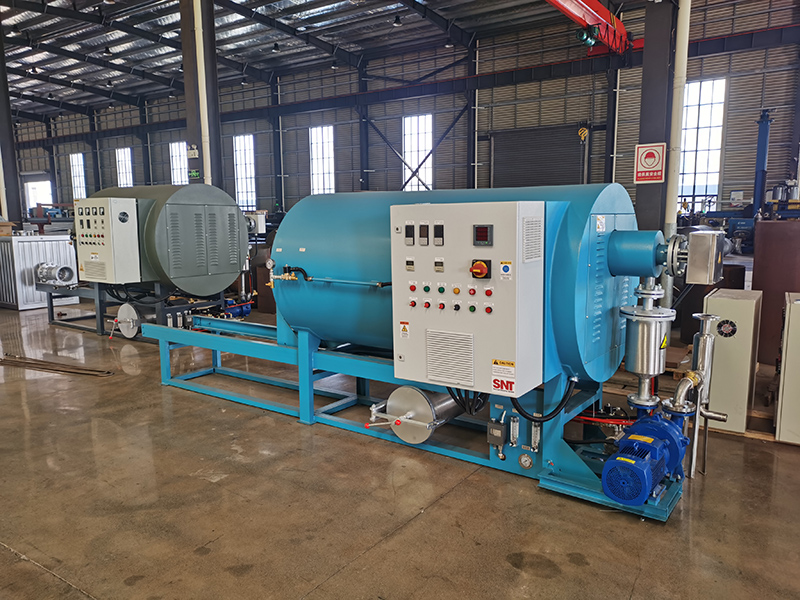
How to Pick an Energy-Saving Screw Vacuum Cleaning Furnace — What Actually Matters
Finding the right energy-saving screw vacuum cleaning furnace is not about spotting the shiniest spec sheet. It is about understanding which design choices cut your electricity bill, which ones extend the machine’s life, and which ones are just marketing noise. Here is how to sort the real deals from the rest.
Start With the Vacuum System — That Is Where Most Energy Gets Wasted
The vacuum pump is the heart of any screw cleaning furnace. A weak or poorly matched pump forces the heating system to work harder and longer, burning through power for no reason.
Check Vacuum Stability, Not Just Peak Vacuum
A furnace that hits 10 Pa on paper but fluctuates wildly during operation is wasting energy every time it recovers. Look for machines that hold vacuum stability within ±5 Pa during the full cleaning cycle. High-precision units can maintain ±2 Pa, which means the heating elements do not need to overcompensate. This alone can shave 10–15% off your annual electricity cost.
Pump Oil and Maintenance Intervals Tell You Everything
Any serious energy-saving furnace uses ISO VG100 grade vacuum pump oil and requires replacement every 500 running hours. Skip this step, and vacuum performance degrades over time. When vacuum drops, the furnace runs hotter and longer to achieve the same cleaning result. A well-maintained pump keeps the MTBF (mean time between failures) above 8,000 hours — roughly 30% longer than a neglected one.
Insulation and Heating Design — The Silent Energy Killers
Most buyers focus on temperature range. Smart buyers focus on how little energy the furnace needs to reach and hold that temperature.
Insulation Material Makes a Bigger Difference Than You Think
Furnaces with thickened silica aluminum insulation layers consume about 12% less energy than those with standard insulation. This sounds minor until you run the machine 300 days a year. At industrial electricity rates, that gap translates into tens of thousands of yuan saved annually. When evaluating options, ask about insulation thickness and material grade — a reputable manufacturer will not hide this.
Multi-Stage Temperature Control Beats Single-Stage Every Time
A furnace that ramps up in one aggressive burst uses significantly more peak power than one with multi-stage programmable heating. Multi-stage designs adjust power output based on the cleaning phase — lower power during the initial melt-off, higher power only when pyrolysis is needed. This approach reduces overall energy consumption by roughly 10% compared to conventional single-stage systems. Machines equipped with PLC-based smart control can automate this entire process, cutting manual intervention and eliminating wasteful overheating.
What to Verify Before You Commit
Temperature Accuracy Matters More Than Maximum Temperature
A furnace rated to 600°C is useless if it cannot hold ±5°C accuracy. Inconsistent temperature means either incomplete cleaning (you run it again, wasting energy) or overheating (you damage the screw, costing more in replacements). Top-tier units keep temperature error within ±1°C. Always ask for this spec — if a seller cannot provide it, walk away.
Cooling Protocol Affects Long-Term Efficiency
Here is something most guides miss: how you shut down the furnace impacts its energy efficiency over years. The correct procedure is to turn off heating first, let the system cool naturally below 40°C, then release vacuum. Rushing this step causes thermal shock to internal components, which degrades insulation and heating element performance over time. A furnace that loses insulation efficiency after a year is not an energy-saving furnace — it is a money pit.
Matching the Furnace to Your Actual Cleaning Load
Energy savings also mean not oversizing your machine. A furnace with a 1,000L chamber running half-empty wastes heat on empty space. Match the chamber size to your typical batch volume — whether that is 5 kg or 20 kg per cycle. Oversized machines have higher idle losses and longer warm-up times, both of which eat into any theoretical efficiency gains.
For facilities running continuous cleaning lines, look for furnaces designed for high throughput (200+ kg per hour) with compatible baking configurations. These dedicated high-capacity units are engineered from the ground up for efficiency, whereas a small batch furnace forced to run continuously will degrade faster and consume more power per kilogram cleaned.
The Real Cost Equation
Energy-saving is not just about the purchase. It is about the full picture: vacuum pump maintenance every 500 hours, heating element cleaning monthly, temperature sensor calibration quarterly, and PLC program backups. A furnace with a slightly higher upfront cost but lower maintenance burden and 20–30% better energy efficiency will pay for itself within the first year of operation. Factor in downtime costs — a single unexpected failure can wipe out 100,000 to 500,000 yuan in daily production losses depending on your scale. The cheapest furnace on paper is rarely the cheapest one to own.