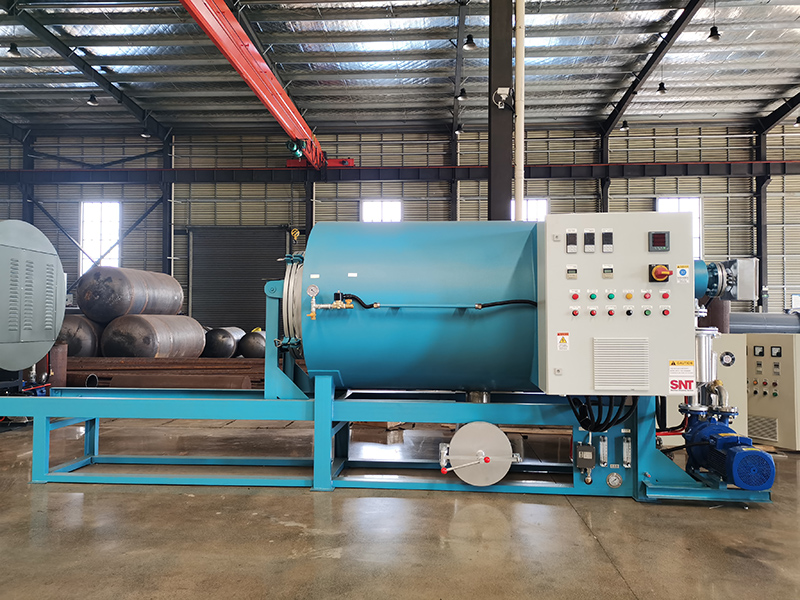
Screw Cleaning Furnace Plastic Material Compatibility: How to Pick the Right Machine for Your Polymer
Cleaning screw barrels and components sounds simple until you realize that polyester does not behave like polyethylene, and nylon does not decompose the same way as polypropylene. The furnace you bought for one material might leave stubborn carbon on another. This is not a minor detail — it is the difference between a clean screw and a damaged one.
Most operators learn this the hard way. They run the same furnace program for every material and wonder why some screws come out spotted, some come out with etched surfaces, and some come out looking perfect. The answer is almost always material mismatch. The furnace was not built for that polymer. Or the program was never adjusted for it.
This guide walks through exactly how different plastics interact with screw cleaning furnaces and how to match your machine to the materials you actually run — not the materials you wish you ran.
Why Plastic Material Type Changes Everything About Furnace Selection
Every polymer has a decomposition temperature, a carbonization point, and a residue behavior that is unique to that material. A furnace that handles PET flakes at 500°C might struggle with PVC at 300°C because PVC releases hydrochloric acid gas that attacks chamber linings and corrodes vacuum pump internals.
This means you cannot treat all plastics the same inside a cleaning furnace. The temperature profile, the vacuum level, the dwell time at each stage, and even the chamber material all need to align with the specific polymer you are burning off.
The Three Things Every Polymer Does Differently Inside a Furnace
First, decomposition temperature varies wildly. Polyethylene starts breaking down around 350°C. Polypropylene follows at roughly 380°C. PET does not fully decompose until 500°C or higher. Nylon sits somewhere in between at 400 to 450°C. If your furnace maxes out at 400°C, you simply cannot clean PET effectively — the residues will not fully burn off and will re-deposit on cooler surfaces inside the chamber.
Second, gas byproducts differ by material. PVC releases HCl gas, which is corrosive. Polycarbonate releases phenol compounds. Some engineering plastics release fluorinated gases. These byproducts attack seals, gaskets, and pump internals if the furnace is not designed to handle them. A furnace built for commodity plastics will degrade fast if you throw PVC into it without checking compatibility first.
Third, residue adhesion behavior is not universal. Some polymers leave a hard, glass-like carbon that flakes off easily. Others leave a sticky, tar-like residue that bonds to metal surfaces and requires mechanical scraping. The cleaning method inside the furnace — whether it relies on thermal decomposition alone or combines thermal with vacuum-assisted volatilization — must match the residue type.
Commodity Plastics: PE, PP, and PS — The Easy Ones
Polyethylene, polypropylene, and polystyrene are the most common contaminants in screw cleaning. They are also the easiest to handle, which is why most entry-level furnaces are designed for them.
Temperature Range and Program Simplicity
PE decomposes between 350°C and 420°C. PP between 380°C and 440°C. PS between 350°C and 400°C. These ranges overlap significantly, which means a single multi-stage program can handle all three without major adjustments.
A furnace with a maximum temperature of 450°C and temperature control accuracy of ±5°C is more than enough for these materials. You do not need extreme precision here — these polymers decompose cleanly and leave minimal residue when the temperature is held long enough at the right range.
Vacuum Requirements Are Modest
For commodity plastics, a vacuum level of 50 to 100Pa is sufficient. The decomposition gases are mostly hydrocarbons — not corrosive, not toxic in small quantities, and easy for a standard rotary vane pump to handle. You do not need a screw vacuum pump or a dry pump setup for PE, PP, or PS. A basic oil-sealed rotary vane pump works fine and costs significantly less to maintain.
The real trick with commodity plastics is dwell time. These materials decompose fast but leave behind a light carbon film if you rush the cycle. Holding at peak temperature for 60 to 90 minutes ensures complete burn-off. Shorter cycles work but require more frequent manual cleaning of the chamber.
Engineering Plastics: PA, PC, POM, PBT — Where Things Get Serious
Engineering plastics are a different beast entirely. They decompose at higher temperatures, leave harder residues, and some of them release gases that destroy furnace components if you are not careful.
Nylon (PA) Requires Higher Temperatures and Longer Dwell
Nylon 6 decomposes around 400°C. Nylon 66 goes up to 450°C. The residue nylon leaves behind is notably stubborn — it forms a hard, ceramic-like carbon that does not flake off easily. This means your furnace needs to reach at least 480°C to fully break down the residue, not just the bulk polymer.
A furnace rated for only 450°C will clean the surface of nylon but leave a bonded carbon layer in the screw threads and bore. Over time, this layer builds up and changes the internal diameter of the screw — which ruins your extrusion tolerance.
For nylon, you also want a vacuum level of 10Pa or better. The volatile decomposition products of nylon include caprolactam, which is a sticky compound that re-condenses on cooler surfaces if the vacuum is not strong enough to pull it out of the chamber. Weak vacuum means the residue migrates from the screw to the chamber walls — and then falls back onto the next batch you clean.
Polycarbonate (PC) Is the Corrosive One
Polycarbonate decomposes between 450°C and 520°C. The problem is not the temperature — it is the byproducts. PC releases bisphenol A and phenol compounds during thermal decomposition. These are mildly corrosive to standard stainless steel chamber linings over time.
If you run PC regularly, the chamber interior should be 310S stainless steel or higher alloy. Standard 304 stainless will show pitting and discoloration within a few hundred cycles. The vacuum pump seals also degrade faster with phenol exposure — switch to Viton seals instead of standard Buna-N.
The temperature program for PC needs a slow ramp. Jumping straight to 500°C causes the surface to carbonize before the bulk decomposes, trapping volatile gases inside the carbon layer. A ramp rate of 3 to 5°C per minute through the 300 to 450°C range, then a hold at 500°C for 90 to 120 minutes, produces the cleanest results.
POM and PBT: The Sneaky Ones
POM (acetal) decomposes around 350°C but releases formaldehyde gas — which is toxic and corrosive. PBT decomposes around 400°C and leaves a residue similar to nylon but slightly easier to remove.
For POM, chamber ventilation is critical. The formaldehyde must be vented outside, not recirculated. A furnace with an external exhaust port and activated carbon filter is mandatory. Running POM in a sealed chamber without proper exhaust is a health hazard and will corrode the pump internals within weeks.
PBT is more forgiving. It behaves somewhat like a hybrid between nylon and PET. A 450°C furnace with 10Pa vacuum and a 60-minute dwell handles it well. The residue is less stubborn than nylon, so you do not need the extreme temperatures that PA demands.
High-Performance Polymers: PEEK, PPS, PTFE — The Demanding Ones
If you are running PEEK, PPS, or PTFE in your screws, you are not dealing with a standard cleaning job. These materials require specialized furnace configurations, and buying a commodity-grade machine will cost you more in the long run than investing in the right equipment upfront.
PEEK Demands 600°C and Exceptional Vacuum
PEEK does not fully decompose until 600°C or higher. Most standard screw cleaning furnaces max out at 500°C or 550°C. This means a standard furnace cannot clean PEEK at all — it will leave a bonded carbon residue that is almost impossible to remove mechanically.
You need a furnace with a maximum temperature of 650°C, chamber linings of Inconel or high-nickel alloy, and a vacuum system capable of reaching 1Pa or better. The vacuum pump must be a dry screw pump — oil-sealed pumps cannot handle the outgassing from PEEK without contamination.
The dwell time at peak temperature for PEEK is 2 to 4 hours. This is not a typo. PEEK is one of the most thermally stable polymers in existence, and its decomposition is slow and incomplete at lower temperatures. Rushing the cycle guarantees residue buildup.
PPS Is Easier Than PEEK But Harder Than PA
PPS decomposes around 500°C to 550°C and releases sulfur compounds. The sulfur is corrosive to copper and brass components inside the vacuum system. If your furnace has any copper gaskets, brass fittings, or copper-wound pump motors, PPS will destroy them.
Use all-stainless or Inconel hardware throughout the vacuum train. The chamber can be 310S stainless, but the pump internals must be sulfur-resistant. A dry screw pump with stainless steel rotors is the minimum requirement.
PTFE Is the Nightmare Scenario
PTFE does not decompose cleanly at any practical temperature. It starts breaking down around 400°C but releases perfluorinated compounds that are toxic, corrosive, and persistent. Most screw cleaning furnaces are not designed for PTFE at all.
If you must clean PTFE residues, the furnace needs a dedicated exhaust system with activated carbon and HEPA filtration, a chamber temperature rating of 550°C, and a vacuum system isolated from any other processing. Running PTFE in the same furnace you use for PE or PP will contaminate every subsequent batch with fluorinated residues.
The honest answer for PTFE is that thermal cleaning is often not the best method. Chemical cleaning or mechanical abrasion may be more practical. But if you insist on thermal, the furnace must be purpose-built for fluoropolymers — not adapted from a commodity machine.
Mixed Material Operations: When You Run Everything
Most real-world operations do not run one polymer at a time. You run PE on Monday, PA on Tuesday, PC on Wednesday, and PET on Thursday. This mixed-material reality changes the selection criteria significantly.
The Maximum Temperature Rule
If you run mixed materials, size your furnace for the highest decomposition temperature among all your polymers. If PET is in the rotation, you need 550°C minimum. If PEEK is in the rotation, you need 650°C. There is no workaround here — a 450°C furnace cannot clean PET no matter how long you hold it.
Chamber Material Must Handle the Worst Case
When you run mixed materials, the chamber lining must resist the most corrosive byproduct you generate. If you run PVC (HCl gas) even occasionally, the chamber must be Hastelloy or high-nickel alloy — not standard stainless. If you run POM (formaldehyde), you need proper exhaust. If you run PPS (sulfur), you need sulfur-resistant pump internals.
The rule is simple: the chamber and vacuum system must survive the harshest material in your rotation, not the easiest one.
Program Flexibility Is More Important Than Raw Power
A mixed-material operation needs a furnace with at least 5 programmable temperature stages, each with independent dwell time control. You cannot clean PE and PET with the same single-stage program. PE needs 400°C for 60 minutes. PET needs 520°C for 120 minutes with a slow ramp. A multi-stage PLC system lets you save separate programs for each material and switch between them with one button press.
Without programmable stages, your operators will guess temperatures and dwell times for every new material. Guessing leads to incomplete cleaning, which leads to residue buildup, which leads to screw damage. The cost of a programmable control system is trivial compared to the cost of replacing a screw barrel.
How to Audit Your Material Compatibility Before Buying
Do not buy a furnace and then figure out what it can clean. Do the audit first.
Step One: List Every Polymer You Run Through Your Screws
Write down every material — including colorants, additives, and processing aids. PVC stabilizers, flame retardants, and impact modifiers all leave residues that behave differently from the base polymer.
Step Two: Find the Decomposition Temperature for Each
Look up the thermal decomposition range for each polymer. The highest number in your list is your minimum furnace temperature requirement. Add 50°C as a safety margin.
Step Three: Identify the Most Corrosive Byproduct
HCl from PVC. Formaldehyde from POM. Sulfur from PPS. Phenol from PC. Fluorinated gases from PTFE. The most aggressive one determines your chamber material and vacuum pump selection.
Step Four: Match to the Furnace Specs
Compare your audit results against the furnace specifications. If the furnace max temperature is below your highest decomposition point plus margin, it cannot clean that material. If the chamber material cannot resist your worst byproduct, it will degrade. If the vacuum pump cannot handle your most corrosive gas, it will fail.
This audit takes an hour. It saves you from buying the wrong machine — which saves you tens of thousands of dollars and months of production downtime.
The Maintenance Reality: Material Type Determines Service Intervals
Your cleaning schedule is not the same for every material. The residues left behind dictate how often you need to open the chamber and scrub.
Commodity Plastics: Clean Every 20 to 30 Cycles
PE, PP, and PS leave light, flaky carbon. The chamber walls stay relatively clean. A quick wipe-down with a brass brush every 20 to 30 cycles is enough. Vacuum pump oil changes every 500 hours.
Engineering Plastics: Clean Every 10 to 15 Cycles
Nylon and PC leave hard, bonded residues. The chamber walls accumulate a ceramic-like film that reduces heating efficiency over time. Scrub every 10 to 15 cycles. Change vacuum pump oil every 300 hours. Inspect pump seals every 200 hours for chemical attack.
High-Performance Polymers: Clean Every 5 to 8 Cycles
PEEK, PPS, and PTFE leave aggressive residues that attack chamber linings and pump internals. Full chamber cleanout every 5 to 8 cycles. Vacuum pump oil change every 200 hours. Seal inspection every 100 hours. If you skip this schedule, the pump will fail and the chamber lining will pit — and both repairs cost more than the furnace itself.
The Bottom Line on Material-Driven Selection
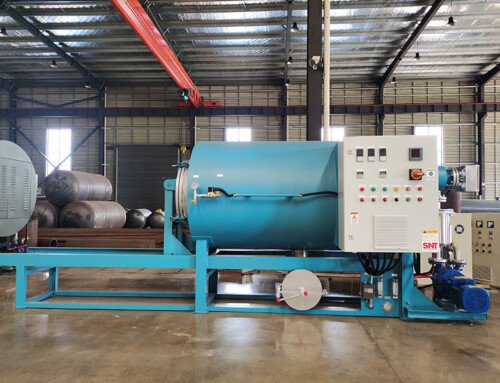
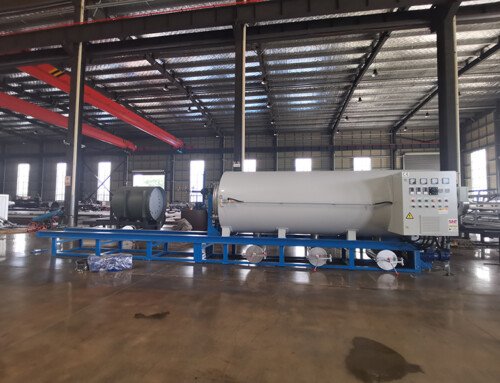
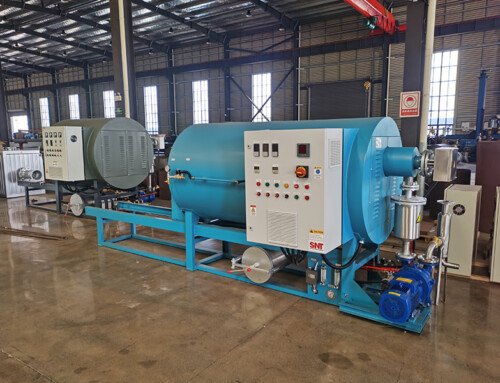
Your screw cleaning furnace is not a generic box that heats things up. It is a chemical reactor that must be matched to the specific polymers you process. The temperature range, the chamber material, the vacuum system, the exhaust capability, and the control program all flow from one question: what plastic are you actually cleaning off those screws?
Answer that question honestly — including the materials you do not want to admit you run — and the right furnace becomes obvious. Ignore it, and you will spend years fighting residue problems that were predictable from day one.