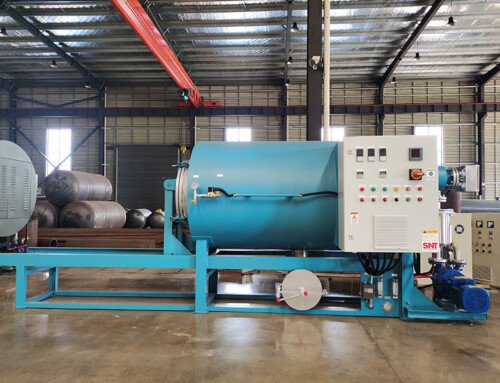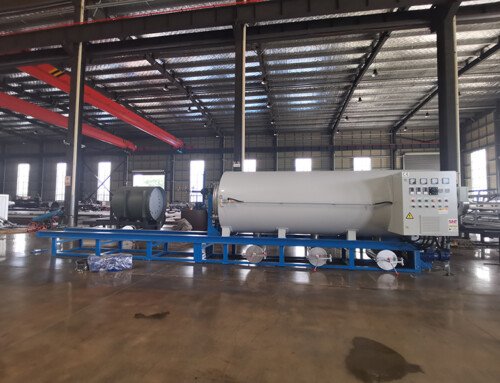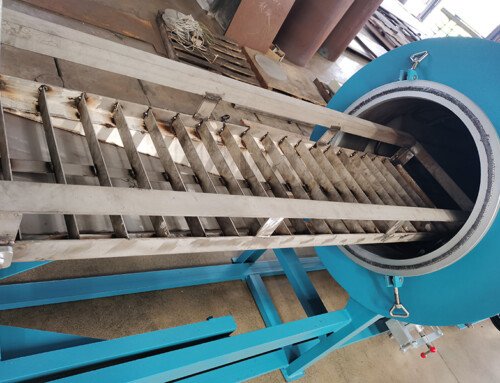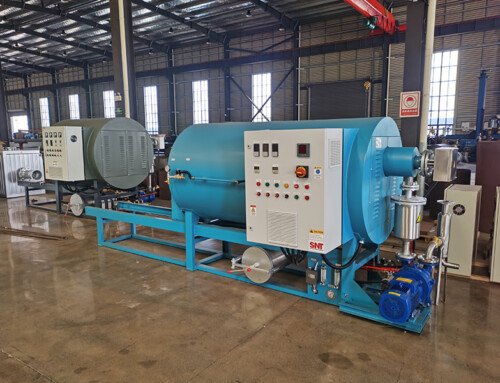
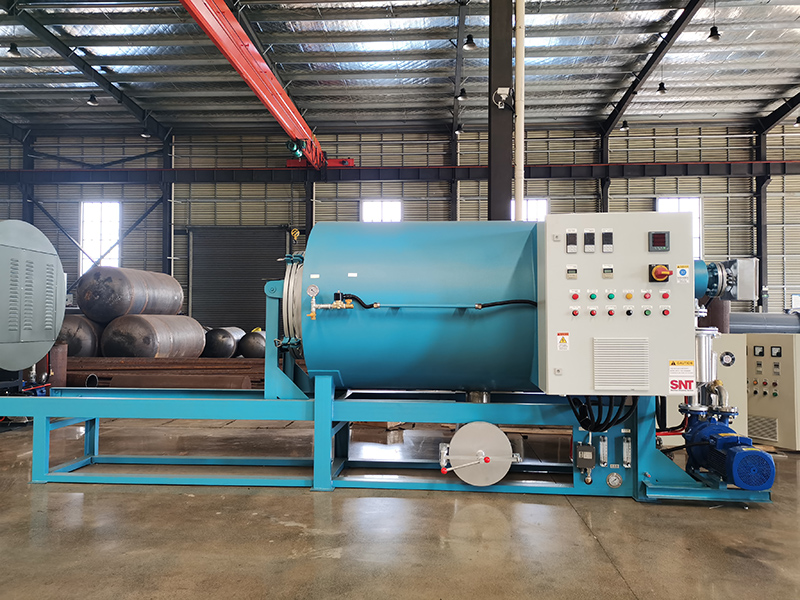
Screw Cleaning Furnace Noise Standards: What You Actually Need to Check Before Buying
Nobody walks into a procurement meeting talking about noise. Everyone talks about temperature precision, vacuum level, cleaning efficiency. But the moment that furnace fires up and the floor starts shaking, noise becomes the only thing anyone cares about. And if it exceeds the legal limit, the entire operation shuts down — not because of cleaning performance, but because of decibels.
Noise compliance is not a nice-to-have. It is the first gate every screw cleaning furnace has to pass through before it earns a spot on your production floor.
The Noise Standards That Actually Apply to Your Furnace
National Industrial Noise Limits You Cannot Ignore
China’s national standard for industrial enterprise boundary noise — GB12348-2008 — sets the hard ceiling. During daytime operations, noise at the factory boundary must not exceed 65 dB(A). At night, that number drops to 55 dB(A). These are not suggestions. They are enforcement thresholds. Exceed them and you face fines, work stoppage orders, and complaints that never go away.
For continuous production facilities like cleaning operations, the evaluation standard tightens further. The permissible noise level inside production workshops and work areas is set at 85 dB(A). Existing enterprises that cannot immediately meet this target may be granted a relaxation, but the ceiling is 90 dB(A) — not a millimeter higher. The absolute maximum allowed at any workplace is 115 dB(A), beyond which operations must stop immediately.
This matters because a screw cleaning furnace sits right in the middle of your production line. The vacuum pump alone can generate 75 to 85 dB(A) at the source. The heating elements, the blower motor, and the mechanical agitator all stack on top of that. Without proper noise management at the equipment level, your facility will fail the boundary test before it even runs a single cleaning cycle.
How Screw Cleaning Furnace Noise Stacks Up Against Other Industrial Equipment
For context, screw compressors and screw extruders in similar industrial settings typically produce noise in the 70 to 85 dB(A) range. Screw vacuum pumps fall into the same band — 75 to 85 dB(A) measured one meter from the source. A screw cleaning furnace combines several of these noise sources into one enclosed unit, which means the raw acoustic output can easily push past 90 dB(A) at the equipment surface if nothing is done to contain it.
This is why noise should be treated as a core technical parameter during procurement — not an afterthought. A furnace that cleans perfectly but cannot pass a noise audit is a liability, not an asset.
What Drives the Noise Inside a Screw Cleaning Furnace
The Vacuum Pump Is Usually the Loudest Offender
The vacuum pump is the primary noise source in any screw cleaning furnace. Its noise comes from two places: mechanical noise from moving parts colliding and grinding against each other, and airflow noise from gas being pulled through tight tolerances at high speed. Mechanical noise can be tackled with sound insulation enclosures, which typically achieve a noise reduction of 20 to 40 dB(A). Airflow noise requires silencers designed to filter specific frequency bands before the sound escapes the exhaust.
A well-maintained vacuum pump running on fresh ISO VG100 grade oil — changed every 500 hours as specified — will stay significantly quieter than one running on degraded oil. Pump airtightness must be tested every 1000 hours. When vacuum performance drops, the pump works harder, spins faster, and gets louder. A noisy pump is almost always a pump that is failing.
Heating Elements and Motors Add Their Own Signature
The heating system contributes noise through thermal expansion cycles and fan-driven air circulation. Monthly cleaning of heating element surfaces prevents dust buildup that changes airflow patterns and creates turbulent noise. Temperature sensors must be calibrated quarterly with an error no greater than plus or minus 1 degree Celsius. A sensor that drifts causes the controller to overshoot temperature targets, which forces the heating elements to cycle harder and louder than necessary.
The blower motor inside the furnace chamber typically adds another 5 to 10 dB(A) on top of the pump noise. Motor bearing wear, unbalanced fan blades, and loose mounting bolts all amplify this. A motor that hums smoothly at 70 dB(A) when new can climb to 85 dB(A) within months if bearings are not inspected and replaced on schedule.
Noise Reduction Strategies That Actually Work
Sound Insulation Enclosures Are Non-Negotiable
The most effective single measure is enclosing the entire furnace in a sound insulation room or hood. According to documented noise control cases, a properly designed insulation enclosure using layered sound-absorbing panels — such as 100mm thick ultra-fine glass wool with a density of 25 kg per cubic meter — can achieve a noise reduction of 20 to 25 dB(A) at the boundary. The absorption coefficient of such material reaches 0.85 across the 250 Hz to 4000 Hz range, which covers the majority of industrial noise frequencies.
For a screw cleaning furnace, the enclosure should be designed so that the airflow channel inside the silencer does not exceed 4 to 5 meters per second. Higher velocities create pressure loss and re-radiate noise through the enclosure walls. The silencer structure should use staggered channels — placing absorptive panels in alternating groups so that sound waves bounce through multiple layers instead of passing straight through.
Vibration Isolation Stops Noise Before It Starts
Mechanical vibration is the silent amplifier of noise. Every motor, every pump, every agitator transmits vibration through its mounting points into the floor, the walls, and the building structure. That structure then radiates the noise outward like a speaker cone.
Installing vibration isolation pads under the furnace base — rubber or spring-based, rated for the equipment weight — can reduce structure-borne noise by 5 to 25 dB(A). The thicker the pad, the better the isolation, but you must match the pad stiffness to the equipment mass. A pad that is too soft lets the furnace rock under load. A pad that is too stiff transmits everything.
For the vacuum pump specifically, mounting it on a dedicated vibration isolation base separate from the furnace frame prevents pump noise from coupling into the main structure. This one change alone can drop the overall facility noise reading by 3 to 5 dB(A) at the boundary.
Silencers on Exhaust Lines Cut Airflow Noise Fast
Every exhaust port on the furnace needs a silencer. The vacuum pump exhaust, the chamber vent, and any purge gas lines all generate airflow noise that escapes if left untreated. A silencer designed for the specific flow rate and frequency profile of your furnace can reduce exhaust noise by 12 to 30 dB(A) depending on the frequency band.
The key is matching the silencer to the actual operating conditions. A silencer rated for 6000 cubic meters per hour of adsorption airflow with 2000 cubic meters per hour of desorption airflow — typical for VOC treatment systems paired with cleaning furnaces — will perform very differently from a generic muffler. Use the manufacturer’s acoustic test data, not marketing claims.
How to Evaluate Noise Performance During Procurement
Demand Third-Party Noise Test Data, Not Nameplate Numbers
Every furnace supplier will quote a noise level on the spec sheet. That number is measured under ideal conditions in a quiet room with the door closed. It tells you almost nothing about what you will hear on your production floor.
Ask for noise test reports from accredited third-party labs. The test should measure sound pressure level at one meter from the equipment surface and at the factory boundary, with the furnace running at full cleaning cycle. The boundary measurement is the one that matters for compliance. If the supplier cannot provide this, walk away.
Check the Vacuum Pump Specification Separately
The vacuum pump is the noise engine of the entire system. Verify that the pump model meets the noise requirements for your facility class. General screw vacuum pumps produce 75 to 85 dB(A) at the source. With a proper silencer and enclosure, the effective noise at the boundary should land below 65 dB(A) during daytime and below 55 dB(A) at night.
If the pump specification does not include noise data, request it. A pump without published noise data is a pump that has not been tested — and untested means unknown, and unknown means risk.
Factor Maintenance Into the Noise Equation
A furnace that meets noise standards on day one will not stay compliant forever. Vacuum pump oil degrades. Bearings wear. Gaskets harden. Temperature sensors drift. Every one of these failures adds decibels.
Build a maintenance schedule into your procurement decision. The pump oil must be changed every 500 hours using ISO VG100 grade oil. Pump airtightness testing every 1000 hours. Temperature sensor calibration every quarter. Heating element surface cleaning every month. Motor bearing inspection every 6 months. These are not optional — they are the maintenance actions that keep the furnace inside its certified noise envelope for years.
The Real Cost of Ignoring Noise at the Spec Stage
Facilities that skip noise evaluation during procurement end up retrofitting sound enclosures, adding silencers, and reinforcing floors after the furnace is already installed. Retrofit noise control costs two to three times more than specifying it correctly upfront. Worse, some retrofits never achieve full compliance because the original equipment was never designed to accept them.
The furnaces that cause the most headaches are not the loudest ones. They are the ones where noise was never discussed during the buying process. A 75 dB(A) furnace with proper enclosure design will outperform a 65 dB(A) furnace with no enclosure — every single time.
Check the noise spec the same way you check the temperature spec. Demand data. Demand proof. And if the number does not work for your facility’s boundary limits, do not buy it.