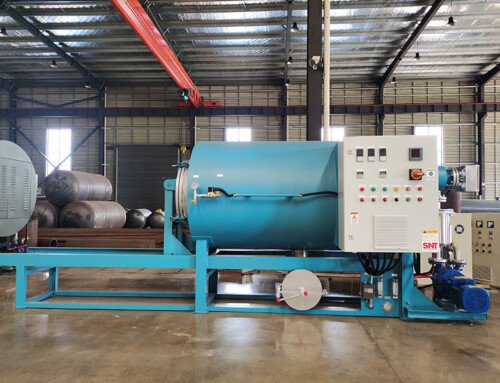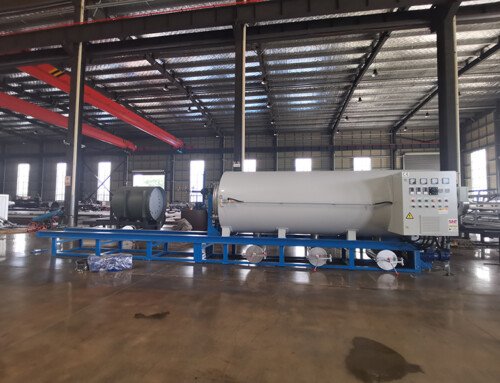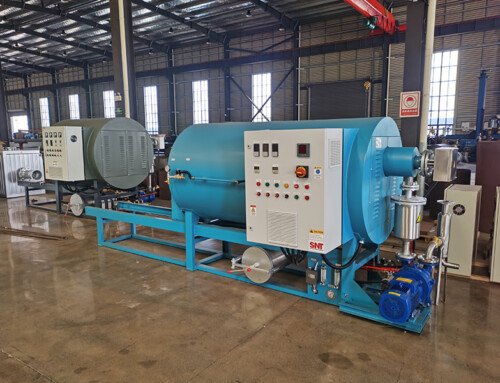
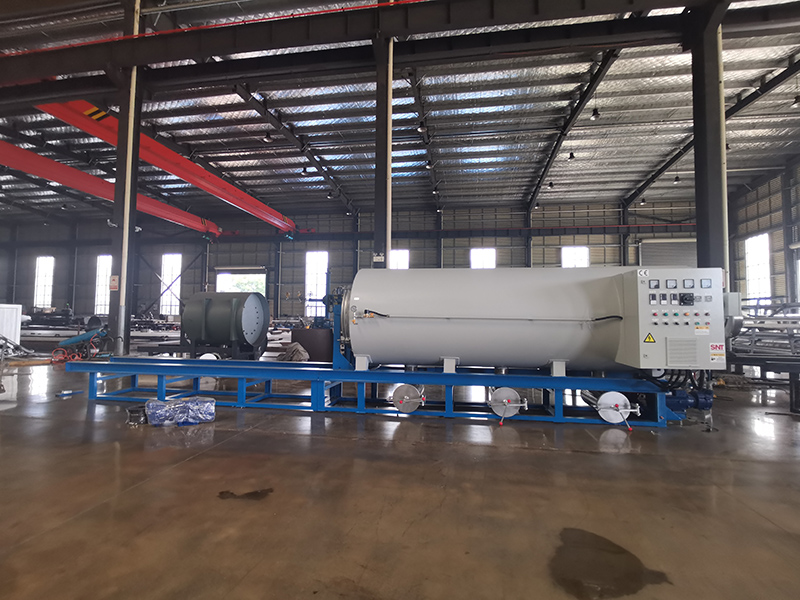
Screw Cleaning Furnace for Pelletizing: How to Pick the Right One Without Wasting Money
If you run a pelletizing line, you already know the drill. Screws get coked. Filters clog. Output drops. Quality swings. And every time you pull a screw for cleaning, you are losing production hours you will never get back. The cleaning furnace you choose determines how fast you get that screw back in service and whether it comes out actually clean or just half-baked. Most pelletizing shops pick the wrong unit at least once. Here is how to avoid that mistake.
What Makes Pelletizing Different From Other Extrusion Cleaning
Pelletizing screws face a unique set of problems that generic extrusion cleaning does not always account for. The residue in a pelletizing screw is not just polymer char — it is a layered mess of degraded polymer, calcium carbonate filler, titanium dioxide pigment, processing aids, and sometimes cross-linked gel from overheated material. This stuff does not just sit on the screw surface. It gets packed into the flight roots, wedged between kneading blocks, and baked hard in the discharge zone where temperatures spike.
A cleaning furnace that works fine for a blown film line will struggle with this. Pelletizing residues are denser, more abrasive, and harder to crack. The furnace you pick needs to handle higher temperatures, tighter vacuum, and longer soak times than a standard unit.
The Selection Criteria That Actually Separate Good Furnaces From Bad Ones
Chamber Size Has to Match Your Real-World Batch Volume
Forget the theoretical maximum. Count how many screws, screen packs, and adapter plates you actually clean per day. For most pelletizing operations running two to four extruders, a 600 to 800 liter chamber covers the daily load without bottlenecking. If you are running six or more lines and cleaning continuously, you need 1000 liters or more. The mistake shops make is buying a chamber that fits their biggest screw but sits half-empty most of the time. That wastes energy on every cycle. Size it for your average daily batch, not your peak.
Vacuum Performance Is More Important Than Temperature Range
Everyone talks about max temperature. But for pelletizing, vacuum quality is what actually cleans the screw. You need a system that pulls down to 10 Pa or lower and holds it steady throughout the entire heating and soaking phase. Why does this matter? Because pelletizing residues contain fillers and pigments that do not fully pyrolyze in an oxygen-rich environment. They just soften and smear. Under deep vacuum, the off-gases get pulled away from the screw surface, the carbon cracks cleanly, and the filler particles separate from the polymer matrix instead of fusing into a hard crust.
A furnace that hits 550°C but only pulls 100 Pa will leave you with a screw that looks clean on the outside but still has packed residue in the flight channels. A furnace that holds 480°C at 5 Pa will give you a screw you can run immediately.
Temperature Uniformity Across the Chamber Matters More Than Peak Temperature
Hot spots inside the chamber are the enemy. If one side of the screw hits 520°C while the other side sits at 440°C, you get uneven cleaning. The hot side over-oxidizes the metal. The cool side leaves carbon behind. Look for a furnace with multi-zone heating — ideally four to six independently controlled zones — so you can program a ramp that heats the entire screw assembly evenly. The temperature deviation across the chamber should stay within ±5°C. Anything wider and you are gambling with every cycle.
Cleaning Method: Why Vacuum Pyrolysis Wins for Pelletizing
Open-Flame and Salt Bath Cleaning Are Dead Ends
Salt bath cleaning was popular a decade ago, but it is a nightmare for pelletizing screws. The molten salt gets into every crevice, and if you do not flush it out perfectly — which nobody ever does — the salt crystallizes inside the screw channels and causes corrosion within weeks. Open-flame cleaning is even worse. The localized flame temperatures can exceed 1000°C at the point of contact, which warps screw shafts, destroys surface hardening on nitrided screws, and ruins the tight tolerances in the metering section. For a pelletizing screw that might cost tens of thousands to replace, that is not acceptable.
Chemical cleaning with solvents or burn-off compounds works for light purges but cannot touch the hard carbon that builds up in pelletizing discharge zones. You end up running the chemical cycle, then pulling the screw and finding it still dirty.
Vacuum Pyrolysis Is the Only Method That Handles Filled Compounds
Pelletizing almost always involves filled or pigmented compounds. Calcium carbonate, talc, glass fiber, titanium dioxide — these materials do not burn. They just sit there and get harder as the polymer around them carbonizes. Vacuum pyrolysis works because it removes the oxygen and pulls the volatile decomposition products away from the screw surface. The polymer cracks and outgasses. The filler particles lose their binding matrix and fall away as fine powder that you can blow out with compressed air after the cycle. No residue. No smearing. No re-contamination.
The typical cycle for a pelletizing screw runs 4 to 8 hours depending on the severity of fouling. Ramp to 420–480°C under vacuum, hold for 2 to 4 hours, then cool under vacuum or with controlled nitrogen backfill. The screw comes out ready to run.
How to Match the Furnace to Your Specific Pelletizing Setup
Underwater Pelletizing Lines Have Different Needs
If you run an underwater pelletizing system, your screws see more moisture and more abrasive wear from the die face. The residue tends to be wetter and more gelatinous when it first starts building up. You need a furnace with a strong initial degas phase — a low-temperature hold around 200°C under vacuum to drive out moisture before ramping to the pyrolysis temperature. Skipping this step causes violent outgassing at higher temperatures, which can damage the vacuum pump and leave you with an incomplete clean.
Strand Pelletizing Requires Higher Temperatures
Strand pelletizing screws often process engineering resins or compounds with higher melt temperatures. The carbon that builds up in these screws is denser and more cross-linked. You need a furnace that can reliably hit 500°C or higher, with a vacuum system rated for the increased off-gas load. The exhaust line should have a condenser or scrubber to catch the heavier hydrocarbons before they reach the pump. Without this, the pump oil degrades fast and vacuum performance drops within months.
Twin-Screw Pelletizing Systems Need Wider Chambers
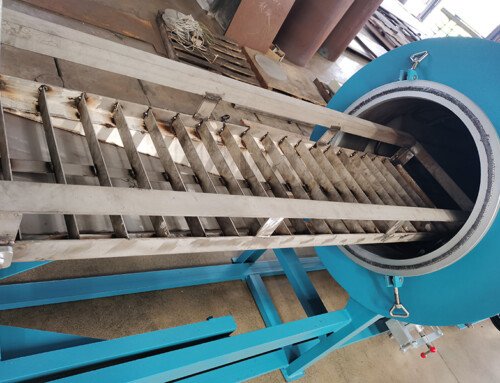
Co-rotating twin-screw pelletizing extruders have long screw assemblies with multiple mixing elements. You cannot clean just the screw — you need to pull the full rotor set, including kneading blocks and any sacrificial mixing sections. The chamber must be wide enough and tall enough to fit the entire assembly without forcing it in at an angle. Forced loading causes uneven heat exposure and can damage the screw elements during handling. A horizontal loading furnace with a wide door opening is the standard choice here.
Operational Details That Save You Money Over Time
Program Your Cycles Precisely and Stick to Them
Every pelletizing compound behaves differently under heat. A polyethylene-based compound pyrolyzes cleanly at 420°C. A polyester or nylon compound needs 460 to 480°C to fully crack. If you run the same program for every material, you either under-clean the tough stuff or over-heat the easy stuff. Build a program library — one cycle per compound — and load the right one every time. This takes ten minutes to set up and saves hours of re-cleaning.
Track Vacuum Pump Health Like Your Life Depends On It
The vacuum pump is the heart of the furnace. When it degrades, cleaning quality drops immediately and you might not notice until you pull a dirty screw. Check pump oil every 500 hours. Replace it with the grade the manufacturer specifies — usually ISO VG100. Test ultimate vacuum monthly. If the pump cannot pull below 20 Pa when it used to hit 5 Pa, rebuild or replace it before it fails mid-cycle. A pump failure during a cleaning run leaves the screw sitting at high temperature with no vacuum protection, which oxidizes the metal surface and ruins the screw.
Clean the Exhaust System Before It Clogs
Pelletizing residues produce heavy tars and waxy byproducts that coat the exhaust lines, the condenser coils, and the vacuum pump inlet. If you do not clean these monthly, the exhaust flow drops, vacuum level rises, and cleaning efficiency plummets. A clogged exhaust line is the most common reason a furnace that worked perfectly for a year suddenly starts leaving carbon behind. Schedule a monthly exhaust cleaning and keep spare condenser coils on hand.
Red Flags That Tell You the Wrong Furnace Was Installed
If your cleaning cycles are taking longer than they used to, check the vacuum first — not the temperature. A slow vacuum rise means the pump is dying or the chamber seal is leaking. If the screw comes out with a rainbow discoloration on the flight surfaces, the vacuum was not tight enough during the soak phase and the metal oxidized. If you are still finding hard carbon in the flight roots after a full 8-hour cycle, the temperature uniformity is off and you need to recalibrate the heating zones. These are not mysterious problems. They are measurable, fixable, and almost always traceable to a single component that was underspecified at the time of purchase.