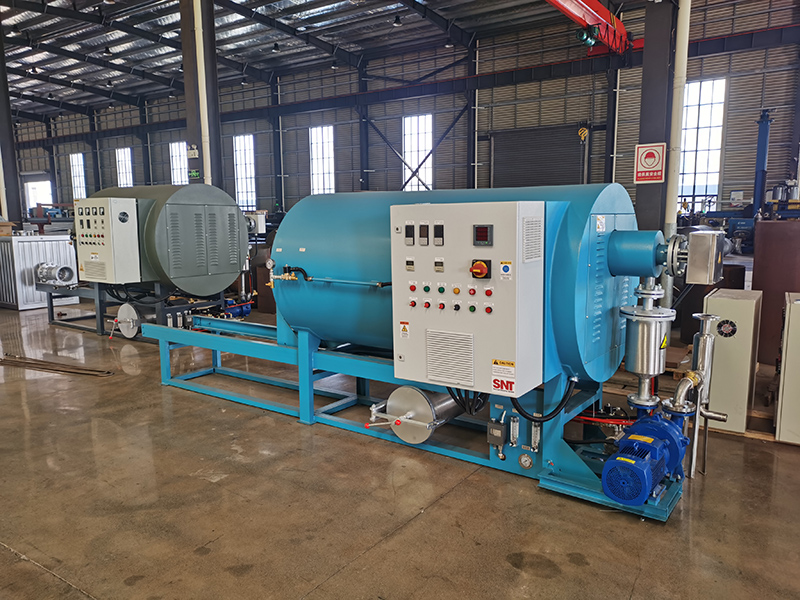
Heating Rate Adjustment Methods for a Screw Cleaning Furnace
The heating rate of a screw cleaning furnace directly affects cleaning efficiency, thermal stability, and screw surface protection. Proper temperature rise control helps reduce thermal stress, improve residue decomposition, and extend furnace service life.
Understand the Importance of Heating Speed Control
A controlled heating process allows screws and furnace structures to expand gradually during operation.
If the temperature rises too quickly, metal components may experience uneven expansion, increasing the risk of deformation, cracking, or surface damage.
Match Heating Speed to Residue Type
Different polymer residues respond differently under high temperatures. Some materials decompose gradually, while others release gases rapidly when exposed to sudden heat.
Adjusting the heating rate according to residue characteristics helps maintain cleaner decomposition conditions inside the furnace chamber.
Consider Screw Material and Size
Large screws and heavy metal components generally require slower heating speeds because they absorb and distribute heat more slowly.
Smaller screws may tolerate faster temperature increases under stable operating conditions.
Step-by-Step Heating Adjustment Techniques
Gradual heating methods are commonly used to maintain stable furnace operation.
Start With a Low Initial Temperature
Beginning the heating cycle at a moderate temperature allows moisture, light residue, and surface contaminants to dissipate gradually.
This stage also reduces sudden stress on furnace insulation and heating elements.
Increase Temperature in Controlled Stages
Instead of using immediate full-power heating, operators should raise the furnace temperature in several controlled steps.
Progressive heating helps improve temperature uniformity throughout the chamber and reduces localized overheating.
Maintain Stable Heating Intervals
Each temperature stage should remain stable for a suitable period before moving to the next level.
Stable intervals help screws absorb heat evenly and improve residue decomposition consistency.
Factors That Influence Heating Speed Adjustment
Several operational conditions affect the ideal heating rate inside a screw cleaning furnace.
Furnace Chamber Load Quantity
A heavily loaded chamber often requires slower heating because multiple screws absorb heat simultaneously.
Faster heating under overloaded conditions may create uneven temperature distribution.
Ventilation and Airflow Conditions
Stable airflow inside the chamber supports balanced heat transfer during operation.
Poor ventilation may cause temperature instability and increase smoke accumulation during rapid heating.
Residue Thickness and Carbon Buildup
Screws with thick residue layers may require slower temperature increases to avoid sudden decomposition and excessive smoke generation.
Controlled heating improves cleaning stability and reduces carbon residue accumulation inside the chamber.
Monitoring Heating Speed During Operation
Continuous monitoring helps operators maintain safe and effective temperature control.
Observe Temperature Controller Readings
Operators should regularly monitor furnace temperature changes during the heating cycle.
Unexpected fluctuations may indicate sensor problems, unstable power supply, or heating element issues.
Watch for Abnormal Smoke Levels
Excessive smoke during rapid heating may suggest that the temperature is increasing too quickly for the residue condition.
Adjusting the heating rate can help improve decomposition balance and ventilation efficiency.
Check Heat Distribution Consistency
Uneven heating inside the chamber may leave residue on certain screw sections while overheating other areas.
Balanced heating speed supports more consistent cleaning performance.
Cooling Coordination After Controlled Heating
Heating speed management should also consider the cooling process after operation.
Reduce Temperature Gradually After Cleaning
Controlled cooling helps maintain screw dimensional stability and reduces thermal stress after high-temperature operation.
Rapid cooling after fast heating cycles may increase the risk of surface damage.
Maintain Ventilation During Cooling
Ventilation systems should continue operating while the furnace temperature decreases.
Steady airflow helps remove residual gases and improves cooling stability.
Avoid Immediate Removal of Hot Screws
Screws should remain inside the chamber during the early cooling phase to prevent sudden exposure to lower ambient temperatures.
Gradual cooling supports better surface protection and reduces oxidation risks.