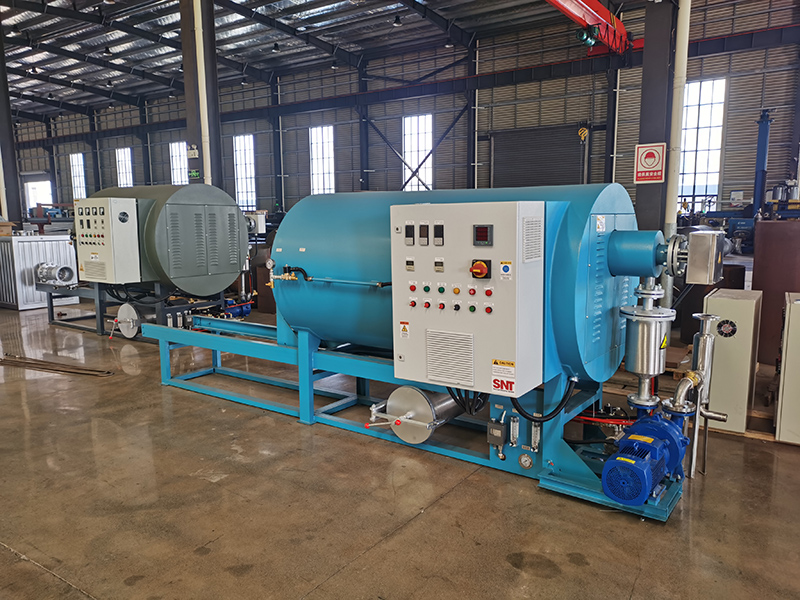
How to Set the Cleaning Duration for a Screw Cleaning Furnace
Cleaning duration is one of the most important operating parameters in a screw cleaning furnace. Proper time settings help remove polymer residue effectively while reducing unnecessary thermal exposure to screws and furnace components.
Understand the Type of Residue Before Setting Time
Different plastics and processing materials leave different levels of carbon buildup and contamination on screw surfaces.
Thin residue layers usually require shorter cleaning cycles, while hardened carbon deposits often need longer heating periods for complete decomposition.
Consider Screw Size and Structure
Large screws and deep-threaded components may require extended cleaning time because heat needs longer to penetrate all surface areas evenly.
Smaller screws with simple structures generally reach effective cleaning conditions more quickly.
Avoid Excessively Long Cleaning Cycles
Overextended cleaning duration may increase oxidation risks, surface discoloration, and unnecessary thermal stress on metal parts.
Balanced time settings improve both cleaning efficiency and component lifespan.
Heating Stage Time Adjustment Methods
The heating stage directly affects residue decomposition performance.
Use Gradual Heating Before Full Cleaning
Instead of immediately applying maximum heat, operators should allow sufficient preheating time for screws and furnace structures to warm evenly.
Gradual temperature increase helps reduce thermal shock and improves cleaning stability.
Maintain Stable Holding Time
Once the target cleaning temperature is reached, the furnace should maintain a stable holding period long enough for residue decomposition to complete.
Insufficient holding time may leave carbon buildup inside screw grooves and narrow channels.
Adjust Heating Time Based on Load Quantity
A fully loaded furnace chamber often requires longer heating and holding periods compared to smaller cleaning batches.
Heat circulation becomes slower when multiple screws are processed simultaneously.
Cleaning Duration Settings for Different Residue Conditions
Residue thickness and contamination level strongly influence the required cleaning time.
Shorter Duration for Light Contamination
Screws with minimal residue usually require shorter processing cycles.
Reducing unnecessary heating time helps minimize energy consumption and metal surface exposure.
Extended Duration for Heavy Carbon Deposits
Thick residue layers may need longer decomposition periods to ensure complete cleaning inside threaded sections.
Longer cleaning cycles should still maintain controlled temperature stability to avoid overheating.
Monitor Residue Decomposition During Operation
Operators should observe smoke conditions, furnace temperature behavior, and exhaust system performance during the cleaning process.
Changes in residue decomposition patterns may indicate whether cleaning time requires adjustment.
Cooling Time Management After Cleaning
Cooling duration is also an important part of the overall cleaning cycle.
Allow Natural Cooling After Heating
Natural cooling helps reduce internal stress on screws and furnace structures.
Rapid cooling methods may increase the risk of deformation or surface cracking.
Keep Components Inside During Initial Cooling
Leaving screws inside the chamber during early cooling stages allows temperature reduction to occur more evenly.
Premature removal may expose components to sudden thermal changes.
Coordinate Cooling Time With Component Size
Large screws usually retain heat longer than smaller components.
Adequate cooling duration improves handling safety and helps protect surface stability.
Factors That Influence Cleaning Time Stability
Several operational factors can affect cleaning duration consistency.
Furnace Temperature Accuracy
Unstable temperature control may increase or reduce the actual cleaning time required for effective residue removal.
Regular calibration helps maintain consistent heating performance.
Airflow and Ventilation Efficiency
Stable airflow inside the chamber improves heat distribution and residue decomposition efficiency.
Poor ventilation may slow the cleaning process and increase smoke accumulation.
Furnace Chamber Loading Arrangement
Improper screw placement or overcrowding may restrict heat circulation and increase required cleaning duration.
Balanced loading methods help maintain more consistent processing results.