If you are running plastic extrusion or injection molding operations, you must have encountered those stubborn carbonized residues stuck deep on the screw surface after long production runs. These hidden impurities often show up as dark spots or uneven streaks on your final products, leading to unexpected material waste and unplanned downtime that eats into your daily production efficiency.
Step-by-step pre-operation safety and site preparation
Before you touch any part of the screw assembly, make sure the entire equipment is fully powered off, with a clear “no operation” warning sign hung on the main power switch. Wait until the barrel and screw temperature drops completely to room temperature, and release all residual pressure inside the heating system to avoid any sudden melt spill during the process. Wear heat-resistant gloves, face shields and non-slip work boots before you start, and keep the work area well ventilated with a dry, non-slip mat laid under the equipment to prevent accidental slips when handling heavy screw components. Gather all necessary non-abrasive tools ahead of time, including soft bronze scrapers, nylon bristle brushes, lint-free cotton cloths and compressed air nozzles, and make sure no sharp metal tools are placed near the operation area that could scratch the precision screw surface.
Proper disassembly sequence to avoid component damage
Follow the rule of working from outer attachments to inner core parts when you start taking the equipment apart. First remove the hopper, connecting flanges and all heating and cooling pipeline accessories, mark each part with a small sticker to record its original installation position and orientation, so you will not mix up the assembly order later. Loosen the barrel fastening bolts evenly in a diagonal sequence, then pull the screw out slowly and steadily with a dedicated lifting tool, never drag the screw directly on the ground or hit it against any hard surface, as even a tiny scratch on the screw thread will cause new material buildup in future production runs.
Targeted removal of carbonized impurities on screw surfaces
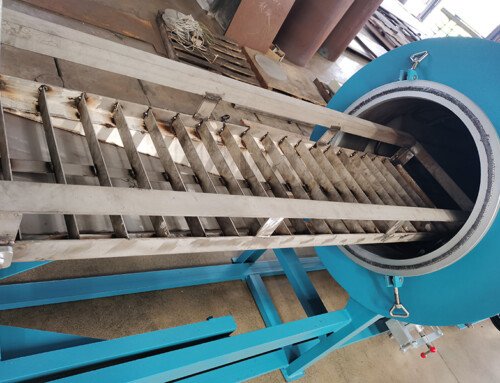
Lay the disassembled screw horizontally on a soft wooden support frame, never place it directly on concrete or metal workbenches. Use a blunt wooden scraper first to gently scrape off most of the loose residual carbonized material on the screw surface, taking extra care around the thread edges and gaps where most hard deposits hide. For those thick, fully carbonized layers that cannot be removed by simple scraping, use a low-temperature uniform heating method to soften the residues slowly, never use high-temperature flame that will overheat the local metal area and change the screw’s original hardness and flatness. Wipe every part of the screw repeatedly with a soft nylon brush dipped in heated alkaline cleaning solution, focus on the deep gaps between screw flights, the connection points of different screw elements, and the small hidden grooves that are easy to be ignored during regular checks.
Deep cleaning for hard-to-reach hidden areas
After you finish the initial scraping and brushing, rotate the screw slowly by hand to check every single circle of the thread, run a clean cotton cloth along the full length of the screw surface to wipe away any remaining tiny carbon particles. Use a narrow, soft brush to clean the small holes on the vent block and the inner surface of the non-return ring, make sure no tiny carbon fragments are left inside these precision matching parts. Do not use any abrasive cleaning powder or sharp steel brush during the whole process, these tools will leave tiny scratches on the metal surface that will catch new melted material easily in the next production cycle, creating new carbonized residues much faster than before.
Post-cleaning inspection and reassembly checks
After all carbonized impurities are fully removed, hold the screw under a bright light to check the full length of the metal surface, confirm there are no visible dark spots, residual material or unexpected scratches left on every part. Check the inner wall of the barrel at the same time, wipe it several times with a clean cotton cloth wrapped around a long rod, until the cloth comes out completely clean without any dark marks. Apply a thin layer of high temperature resistant assembly lubricant on all matching surfaces before you start putting the parts back together, tighten all fastening bolts evenly following the diagonal sequence, never over-tighten any single bolt that could cause deformation of the barrel flange.
Pre-production test run to confirm cleaning effect
After the full reassembly is finished, start the equipment for a short no-load test run first, keep the screw running at a low speed for 3 to 5 minutes, check if there is any abnormal noise or unstable rotation during the whole process. Adjust the barrel temperature to the regular production setting, add a small amount of compatible transition resin to push out any tiny residual particles left inside the barrel, keep extruding until the coming out melt is fully uniform in color without any dark spots or streaks. Only when you confirm the extruded material is completely free of carbon impurities can you start the formal production process, this step will help you avoid wasting new production material on an incompletely cleaned system.