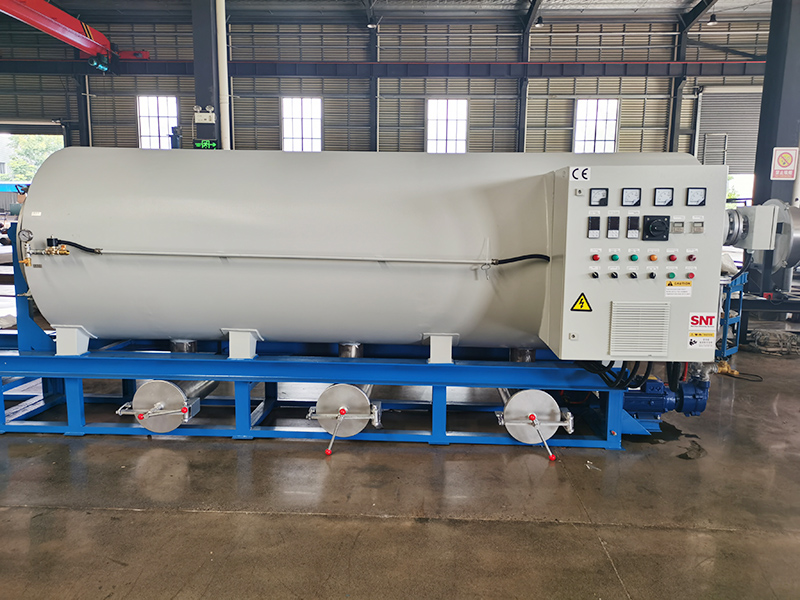
How to Pick the Right Screw Vacuum Cleaning Furnace for Fast Turnaround
When you are chasing throughput on a screw vacuum cleaning furnace, the last thing you want is a machine that sits idle between batches. The difference between a furnace that cleans in 4 hours versus one that drags out to 8 comes down to a handful of technical choices most buyers overlook until it is too late. This guide cuts through the noise and focuses on what actually drives cleaning speed.
Temperature Control Is the Real Speed Lever
Most people fixate on vacuum level when they should be staring at temperature precision. A furnace that swings plus or minus 5 degrees Celsius during a cycle forces you to run longer just to be safe. Tighten that to plus or minus 1 degree Celsius and you can push the heating ramps harder without risking damage to the workpiece.
Why Ramp Rate Matters More Than Peak Temperature
A fast cleaning furnace does not just sit at the top temperature and wait. It uses multi-stage programmed heating, hitting 3 to 5 temperature nodes in sequence. This staged approach breaks down polymers and carbon residues more aggressively at each step, cutting total cycle time by up to 30 percent compared to single-stage heating. Look for a PLC-controlled system that lets you preset these ramps so the operator just hits start and walks away.
Uniform Heat Distribution Across the Chamber
Hot spots are the enemy of speed. If one corner of the chamber runs 20 degrees hotter than the opposite side, you either under-clean the cool zone or over-stress the hot zone. Furnaces with double-circulation heating systems or optimized heating element placement keep the temperature gradient under plus or minus 5 degrees Celsius across the entire load. That uniformity means you can trust a single cycle time instead of running safety margins that eat your productivity.
Vacuum Performance Directly Affects Cycle Time
Vacuum level is not just about cleaning quality. It is about how fast you can get there. A furnace that pulls down to 10 Pascals in under 30 minutes gives you a massive head start on every batch. If the pump struggles and takes an hour to reach target vacuum, your total cycle balloons.
Pump Selection Drives Everything Downstream
Screw vacuum pumps are the workhorse for fast-cycling furnaces. They handle large volumes of gas and vapor quickly, which means shorter pump-down times and faster residue removal. A pump that needs oil changes every 500 hours and a tightness check every 1000 hours will hold its vacuum performance over thousands of cycles. Cheap pumps lose vacuum over time, and the only fix is running longer cycles to compensate. That is a hidden cost most buyers do not see until month six.
Leak Tightness Is Non-Negotiable
Even the best pump cannot compensate for a leaky chamber. Micro-leaks let air creep in during the high-temperature phase, which oxidizes the workpiece and forces you to re-clean. Furnaces built with welded stainless steel chambers and proper flange sealing maintain vacuum stability throughout the entire cycle. Test this before you commit: ask for a vacuum hold test at operating temperature and watch for drift over 2 hours.
Automation Determines Whether Speed Is Real or Theoretical
A furnace can have incredible technical specs on paper, but if an operator has to manually adjust valves, tweak temperatures, or monitor pressure gauges every 15 minutes, your actual throughput will be half the rated speed.
Full PLC Integration Is the Minimum Standard
The best fast-cleaning furnaces run on a PLC system that handles multi-stage heating, automatic constant temperature holds, automatic slag discharge, and cool-down linkage. One button start, zero manual intervention. This cuts operator involvement by roughly 80 percent and eliminates the human errors that cause re-runs. If the control panel still relies on analog dials and toggle switches, you are paying for speed you will never get.
Real-Time Monitoring Prevents Costly Downtime
Smart furnaces display temperature, vacuum level, and run time on screen in real time. When vacuum leaks or temperature spikes happen, the system alarms and shuts down automatically instead of letting you ruin a batch. This sounds basic, but it is the difference between a 10-minute abort and a 4-hour re-clean with scrap parts.
Maintenance Habits Define Long-Term Speed
A furnace that cleans fast on day one but slows down after six months is not fast. It is just new. The maintenance routine you build now determines whether you keep that speed for years or watch it erode.
Pump and Heating Element Care
Vacuum pump oil should be changed every 500 hours using ISO VG100 grade oil. Heating element surfaces need monthly dust removal, and temperature sensors should be calibrated quarterly to stay within plus or minus 1 degree Celsius accuracy. Skip these steps and you will see local overheating, uneven cleaning, and eventually element failure. Each skipped maintenance window costs you more in lost production than the maintenance itself.
Record Keeping Pays Off
Log every cycle: vacuum curve, temperature profile, load size, cleaning result. Over time this data reveals patterns. You will see which materials clean fastest, which temperature ramps work best, and where the furnace is drifting. Furnaces with well-maintained PLC programs and regularly backed-up control systems avoid the sudden crashes that kill throughput.
Matching the Furnace to Your Actual Workload
Speed means nothing if the furnace cannot handle what you throw at it. A small benchtop unit rated for lab samples will choke on a 20-kilogram batch, no matter how fast its pump is.
Chamber Volume and Load Sizing
For operations cleaning 50 to 100 parts per day, a 500-liter chamber is the sweet spot. Anything larger and you are wasting energy heating empty space. Anything smaller and you are running multiple cycles. Match the chamber to your daily volume, not your peak volume. Oversizing is just as bad as undersizing.
Material Compatibility Checks
The chamber interior should be 310S stainless steel at minimum. It resists high-temperature corrosion, does not coke up easily, and cuts post-cleaning chamber maintenance time dramatically. If you are cleaning abrasive residues or high-viscosity polymers, verify that the furnace design handles those specific challenges. A general-purpose furnace will clean, but it will clean slowly and leave you scraping the walls.