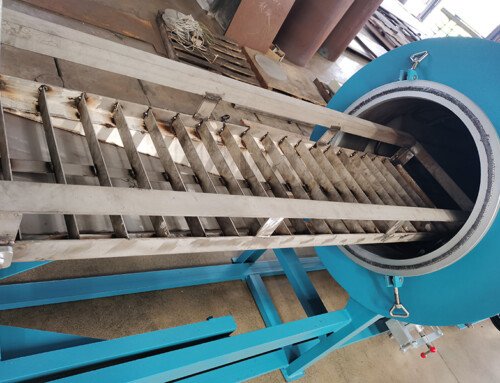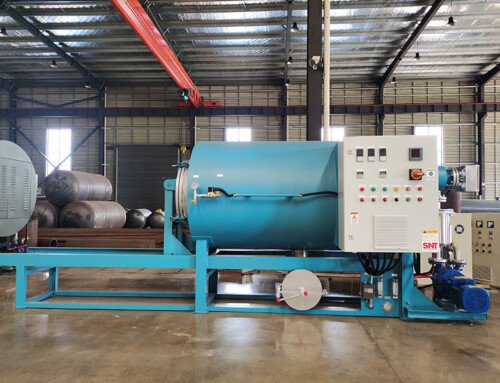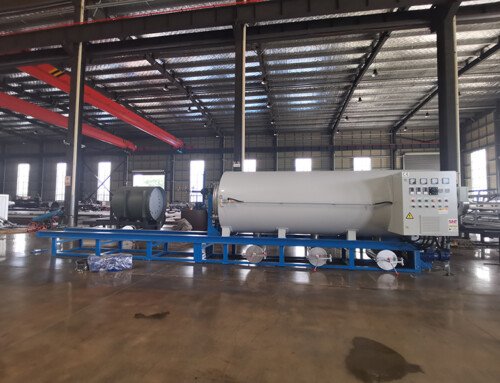
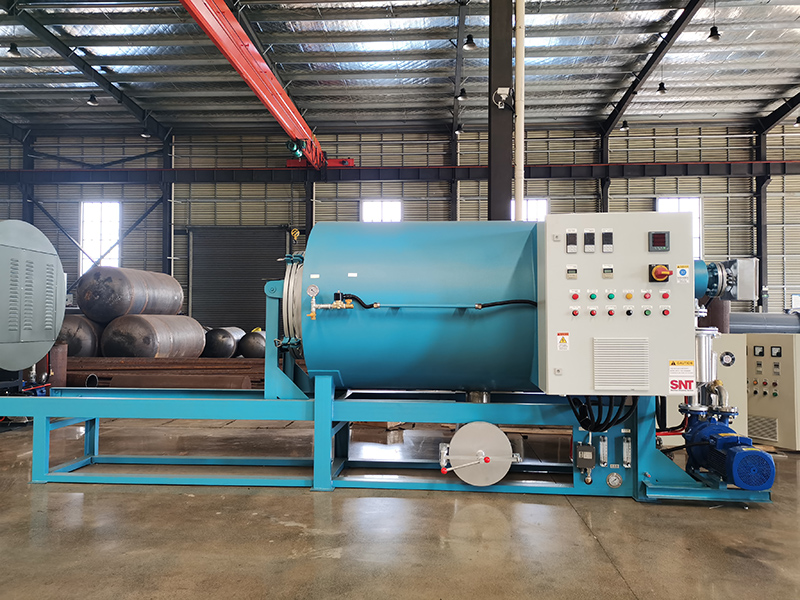
Extending the service life of a screw cleaning furnace does not rely on complicated, costly modifications. It comes down to consistent, practical daily operational choices and small proactive adjustments that prevent minor avoidable issues from accumulating into major irreversible damage. These field-proven methods are drawn from years of observing equipment performance across different industrial production sites, and they focus on actions every on-site team can implement without disrupting normal production flow.
Optimize temperature ramp-up and cool-down cycles
Uncontrolled thermal shock is one of the biggest hidden contributors to premature component wear, yet it often goes unnoticed by operators who prioritize fast turnaround over long-term equipment health. Every time the unit heats up or cools down too quickly, uneven expansion and contraction places extra stress on chamber walls, heating elements, and sealing parts.
Implement a slow, staged heatup sequence that raises temperature in small, steady increments instead of jumping straight to maximum power immediately after startup. This gives every part of the unit time to expand evenly, eliminating localized stress points that would otherwise develop tiny cracks or warping over hundreds of operating cycles.
Allow a gradual, natural cool-down period after the cleaning cycle finishes, instead of forcing rapid cooling with high-velocity airflow or opening the main door while the internal chamber is still at extreme high temperature. Sudden contact with room-temperature air creates sharp thermal gradients that fatigue metal surfaces far faster than normal gradual cooling would ever do.
Establish residue removal routines after every cycle
Hardened, carbonized residue left inside the chamber is not just a minor cleanliness issue. Over repeated heating cycles, this leftover material bonds tightly to internal metal surfaces, creating insulating hot spots that cause uneven heat distribution and steadily erode the chamber’s protective inner layer.
Perform a quick preliminary wipe and loose residue removal immediately after each operating cycle, while the chamber has cooled down to a safe handling temperature but is still slightly warm. At this stage, most leftover material is still soft and easy to clear away, so you do not need aggressive scraping that could scratch or damage the chamber’s inner surface.
Schedule a full deep cleaning session at regular predefined intervals, based on your actual production volume and the type of materials being processed. During this session, disassemble all easily accessible internal components, clear every hidden corner and gap where residue tends to accumulate, and make sure no trace of carbonized buildup remains to interfere with future operations.
Inspect and maintain door seal and pressure components
A worn or improperly adjusted door seal does not just let hot air escape and waste energy. It also creates inconsistent internal operating conditions that force the entire heating system to work overtime, accelerating wear on every connected component. Even a tiny gap in the seal can create a steady stream of superheated air that scorches nearby wiring and external structural parts.
Check the full perimeter of the door seal before every startup, looking for signs of compressed deformation, small cracks, or hardened sections that no longer make full continuous contact with the chamber opening. Even minor visible wear should be addressed promptly, before it develops into a gap large enough to cause consistent heat leakage.
Verify that the door closing mechanism applies even, balanced pressure across every point of the seal, instead of clamping down tighter on one side than the other. Uneven pressure creates uneven wear across the seal’s surface, shortening its usable life and creating gaps that are extremely easy to miss during casual visual checks.
Stabilize operating environment and power supply
Many avoidable equipment failures trace back not to the furnace itself, but to poor conditions in the surrounding installation space. Small adjustments to the immediate operating environment can eliminate a whole category of hidden stress factors that quietly reduce the unit’s overall lifespan.
Keep the area around the furnace well ventilated, so excess waste heat generated during operation can dissipate naturally instead of building up around the unit’s control panel, wiring terminals, and external motor components. Sustained high ambient temperature around these sensitive electrical parts causes them to age far faster than they would in a properly cooled, well-ventilated space.
Add surge protection and voltage stabilization to the unit’s dedicated power line, to shield the control system and heating elements from sudden power spikes, unexpected brownouts, or unplanned hard shutdowns. Abrupt power interruptions mid-cycle leave hot sections of the heating elements exposed without uniform heat distribution, creating localized overheating that can burn out elements long before their expected service life ends.
Conduct regular preventive checkups for hidden early signs of wear
Most major unexpected failures give clear small warning signs days or even weeks before they develop into full breakdowns. A structured routine of quick, systematic checkups helps you catch these issues early, when they can be resolved with minimal time and effort.
At least once every two weeks, walk through a simple visual inspection of all external wiring connections, support frame bolts, and temperature sensor mounting points. Look for loose connections, slight discoloration from near-overheating, or minor shifting of components that should stay firmly fixed in place.
Calibrate all temperature sensors on a scheduled basis, to make sure the displayed internal reading matches the actual real temperature inside the chamber. An inaccurate sensor that reports a lower temperature than reality can let the unit run far above its designed safe operating limit for weeks at a time, causing unseen internal damage that only becomes apparent once major components start to fail.