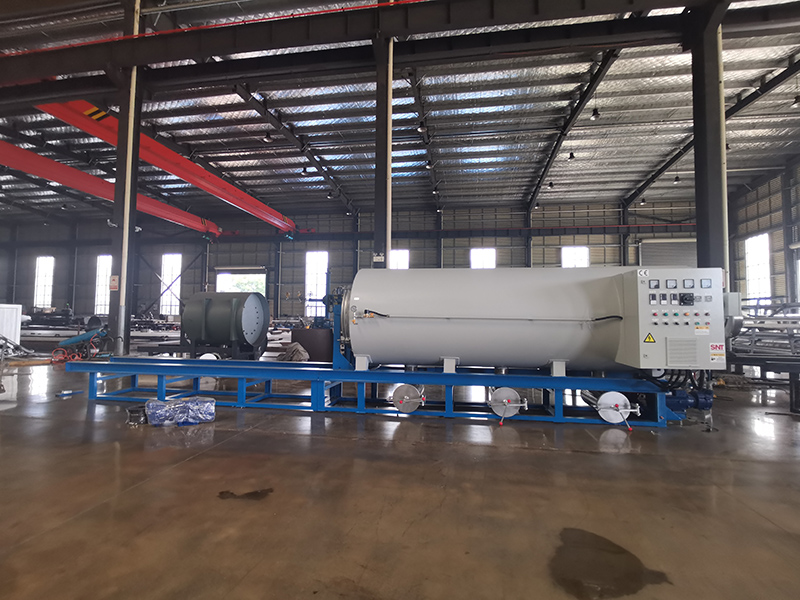
Vertical vs Horizontal Screw Cleaning Furnace: Which Layout Fits Your Operation
Choosing between a vertical and a horizontal screw cleaning furnace is not just about fitting the machine into your floor plan. The orientation changes how heat reaches your parts, how vacuum behaves inside the chamber, how fast you can load and unload, and ultimately how consistent your cleaning results will be over thousands of cycles. Getting this wrong means you will be fighting the machine every single day instead of letting it do the work.
How Chamber Orientation Changes the Entire Cleaning Dynamic
At first glance, both layouts look like they do the same thing. Heat the chamber, pull vacuum, bake off residue, cool down, open the door, take out clean parts. But the physics inside each chamber is fundamentally different, and those differences show up in your daily output.
Gravity Plays a Bigger Role Than You Think
In a vertical furnace, parts hang or sit upright. Gravity pulls residue downward, away from the workpiece surface. This sounds like an advantage, and for light carbon buildup it is. But for heavy polymer degradation or thick carbon layers, the residue falls to the bottom of the chamber and can re-deposit on lower parts if the vacuum flow is not strong enough to carry it all out through the exhaust.
In a horizontal furnace, parts lay on their side. Gravity pulls residue down onto the part itself, not away from it. That means the cleaning action has to come entirely from vacuum flow and thermal decomposition. This sounds worse, but it actually forces a more aggressive and uniform cleaning because there is no “easy path” for residue to take. The result is often cleaner surfaces on complex geometries like screw barrels with flights and mixing elements.
Vacuum Flow Patterns Differ Significantly
Vertical chambers tend to have better natural convection during pump-down. Hot gas rises, cold gas falls, and this creates a circulation pattern that helps evacuate the chamber faster. Horizontal chambers rely more on forced vacuum flow because there is no natural convection advantage. This means the pump sizing and port placement matter more in a horizontal unit. A poorly designed horizontal furnace can take twice as long to reach target vacuum compared to a vertical one with the same pump.
But here is the trade-off. Once a horizontal furnace reaches operating vacuum, the hold is often more stable. The horizontal orientation creates a longer seal path between the door and the chamber, which reduces the chance of micro-leaks during the high-temperature phase. Vertical furnaces with top-loading doors can struggle with seal integrity if the door gasket wears unevenly.
Loading and Unloading: Where Your Daily Time Goes
This is where most buyers make their biggest mistake. They pick a layout based on specs and then discover that their operators spend 20 extra minutes per cycle just loading parts.
Vertical Furnaces Win on Floor Space but Lose on Ergonomics
A vertical unit has a smaller footprint. If your shop is tight, this matters. The chamber stacks upward, so you get more usable volume in less floor area. But loading means lifting heavy screw barrels straight up and sliding them into a rack. Over 50 cycles a day, that adds up fast. Operator fatigue leads to mistakes, and mistakes lead to dropped parts or improper seating, which leads to uneven cleaning.
Vertical furnaces also tend to have a top-opening door. When that door opens at 400 degrees Celsius, the heat radiates straight up into the operator’s face. You need good extraction ventilation and strict safety protocols. This is not a dealbreaker, but it is a daily operational cost that people forget to factor in.
Horizontal Furnaces Are Easier on the Body but Hungrier for Space
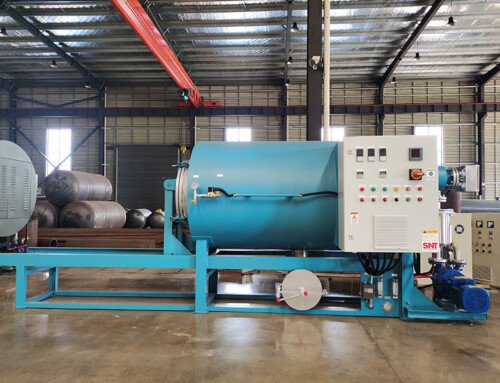
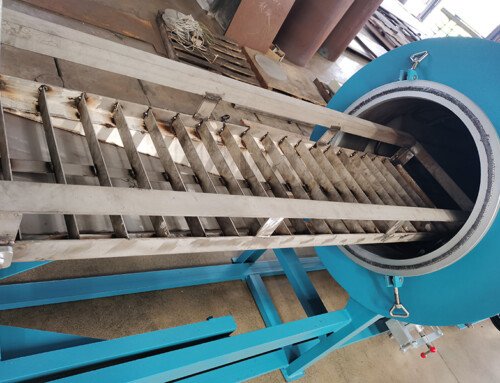
A horizontal unit loads from the side or the front. You roll or slide the barrel in at waist height. No lifting, no overhead work. For heavy barrels weighing 50 kilograms or more, this is a genuine ergonomic advantage. Your operators will thank you after the first week.
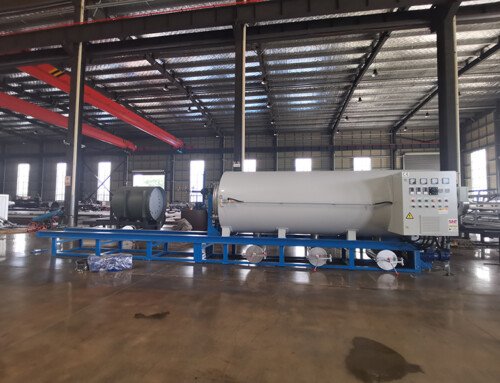
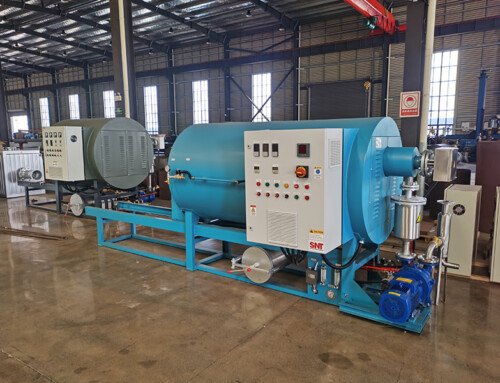
The downside is length. A horizontal chamber that holds the same volume as a vertical one can be twice as long. You need to plan for clearance in front of the door for loading carts and behind the unit for exhaust piping. If your layout is already crowded, a horizontal furnace can create a bottleneck that slows down your entire production line.
Temperature Uniformity and What It Means for Cleaning Quality
Both layouts can achieve tight temperature control. But the way heat distributes inside each chamber creates different challenges.
Vertical Chambers Have Natural Stratification Issues
Heat rises. In a vertical furnace, the top of the chamber can run 10 to 15 degrees hotter than the bottom, especially during the ramp-up phase. This is manageable with multi-zone heating and good circulation fans, but it adds complexity to the control system. If you are cleaning parts that span the full height of the chamber, you will see inconsistent results between the top rack and the bottom rack unless the temperature profiling is dialed in carefully.
Horizontal Chambers Distribute Heat More Evenly But Struggle at the Ends
A horizontal furnace heats from the sides or the top, and the heat spreads along the length of the chamber more uniformly. The middle section stays within tight tolerances. But the ends, near the door and the exhaust port, can run cooler. This creates a dead zone where cleaning takes longer. The fix is to avoid loading parts near the ends or to use a longer dwell time that compensates for the edge effect.
For screw barrels specifically, this matters because the flighted section needs even heat all the way around. In a horizontal unit, if the barrel is not rotated or repositioned during the cycle, one side will always face the hotter zone and the other side will face the cooler zone. Some horizontal furnaces solve this with internal rotation fixtures, but that adds cost and mechanical complexity.
Which Orientation Fits Your Actual Workflow
There is no universal winner. The right choice depends on what you clean, how many you clean, and how your shop is laid out.
Go Vertical If You Have Limited Floor Space and Light to Medium Residue
If your operation runs 20 to 40 barrels per day, your shop floor is tight, and you are mostly dealing with carbon buildup from standard polymers like PE or PP, a vertical furnace gives you the best balance of footprint, speed, and cost. The faster pump-down time and natural convection help you keep cycle times short, and the smaller footprint lets you place the furnace closer to your extrusion line, reducing transport time for dirty and clean barrels.
Go Horizontal If You Clean Heavy Residue or Run High Volume
If you are dealing with engineering plastics, PVC, or heavily degraded material that leaves thick carbon layers, the horizontal layout gives you more consistent cleaning across complex geometries. The forced vacuum flow and even heat distribution handle stubborn residues better. If you run 50 or more barrels per day, the ergonomic advantage of side loading prevents operator fatigue from becoming a bottleneck. You will need the floor space, but the cleaning quality and daily throughput will justify it.
Think About Your Future Expansion
Whatever you pick, think about where you will be in three years. If you plan to add a second line or switch to larger barrels, a horizontal furnace is easier to scale because you can extend the chamber length. Vertical furnaces are harder to scale without replacing the entire unit. Picking the layout that gives you room to grow saves you from a painful migration later.