How to Make Loading and Unloading Your Screw Cleaning Furnace Faster and Easier
Loading and unloading a screw cleaning furnace is where most shops lose time they never get back. Operators spend 15 minutes wrestling a 50-kilogram barrel into a tight chamber, then another 10 minutes pulling it out while it is still hot. Over 30 cycles a day, that adds up to 12 hours a week just moving barrels. The furnace itself might be running at peak efficiency, but the whole process is bottlenecked at the door.
This guide covers practical ways to make loading and unloading faster, safer, and less of a daily headache.
Why Loading and Unloading Takes So Long in the First Place
Before you fix the problem, you need to understand why it exists.
Most Furnaces Are Designed for the Machine, Not the Operator
Furnace manufacturers optimize for chamber volume and temperature uniformity. They do not optimize for how a human being actually moves a heavy, hot, awkward barrel into a confined space. The result is a chamber that is great at cleaning but terrible to load. Narrow doors, low clearances, and fixtures that require precise positioning all add minutes to every cycle. Those minutes compound fast.
Operators Skip Safety Steps to Save Time
When loading takes too long, operators start cutting corners. They skip the glove check, they load a barrel that is not pre-heated, they skip the chamber wipe-down. These shortcuts save 30 seconds per load but cost hours in re-runs, repairs, and contaminated batches. The real fix is not to tell operators to be more careful. It is to make the correct way also the fast way.
Fixture Design That Speeds Up Loading
The fixtures inside the chamber are the single biggest factor in how fast you can load and unload.
Use Quick-Release Support Systems Instead of Fixed Racks
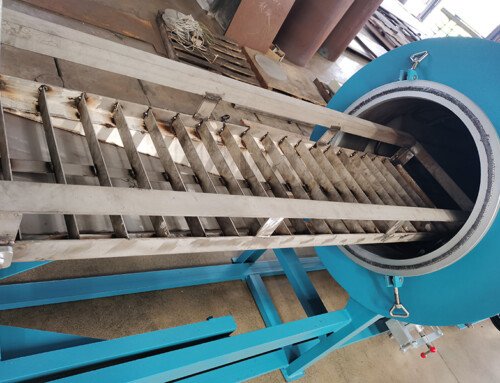
Fixed racks require you to slide the barrel into a precise position. If it is off by even a centimeter, it does not sit right, and you have to pull it out and try again. Quick-release support systems use spring-loaded or hinged supports that accept the barrel from multiple angles. You drop the barrel in, the supports snap into place, and you are done. Loading time drops from 5 minutes to under 2.
Adjustable Fixtures for Multiple Barrel Sizes
If you clean different barrel diameters, a fixed fixture for each size means you spend time swapping fixtures between loads. Adjustable fixtures with sliding or telescoping supports let you change the barrel size in under a minute without tools. One set of fixtures handles everything. That alone saves 10 minutes per shift when you run mixed loads.
Low-Profile Supports Reduce Lifting Height
High supports mean you have to lift the barrel overhead to clear them. That is slow and hard on the back. Low-profile supports keep the barrel at waist height during loading and unloading. No lifting, no overhead work, no strained operators. The barrel slides in horizontally on a low cart or roller tray. It takes 30 seconds instead of 3 minutes.
Chamber Door Design and How It Affects Your Daily Workflow
The door is the bottleneck. Everything goes through it.
Side-Loading Doors Beat Top-Loading Doors for Heavy Barrels
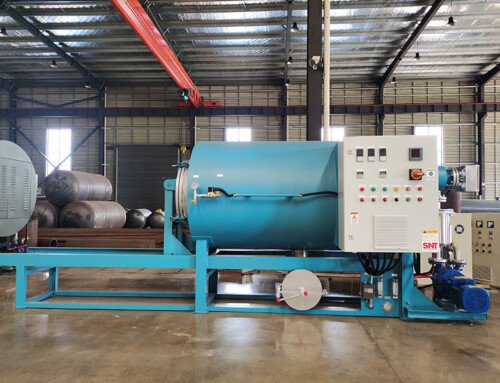
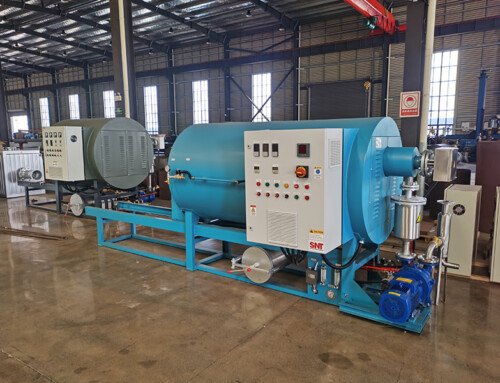
Top-loading doors require you to lift the barrel straight up and over the door frame. For a 50-kilogram barrel, that is a serious lift, especially when you do it 30 times a day. Side-loading doors let you roll or slide the barrel in at waist height. No lifting, no awkward angles, no dropped barrels. If you are buying a new furnace, side-loading is not a luxury. It is a requirement for any shop running heavy barrels.
Wider Door Openings Reduce Loading Time by Half
A narrow door opening forces you to angle the barrel and fight to get it through. A wide door opening lets you walk the barrel straight in. Most furnaces have door openings that are barely wider than the barrel itself. That is a design flaw. If you can specify a wider opening when ordering, do it. The extra 10 centimeters of width saves minutes per load.
Hinge and Counterbalance Systems Matter
A heavy door that you have to hold open with one hand while loading with the other is a recipe for a pinched finger or a dropped barrel. Counterbalanced doors stay open on their own. Gas spring assist doors open with one finger. These small details sound trivial until you have loaded 200 barrels in a single shift.
Pre-Load Preparation That Cuts Cycle Time
Most of the time spent on loading is not actually loading. It is preparation.
Pre-Heat Barrels on a Dedicated Staging Rack
Instead of pre-heating barrels one at a time before each load, use a staging rack with built-in heaters. Load 5 or 6 barrels onto the rack, heat them all at once to 120 degrees Celsius, then roll them into the furnace as needed. This parallel preparation cuts pre-heat time from 30 minutes per barrel to 30 minutes per batch. The barrels stay warm on the rack until you are ready for them.
Clean and Dry Barrels Before They Reach the Furnace
A wet or dirty barrel takes longer to load because you have to wipe it down at the door. A clean, dry barrel goes straight in. Set up a pre-load station next to the furnace with a wipe-down cloth and a compressed air gun. Every barrel gets a 30-second wipe and a 10-second air blast before it reaches the chamber. That one minute of prep saves 5 minutes of troubleshooting inside the chamber.
Label Barrels by Polymer Type and Load Priority
If you run multiple polymer types, unlabeled barrels mean you spend time at the door figuring out which one goes in next. Color-coded tags or heat-resistant labels on each barrel tell you exactly what it ran and what cleaning profile it needs. No guessing, no checking the log, no loading the wrong barrel into the wrong cycle. It takes 10 seconds to label a barrel. It saves minutes of confusion per shift.
Unloading Techniques That Protect the Barrel and the Operator
Unloading is just as important as loading. A clean barrel can get re-contaminated in the 30 seconds between the chamber and the storage rack.
Use a Roller Tray or Low Cart for Unloading
Do not make operators lift a hot barrel out of the chamber and carry it across the shop. Use a roller tray or a low cart that slides under the barrel inside the chamber. The barrel rolls out onto the tray, and the tray rolls to the cooling station or the storage rack. No lifting, no carrying, no dropped barrels. A simple cart with heat-resistant wheels costs almost nothing and saves your operators from back injuries.
Cool on the Tray, Not on the Floor
A barrel pulled from the furnace and set on a concrete floor cools unevenly. The bottom surface chills fast while the top stays hot. That temperature differential causes warping. Keep the barrel on the roller tray until it reaches 150 degrees Celsius. The tray elevates it off the floor, allows air to circulate under all surfaces, and keeps the barrel from warping. Then move it to the storage rack.
Wear the Right Gloves and Handle by the Ends Only
When you touch a clean barrel, you contaminate it. Skin oil transfers instantly to the bore surface. Wear clean nitrile gloves every single time. Grab the barrel only by the ends or the flange. Never touch the bore or the flighted section. One fingerprint on the bore surface is enough to cause black specks in your first production run.
Workflow Layout That Minimizes Movement
Where you place the furnace matters as much as how you load it.
Position the Furnace Next to the Extrusion Line
If the furnace is across the shop from the extruder, operators spend 10 minutes per cycle walking barrels back and forth. Place the furnace as close to the extrusion line as possible. Ideally, the unloading rack rolls directly into the loading station. The barrel comes off the extruder, goes onto the cleaning rack, rolls into the furnace, comes out clean, and rolls back to the extruder. One continuous flow. No walking, no carrying, no wasted motion.
Keep the Loading Area Clean and Clear
A cluttered loading area slows everything down. Operators trip over hoses, bump into carts, and waste time looking for the right barrel. Keep the area around the furnace door clear. One cart for dirty barrels, one cart for clean barrels, one rack for fixtures. Nothing else. A clean loading area makes loading faster and safer without any equipment changes.
Use a Two-Person System for Heavy Barrels
If your barrels weigh more than 40 kilograms, one person should not be loading them alone. A second person handles the door and guides the barrel while the first person pushes. This cuts loading time in half and eliminates the risk of a dropped barrel or a pinched hand. It also reduces operator fatigue, which means fewer mistakes over a full shift.
Maintenance Habits That Keep Loading Fast Over Time
A loading system that works great on day one will slow down by day 300 if you do not maintain it.
Clean Fixtures After Every Cycle
Carbon and dust build up on fixtures fast. Dirty fixtures make loading harder because the barrel does not sit smoothly. Clean every support, every spacer, and every guide rail after each cycle. A 2-minute wipe-down keeps loading fast for years.
Inspect Door Seals and Hinges Weekly
A sticking door or a worn hinge adds 30 seconds to every load. That sounds like nothing until it adds up to hours per month. Lubricate hinges weekly. Inspect seals for cracking or compression set. Replace them before they fail. A smooth-opening door is a fast-loading door.
Check Roller Trays and Carts Monthly
Wheels wear out. Trays warp. Carts get bent. A wobbly cart slows down unloading and risks dropping a hot barrel. Check every wheel, every tray, and every cart monthly. Replace worn parts immediately. A 20-dollar wheel replacement saves you from a 2,000-dollar barrel repair.