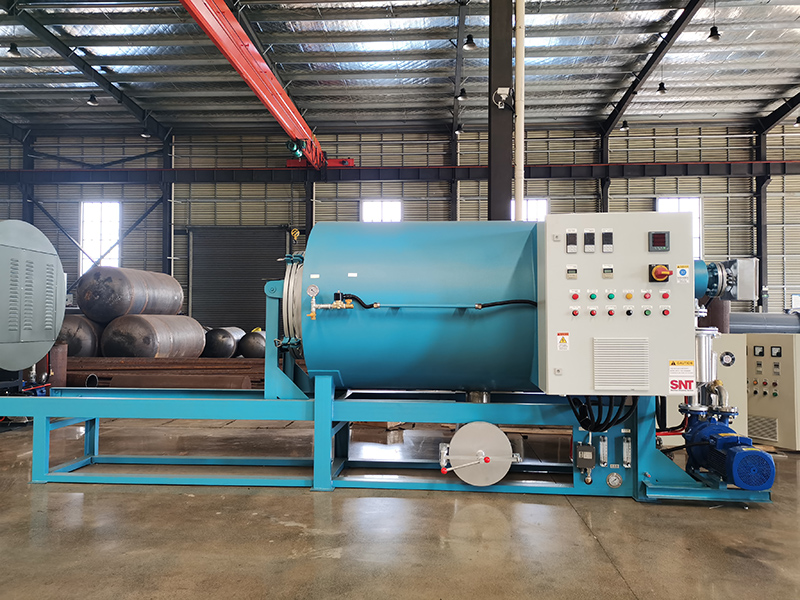
Screw Cleaning Furnace Operation in Dusty Environments: What Gets Overlooked
Dust and polymer powder are everywhere in an extrusion shop. They settle on floors, drift through the air, and land on everything. When you run a screw cleaning furnace in that kind of environment, the dust does not just sit there. It gets pulled into the chamber, coats the heating elements, clogs the vacuum lines, and slowly kills your machine. Most operators do not even realize the damage is happening until the furnace starts underperforming. By then, you are already behind on maintenance.
This guide covers the real risks of running a cleaning furnace in a dusty shop and what you need to do differently to keep the machine alive.
Dust Is Not Just Dirt. It Is a Contamination Source.
People think dust is a housekeeping problem. In a cleaning furnace, it is a process problem.
Polymer Dust Re-Deposits on Clean Barrels
When you open the chamber door in a dusty shop, airborne polymer particles rush in and settle on every surface inside. That includes your clean barrel. You just spent four hours cleaning that barrel, and within seconds of opening the door, it has a fresh coat of dust on the bore surface. That dust bonds to the metal at high temperature and becomes part of the next production run. You will see it as black specks or surface defects in your extruded parts, and you will waste hours trying to figure out where it came from.
The answer is simple. It came from the air in your shop.
Carbon Dust From Previous Cycles Builds Up Fast
Every cleaning cycle releases fine carbon particles. In a clean shop, those particles get captured by the exhaust system. In a dusty shop, they mix with ambient dust and form a stubborn layer on the chamber walls, the fixtures, and the door seal. Over time, this layer becomes a thermal insulator. It traps heat unevenly, creates hot spots, and reduces cleaning efficiency. You will notice it first as longer cycle times, then as inconsistent cleaning results, and finally as element burnout.
Chamber Door Handling Changes Everything in a Dusty Shop
The door is the weakest point in any furnace. In a dusty environment, it is the failure point.
Every Door Opening Is a Contamination Event
In a clean room, you can leave the door open for a minute without worrying. In a dusty shop, every second the door is open lets thousands of particles into the chamber. The longer you leave it open, the more contamination you introduce. Load your barrel fast, close the door fast. Do not stand there checking your phone. Do not leave the door ajar while you grab the next barrel. Each opening is a fresh contamination event, and they add up.
Gasket Wear Accelerates With Dust Exposure
Dust particles get trapped between the door and the gasket. Every time you open and close the door, those particles act like sandpaper, grinding into the gasket surface. In a clean shop, a door gasket lasts two years. In a dusty shop, it lasts six to eight months. The gasket loses its compression set, develops micro-tears, and starts leaking vacuum. You will not notice the leak until your vacuum hold starts drifting mid-cycle.
Inspect the gasket every two weeks in a dusty environment. Wipe it clean with a lint-free cloth before every cycle. Replace it the moment you see any cracking, compression set, or surface damage. A worn gasket in a dusty shop is not a maintenance item. It is a ticking time bomb.
Vacuum System Takes the Hardest Hit
The pump is the first component to suffer when dust gets into the system.
Dust Clogs the Vacuum Lines and Filters
Polymer dust and carbon particles get sucked into the vacuum lines every time the pump runs. They accumulate in the filters, the traps, and the pump internals. A clogged filter reduces pumping speed. A dirty pump loses vacuum performance. Both mean longer pump-down times and unstable vacuum holds during cleaning cycles.
Clean or replace vacuum filters every 100 hours in a dusty shop. In a clean shop, you can stretch that to 300 hours. In a dusty shop, 100 hours is the maximum. Check the filter color every 50 hours. If it is dark or clogged, replace it immediately. Do not wait.
Pump Oil Degrades Faster With Dust Contamination
Dust that gets past the filters ends up in the pump oil. The particles act as abrasives, wearing down the pump internals. They also change the oil viscosity, which reduces sealing performance. The pump works harder, runs hotter, and fails sooner.
Change pump oil every 300 hours in a dusty environment, not 500. Use ISO VG100 grade oil. Check the oil color every 100 hours. If it looks gritty or dark, change it right away. Running degraded oil in a dusty shop will destroy your pump within months.
Heating Elements Fail Sooner Than You Think
Dust on heating elements is not just ugly. It is destructive.
Dust Creates Hot Spots That Burn Out Elements
When fine dust settles on a heating element, it creates an insulating layer. The element runs hotter under the dust than on the clean sections. That temperature differential causes uneven expansion, which leads to micro-cracks in the element sheath. Over time, those cracks propagate and the element fails. In a dusty shop, element life can drop by 40 percent compared to a clean shop.
Clean heating elements every 50 hours in a dusty environment. Use compressed air at low pressure to blow off loose dust. Do not use water or wet cloths. Do not scrub the elements. A gentle air blast is all you need. Inspect for any discoloration or surface damage while you are in there.
Chamber Walls Accumulate Dust That Affects Heat Distribution
Dust on the chamber interior walls acts as an insulator. It traps heat in some areas and lets it escape in others. The result is uneven temperature distribution across the load. Barrels on one side of the chamber clean faster than barrels on the other side. You will see this as inconsistent cleaning results, and you will blame the program instead of the dust.
Wipe down the chamber interior with a clean, dry cloth after every cycle. Do this before you load the next batch. It takes five minutes. It keeps the temperature profile uniform and your cleaning results consistent.
Fixture and Support Contamination Is a Hidden Problem
Most operators clean the barrel but forget about the fixtures holding it.
Ceramic Supports Collect Dust That Transfers to Barrels
Quartz and ceramic supports sit in the chamber between cycles. In a dusty shop, they collect a layer of polymer dust and carbon residue. When you load the next barrel on those dirty supports, the dust transfers to the barrel surface. You just cleaned the barrel, and now it is dirty again from the fixture.
Clean every fixture before every load. Use compressed air to blow off loose dust, then wipe with a lint-free cloth. If the support is chipped or cracked, replace it. A damaged support not only transfers dust, it also blocks gas flow to the barrel surface, which creates cleaning dead zones.
Loading Racks and Carts Bring Dust Into the Chamber
The rack or cart you use to move barrels into the furnace is covered in dust. Every time you roll it near the chamber door, you are introducing more particles. Keep the loading area as clean as possible. Wipe down the rack before every use. Do not let the rack sit in a pile of polymer scraps or dust. A clean rack means a cleaner chamber.
Exhaust and Ventilation Matter More in Dusty Shops
The exhaust system is your first line of defense against dust buildup.
Keep the Exhaust Ducts Clean or You Lose Pumping Speed
Dust accumulates in exhaust ducts faster in a dirty shop. When the ducts get clogged, the pump cannot evacuate the chamber efficiently. Pump-down times increase, vacuum holds drift, and cycle times balloon. Clean the exhaust ducts every month in a dusty environment. In a clean shop, you can do this every three months. In a dusty shop, monthly is the minimum.
Install a Pre-Filter on the Exhaust Line
A pre-filter on the exhaust line catches large particles before they reach the pump. This simple addition extends pump life by months and keeps vacuum performance stable. It costs almost nothing to install and takes five minutes to replace. In a dusty shop, it is not optional. It is essential.
How to Tell If Dust Is Killing Your Furnace
You do not need fancy diagnostics. Watch for these signs.
Pump-Down Time Keeps Getting Longer
If your pump-down time has increased by 20 percent or more over the last few months, dust is almost certainly the cause. Check your filters, your pump oil, and your exhaust ducts. One of them is clogged. Clean it, and your pump-down time will drop back to normal.
Cleaning Results Are Getting Worse Over Time
If your barrels are coming out less clean than they used to, even with the same program, dust contamination is likely the reason. The chamber interior is coated with a layer of insulation that disrupts heat distribution. The fixtures are dirty. The vacuum is unstable. Do a full chamber clean, replace the filters, change the pump oil, and run a blank cycle. You will see the difference immediately.
Elements Are Burning Out Faster Than Expected
If you are replacing heating elements every three months instead of every six, dust is the reason. Clean the elements more often, check for hot spots, and verify that your chamber interior is free of dust buildup. Elements do not fail on their own. Something is causing it, and in a dusty shop, that something is almost always dust.