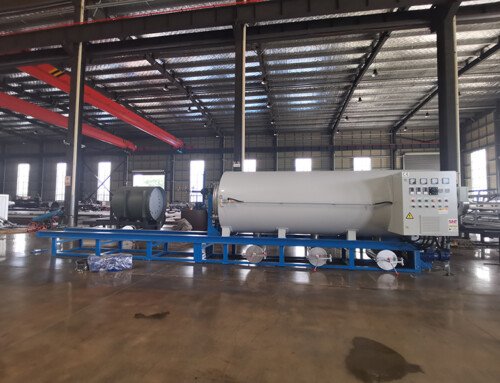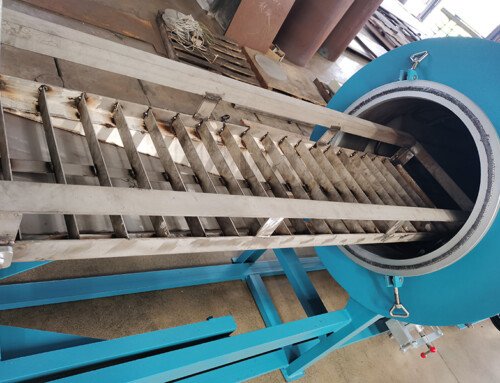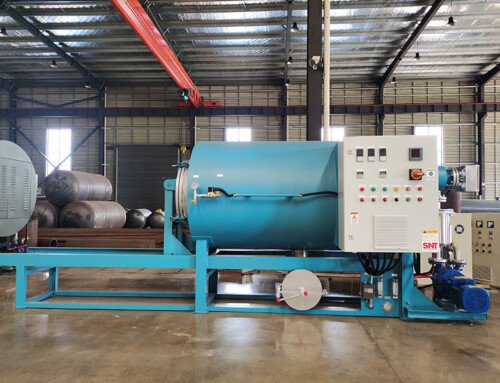
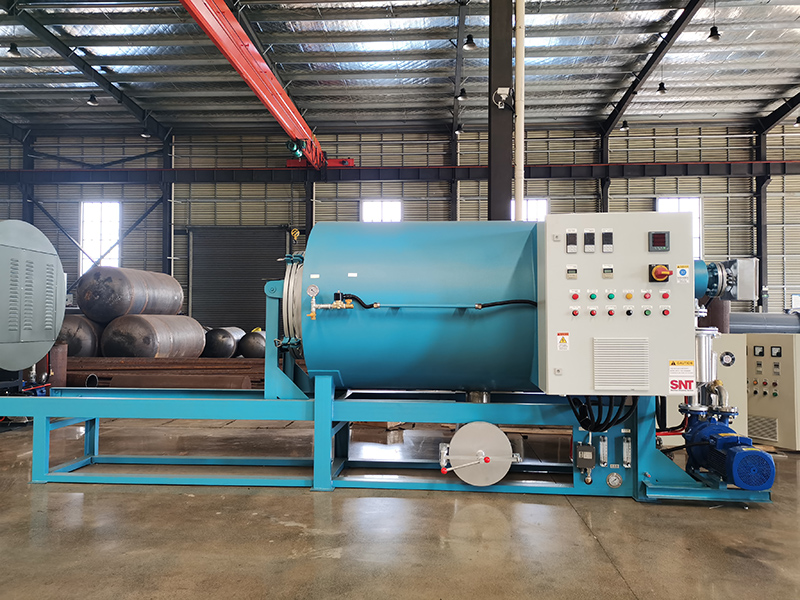
Start your inspection from the material loading and unloading area, as this is where most residual contaminants first enter the furnace chamber. Over multiple cleaning cycles, thin layers of melted polymer, oil residue, and carbonized debris can build up along the inner walls, on the sealing gaskets, and inside the screw feeding channel. When these deposits are not fully removed during routine cleaning, they will slowly decompose under repeated high heat and release sharp, lingering odors that seep out even when the furnace is running at normal operating temperatures.
Check the condition of the door seal and the chamber access panel first. If the seal surface is cracked, warped, or caked with fine carbon dust, small amounts of external air can leak into the vacuum chamber during the cooling phase. This introduces uncontrolled oxygen that causes partial oxidation of residual organic matter, generating acrid, burnt smells that would not appear under a stable pure vacuum environment.
Exhaust and Condensation Path Residue
Trace the full exhaust line from the furnace outlet all the way to the external vent port. Over months of operation, unfiltered oil mist and volatile organic vapors can condense and accumulate in the bends of the piping, forming a sticky, dark layer that is never fully purged during standard vacuum cycles. Every time the furnace heats up for a new run, these trapped residues re-vaporize and drift back into the main chamber, mixing with fresh process fumes and creating a mixed, heavy odor that cannot be eliminated by a single high-temperature bake-out.
Pay extra attention to the liquid collection tank installed along the exhaust path. If the collected condensate is left sitting for too long without draining, it will undergo anaerobic decomposition and release sour, rotten odors that get pulled back into the furnace during the vacuum break and air replacement step. Even a small volume of stagnant, aged condensate can spread its smell through the entire chamber the moment the internal pressure equalizes with ambient air.
Thermal Cycle and Temperature Distribution Issues
Observe the temperature readings from multiple sensor points across the furnace chamber during a full heating cycle. If there are cold spots where the local temperature stays consistently 50 to 80 degrees below the set process value, residual polymer material in these areas will never reach the full pyrolysis temperature required for complete breakdown. Instead of being fully vaporized and carried out through the exhaust system, these materials will only partially melt, slowly off-gassing light, waxy compounds that create a persistent, sweet chemical odor inside the chamber.
Check the duration of the high-temperature holding phase in your current process recipe. If the holding time is cut too short to save cycle time, large amounts of partially cracked organic molecules will remain trapped in the fine gaps between the furnace insulation layers. These trapped compounds will gradually release over dozens of subsequent runs, creating faint, hard-to-locate odors that reappear even after you have manually wiped down every visible surface inside the main chamber.
Ingress of External Contaminants During Idle Periods
Review the standard shutdown procedure followed by your operating team when the furnace is left idle for more than three days. If the chamber is left open to the ambient workshop air without any protective sealing, airborne dust, cleaning solvent fumes, and fine oil mist from nearby machinery can settle on the hot inner walls and insulation. When the furnace is started up again, these foreign contaminants will be heated and decomposed, generating unexpected, sharp odors that were not present during normal production runs.
Check the condition of the vent filter installed on the fresh air intake line used for vacuum breaking. If the filter element has not been replaced for an extended period, it will become saturated with trapped dust and organic residues. Every time fresh air is pulled into the chamber to break vacuum, these accumulated contaminants are carried directly into the high-temperature environment, leaving behind thin layers of new deposits that generate faint but noticeable odors after every cycle.