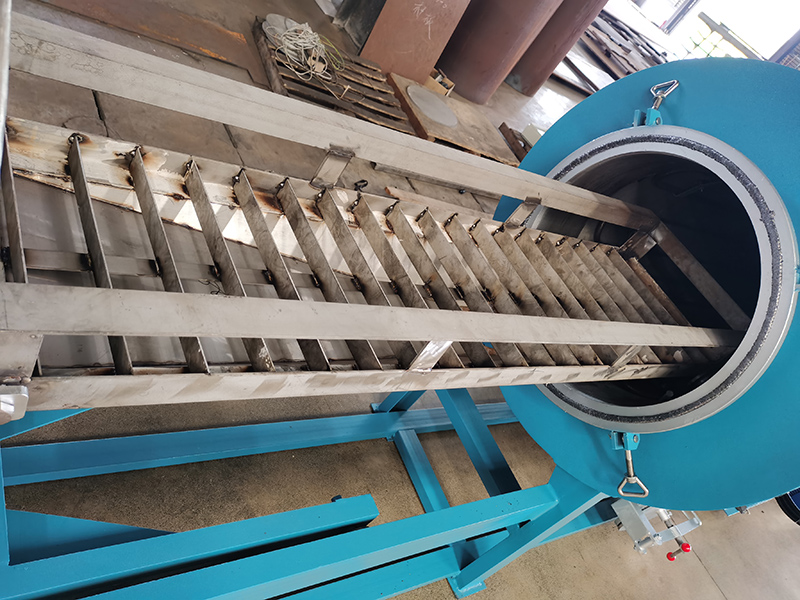
Dangerous Things You Should Never Do While a Screw Cleaning Furnace Is Running
Operators get comfortable. After a few hundred cycles, the furnace feels like a simple machine. Push a button, walk away, come back when it beeps. That comfort is exactly how accidents happen. A screw cleaning furnace running at 450 degrees Celsius under deep vacuum is not a tool you can treat casually. The list below covers the mistakes that cause equipment damage, safety incidents, and ruined batches. Most of them are things people do every day without thinking.
Never Open the Chamber Door Mid-Cycle
This sounds obvious, but it happens more often than anyone wants to admit. An operator sees something that looks wrong, or the alarm goes off, and the instinct is to open the door and check. Do not do it.
Thermal Shock Kills Heating Elements Instantly
When you crack open a door at operating temperature, cold air rushes in and hits elements that are glowing red. The thermal shock can crack ceramic insulation, warp element sheaths, and destroy temperature sensors in seconds. One impatient door opening can cost you thousands in replacement parts and days of downtime. The furnace is designed to handle the full cycle without intervention. If something is wrong, let the system complete its shutdown sequence.
Vacuum Implosion Risk Is Real
A chamber under deep vacuum with the door suddenly open does not just let air in. It lets air in violently. Loose tools, fixtures, or even small parts inside the chamber can become projectiles. The pressure differential can also damage the door seal and the hinge mechanism. This is not a theoretical risk. It has destroyed doors and injured operators in real shops.
Never Bypass Safety Interlocks or Alarms
Every interlock on the furnace exists because someone learned a hard lesson. Disabling them does not make the machine faster. It makes it dangerous.
Temperature Override Leads to Ruined Barrels
Some operators bypass the high-temperature limit because they want to push the cleaning a little harder. The problem is that screw barrels have thermal limits too. Exceeding them warps the bore, changes the surface finish, and in extreme cases, cracks the barrel entirely. A barrel that costs you thousands to replace because someone wanted to save 30 minutes on a cleaning cycle is not a win.
Vacuum Alarm Silencing Hides the Real Problem
When the vacuum alarm goes off during a cycle, it means the system is losing vacuum. This could be a micro-leak, a pump failure, or a door seal issue. Silencing the alarm and letting the cycle continue does not fix the problem. It lets oxygen into the chamber at high temperature, which oxidizes your workpieces and contaminates the next batch. You will not see the damage until those parts go into production and start failing.
Never Load Wet or Contaminated Parts Into a Hot Chamber
The state of your parts when they go in matters as much as anything else in the process.
Moisture Causes Violent Outgassing
If a screw barrel has any moisture on it when it enters a hot vacuum chamber, that water flashes to steam instantly. The rapid expansion can spike chamber pressure, trip the vacuum pump, and in worst cases, crack the chamber wall or blow the door gasket. Always dry parts completely before loading. A quick wipe-down is not enough. Use forced air or a low-temperature pre-bake to drive off all surface moisture.
Cross-Contamination From Mixed Loads
Never load barrels that have been running different polymers in the same cycle without a full chamber clean in between. PVC residue mixed with PE residue creates hydrochloric acid gas at high temperature. That acid eats chamber linings, corrodes heating elements, and ruins every part in the load. The damage is invisible until it is not. One bad mix can cost you a full chamber refurbishment.
Never Ignore Abnormal Sounds or Smells During Operation
The furnace tells you when something is wrong. You just have to listen.
Grinding or Squealing Means Pump Trouble
A screw vacuum pump that is starting to fail will make noise before it fails completely. A high-pitched squeal or a grinding sound means the rotors are wearing or the bearings are going. If you hear it and keep running, you will destroy the pump and possibly contaminate the chamber with metal particles. Shut down, isolate the pump, and inspect it immediately.
Burning Plastic Smell Is Not Normal
A faint odor during the first 30 minutes of a cycle is normal. That is the residue burning off. But a strong, acrid smell that persists past the midpoint of the cycle means something is overheating. It could be a heating element that is shorting out, a thermocouple that has failed, or insulation that is breaking down. Do not ignore it. Open the exhaust fully, shut down the cycle, and investigate before restarting.
Never Skip Cool-Down or Rush the Post-Cycle Sequence
The cycle does not end when the heater turns off. The cool-down phase is just as important as the cleaning phase.
Opening Too Early Warps Everything Inside
If you open the chamber while it is still above 200 degrees Celsius, you get the same thermal shock problems as opening mid-cycle. But you also get warped fixtures, cracked quartz supports, and parts that are still outgassing. The cool-down phase brings the temperature down slowly so that all components return to ambient at a safe rate. Skipping it or shortening it saves you 20 minutes and costs you weeks in repairs.
Residue Handling Without Proper PPE Is a Health Hazard
The residue that comes out of a screw barrel after cleaning is not just carbon. It contains decomposed polymers, metal oxides, and potentially toxic fumes trapped in the sludge. Always wear heat-resistant gloves, a respirator rated for organic vapors, and eye protection when handling post-cleaning residue. Do not sweep it into the air. Do not touch it with bare hands. It is not worth the exposure.
Never Run the Furnace Without a Completed Pre-Start Check
Before every single cycle, there are five things you should verify. Operators who skip this routine are the ones who call at midnight because something went wrong.
Check the Door Gasket and Seal Surface
Look for cracks, compression set, or debris on the gasket. A damaged gasket is the number one cause of vacuum loss and micro-leaks. Replace it before it fails mid-cycle, not after.
Verify Pump Oil Level and Color
Low oil or dark oil means the pump is running on borrowed time. Top it off or change it before starting. A pump that seizes during a cycle at 400 degrees is a disaster you do not want to clean up.
Confirm All Sensors Read Correctly
Temperature sensors, vacuum gauges, and pressure transducers all need to read within expected range before you start. A sensor that reads 50 degrees low will let you overheat the chamber without knowing it. A 30-second check prevents a catastrophic run.