
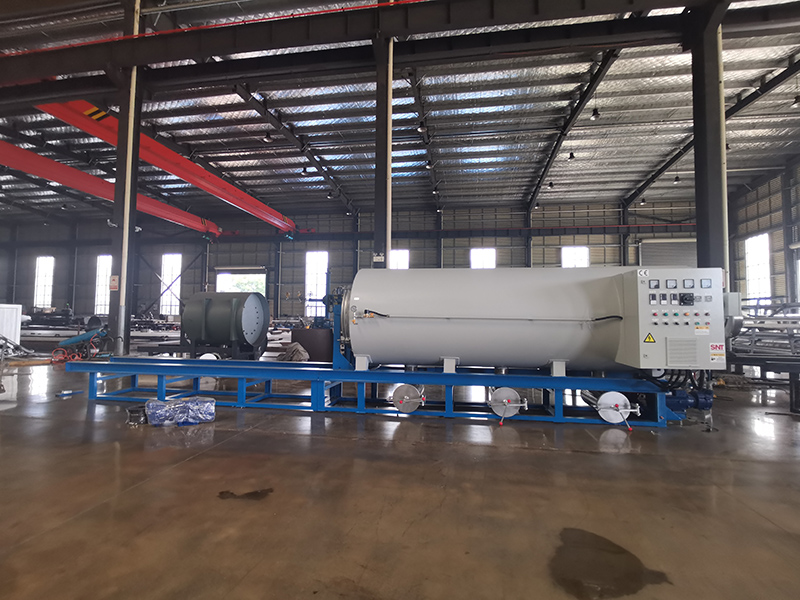
Batch Cleaning Tricks That Make Your Screw Cleaning Furnace Run Like Clockwork
Running a screw cleaning furnace one barrel at a time is fine for a lab. But when you are cleaning 20, 40, or 60 barrels per shift, every minute wasted on a bad load adds up fast. Batch cleaning is where most shops either win or lose their margins. The difference between a 4-hour turnaround and a 7-hour slog is not the machine. It is how you load, program, and manage each batch.
How to Load a Batch Without Creating Dead Zones
The way you stack barrels inside the chamber determines whether every single one comes out clean or half of them need a re-run. Most operators just shove everything in and hope for the best. That is how you get inconsistent results.
Stagger Your Barrels Instead of Stacking Them Directly
If you lay barrels flat on top of each other, the ones on the bottom get shadowed from heat and vacuum exposure. The top ones get full blast but the bottom ones barely see any gas flow. Stagger them so each barrel has at least 2 to 3 centimeters of clearance on all sides. This lets hot gas circulate around every surface, including the flighted sections that trap the most residue.
Use ceramic or quartz spacers between layers. Do not use metal spacers. Metal conducts heat unevenly and creates cold spots right where you do not want them.
Mix Barrel Sizes Strategically
If you have a batch with different barrel diameters, do not group all the large ones together and all the small ones together. That creates temperature gradients because large barrels absorb more heat and cool slower. Mix them throughout the chamber so the thermal mass is distributed evenly. The furnace controller will compensate better when the load is balanced.
Temperature Profiling for Mixed Polymer Batches
A batch with PE residue cleans at 380 degrees Celsius. A batch with PVC residue needs 420 degrees Celsius or you get acid gas that eats your chamber. When you run a mixed batch, you cannot just pick one temperature. You need a staged profile that handles both without damaging anything.
Start Low and Ramp in Stages
Begin the cycle at 250 degrees Celsius for 30 minutes. This drives off moisture and light volatiles without spiking the chamber pressure. Then ramp to 380 degrees Celsius for 60 minutes to break down standard carbon and polymer residue. Finally push to 420 degrees Celsius for 30 minutes to handle the stubborn stuff. This three-stage approach cleans everything in the batch without overheating barrels that only had light buildup.
Hold Times Matter More Than Peak Temperature
Most operators crank the temperature to the max and think that is enough. It is not. A 15-minute hold at 420 degrees Celsius cleans less than a 45-minute hold at 400 degrees Celsius. The longer dwell time gives the heat time to penetrate deep into the flight roots and mixing sections where residue hides. Shorten the hold time to save minutes and you will spend hours on re-runs instead.
Vacuum Management During Large Batches
Big batches put a heavy load on the vacuum system. If you do not manage the pump-down sequence correctly, you will waste 30 to 60 minutes just waiting for the chamber to reach target vacuum.
Pre-Heat the Chamber Before Pulling Vacuum
This sounds counterintuitive but it works. Heat the empty chamber to 150 degrees Celsius before you start the pump-down. Warm walls release less adsorbed gas than cold walls, which means the pump has less work to do. You can reach target vacuum 20 to 30 percent faster than if you start pumping on a cold chamber. This alone saves 10 to 15 minutes per batch.
Use a Step-Down Vacuum Strategy for Heavy Loads
Do not try to pull from atmospheric pressure to 10 Pascals in one go when the chamber is full of heavy barrels. The outgassing from all those dirty surfaces will overwhelm the pump. Instead, pull down to 100 Pascals first, hold for 10 minutes to let the bulk of the volatiles escape, then pull to final vacuum. This two-step approach protects the pump and gets you to target pressure faster than a single aggressive pull-down.
Cool-Down Is Part of the Cleaning Process
Most operators treat cool-down as dead time. They open the door as soon as the heater shuts off. This is one of the most expensive mistakes you can make with a batch.
Let the Chamber Cool to Below 150 Degrees Celsius Before Opening
Opening a hot chamber lets air rush in and oxidize every clean surface you just spent hours cleaning. The oxide layer is thin but it is enough to affect the next production run, especially with engineering plastics that are sensitive to surface contamination. A controlled cool-down to 150 degrees Celsius takes about 45 minutes. It feels long. But it saves you from wiping down every barrel again or running a second cleaning cycle.
Use Forced Air Cooling Only After Natural Cool-Down
Some operators blast the chamber with compressed air to speed up cool-down. Do not do this until the chamber is below 200 degrees Celsius. Forced air on a hot chamber creates thermal shock that cracks quartz fixtures, warps thin-wall barrels, and damages door seals. Let the chamber cool naturally first, then use low-pressure air to bring it down the last 50 degrees.
Batch Record Keeping That Actually Helps
You cannot improve what you do not measure. But most shops keep records that are useless. A log that says “cleaned 30 barrels, 4 hours” tells you nothing.
Track Vacuum Curves and Temperature Profiles for Every Batch
Write down the pump-down time, the vacuum hold stability, the temperature at each stage, and the total cycle time. After 20 batches, you will see patterns. Maybe barrels from extruder A always take 10 minutes longer to clean. Maybe Fridays have more vacuum drift than Mondays. That data lets you adjust your profiles for each load instead of guessing.
Note Which Barrels Need Re-Cleaning and Why
If barrel 7 out of 30 needs a second cycle, write down why. Was it a different polymer? Heavier buildup? Wrong position in the chamber? Over time this log becomes your best troubleshooting tool. You will stop making the same mistakes because you will actually remember what caused the last one.