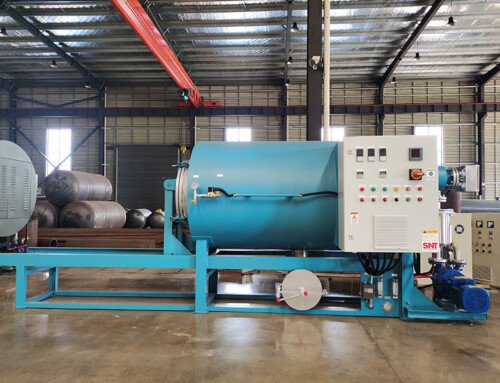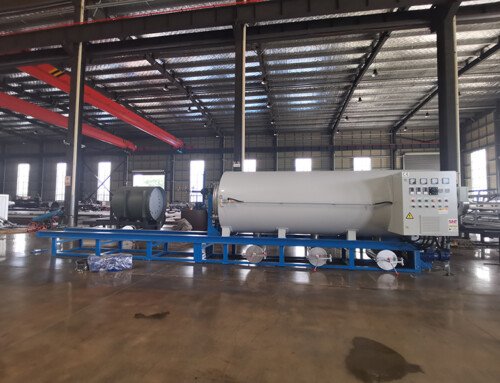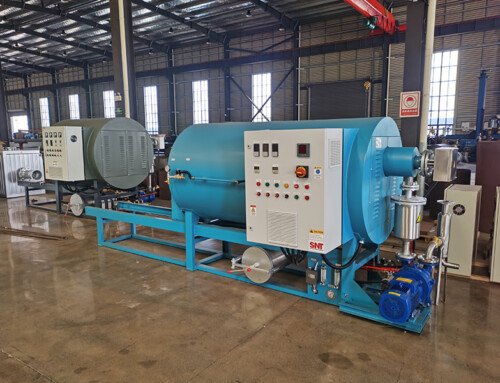
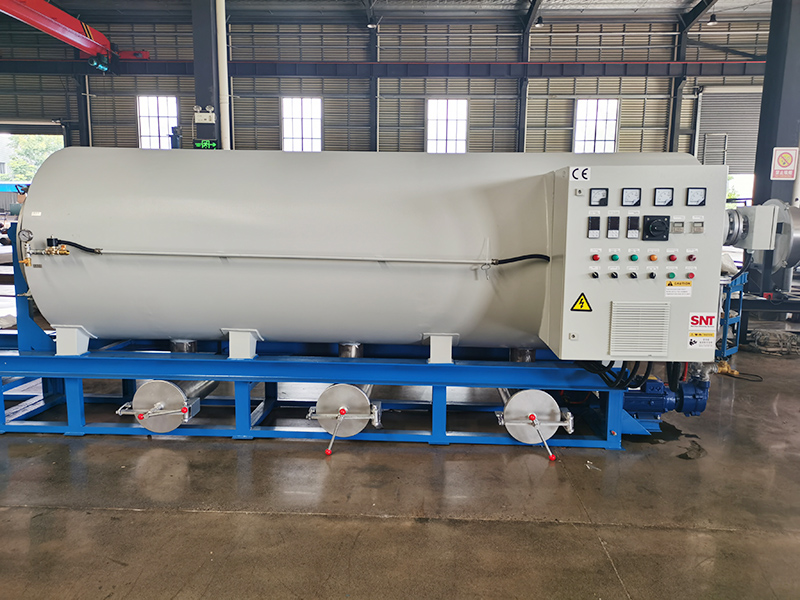
Large-Capacity Screw Cleaning Furnace: What Actually Matters When You Buy
Buying a large-capacity screw cleaning furnace is not like picking a toaster. These machines operate under extreme vacuum at temperatures exceeding 400℃, and when something goes wrong inside a sealed chamber, there is no “pause and think” moment. The difference between a furnace that runs flawlessly for a decade and one that becomes an expensive paperweight comes down to the specs you check — or skip — before signing anything.
Here is what separates a smart purchase from a costly mistake.
Chamber Volume Has to Match Your Real Throughput
Most buyers look at batch size and pick a furnace that “seems close.” That is how you end up with a machine that is either gasping for air or wasting energy on empty space.
Size It by Daily Output, Not by Batch
If your daily cleaning volume sits between 50 and 100 pieces, a 500L chamber works. If you are pushing past 100 pieces a day, go 1000L or larger. The rule is simple: never let the furnace become the bottleneck. A furnace that is too small for your output means you are running multiple cycles per day, burning more energy per part, and wearing out the heating elements faster than planned.
Conversely, an oversized furnace running at 30 percent load wastes heat, increases cycle time, and drives up your electricity bill for no reason. Match the chamber to your actual daily throughput — not your peak fantasy throughput.
Door Opening and Workpiece Clearance
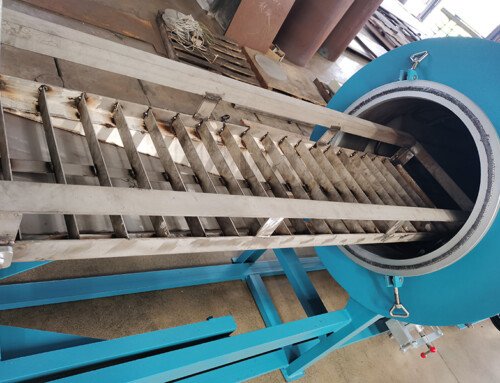
Large capacity means nothing if your workpiece does not fit through the door. For long screws, filter cores, or molds, the door opening needs to be at least 800mm wide and tall enough to clear the longest part you will ever load. Check this before you commit. A furnace with a beautiful spec sheet and a door that is two inches too narrow is a furnace you will return.
Temperature and Vacuum: The Two Numbers That Rule Everything
Every other feature on the spec sheet is secondary. These two numbers determine whether your cleaning actually works or whether you are just heating junk in a vacuum.
Temperature Control Accuracy Must Be Tight
Look for a control accuracy of ±3℃ or better. Some high-end units push this to ±1℃, and if your application involves semiconductor-grade cleanliness or pharmaceutical components, that tighter tolerance is not a luxury — it is a requirement. The reason is straightforward: polymer residues decompose cleanly only within a narrow temperature window. Too low and they melt without breaking down. Too high and they char, creating pressure spikes inside the chamber. A furnace that swings ±5℃ or more is guessing, and guessing at 400℃ is how you get a bad day.
Vacuum Level and Pump-Down Speed Are Non-Negotiable
The vacuum level needs to hit 10Pa or lower — ideally 5Pa or better for demanding applications. But vacuum level alone is not enough. The pump-down time matters just as much. If it takes more than 30 minutes to reach your target vacuum, you are losing productive time on every single cycle. A high-capacity screw pump paired with a properly sized backing pump will get you there fast. Slow pump-down also means your workpiece sits at elevated temperature longer than necessary, which accelerates oxidation and reduces part life.
Heating Method Changes Your Total Cost of Ownership
This is where most buyers get tripped up. The heating system you choose affects not just performance but your energy bill for the next ten years.
Thermal Oil vs Electric Heating: Pick Based on Run Time
Electric heating elements are simple and cheap upfront. But at large capacity, the energy consumption adds up fast. Thermal oil circulation systems cost more initially, but the oil does not need replacing for five years or more, and the heat distribution is more uniform across the chamber. For a furnace running eight hours a day, 300 days a year, a thermal oil system can cut your energy costs by 20 to 30 percent compared to a standard electric setup. Over five years, that savings pays for the upgrade twice over.
Segmented Heating Zones Prevent Hot Spots
A single heating zone in a large chamber is a recipe for uneven cleaning. Look for at least three to five independently controlled heating zones. This lets you program a gradual thermal ramp — slow warm-up to melt polymers, then a controlled spike to oxidize residue. Without segmented control, you get localized overheating, which means some parts clean perfectly while others char in the same run.
Safety Systems: The Stuff You Hope You Never Need
You do not buy safety features because you want to use them. You buy them because the alternative is a fire inside a sealed vacuum chamber at 400℃.
Redundant Temperature Sensors and Auto Shutdown
One thermocouple is a gamble. Two is the minimum. Three with cross-checking is what you should demand. If any sensor drifts from the set point, the control system should kill the heat within half a second — not wait for a human to notice. This hardware-level interlock, not software-only, is what keeps a temperature runaway from becoming a disaster.
Explosion-Proof Rating and Chamber Integrity
Large-capacity furnaces are pressure vessels. The explosion-proof rating should meet at minimum Exd II CT4. If you are cleaning parts with volatile residues or flammable polymers, step up to Ex db IIC T2 through T6 Gb. The enclosure itself should be rated IP66 at minimum — dust-tight and capable of handling water jets from any direction. A furnace sitting in an industrial environment without IP66 protection will corrode, short out, and shut down within months.
Vacuum Leak Detection with Emergency Venting
A sudden loss of vacuum in a heated large chamber can cause implosion or force superheated gases into the room. The furnace should monitor vacuum continuously and trigger an automatic shutdown within 0.5 seconds of detecting any anomaly. Some advanced configurations add a dual safety valve that vents the chamber in a controlled manner while simultaneously cutting the heat. This layered approach is what separates a serious industrial machine from a lab experiment.
Material Selection Inside the Chamber
The interior of your furnace is going to see temperatures, chemical byproducts, and thermal cycling that would destroy cheap materials in weeks.
310S Stainless Steel Is the Baseline
Anything less than 310S grade stainless steel on the chamber walls is a false economy. 310S resists oxidation at high temperature, does not scale, and is far easier to clean between runs. Cheaper grades will develop a baked-on residue layer after a few dozen cycles, and that layer will start flaking off onto your workpieces. You are paying for clean parts — do not let the furnace itself become the contamination source.
Welded Seams Over Bolted Joints
In a large chamber, every bolted joint is a potential leak point under vacuum and thermal stress. Fully welded construction with minimal joint count means fewer places for vacuum to escape and fewer places for residue to hide. If the spec sheet lists bolted interior panels, ask why.
Control System: The Brain of the Whole Operation
A large-capacity furnace without an intelligent control system is just a big oven with a vacuum pump.
PLC-Based Control with Multi-Stage Programming
You need a PLC system that lets you program temperature ramps, hold times, vacuum stages, and cool-down sequences. The ability to store multiple recipes means you can switch between different workpiece types without reprogramming everything from scratch. Look for systems that support at least five programmable stages with automatic transitions between them.
Remote Monitoring and Fault Diagnostics
A furnace that cannot tell you what is wrong before it shuts down is a furnace that costs you uptime. Modern PLC systems should log every cycle, flag sensor drift, and alert you to maintenance needs before something actually breaks. If the manufacturer cannot show you a diagnostic interface, that is a red flag about the quality of the control system itself.