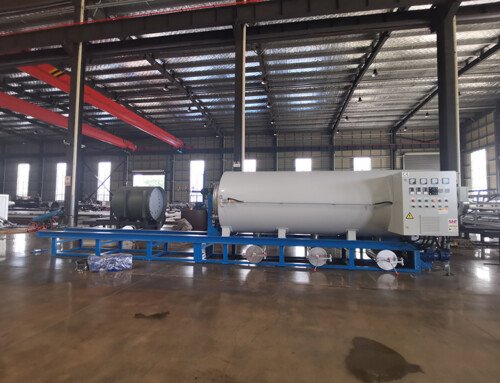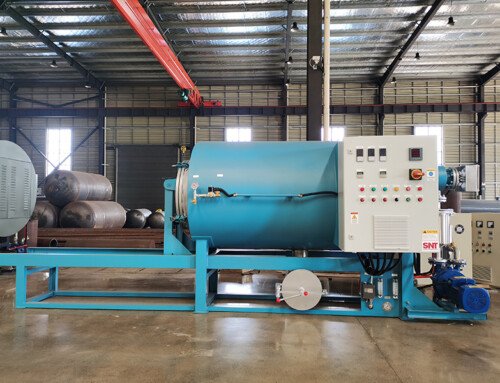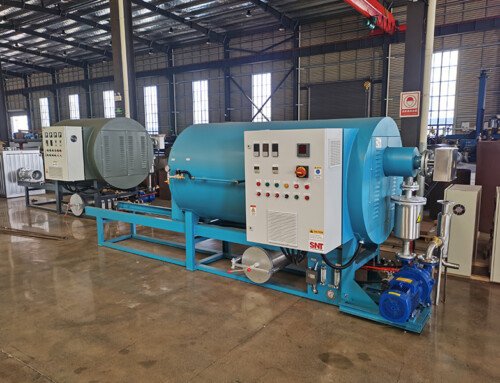
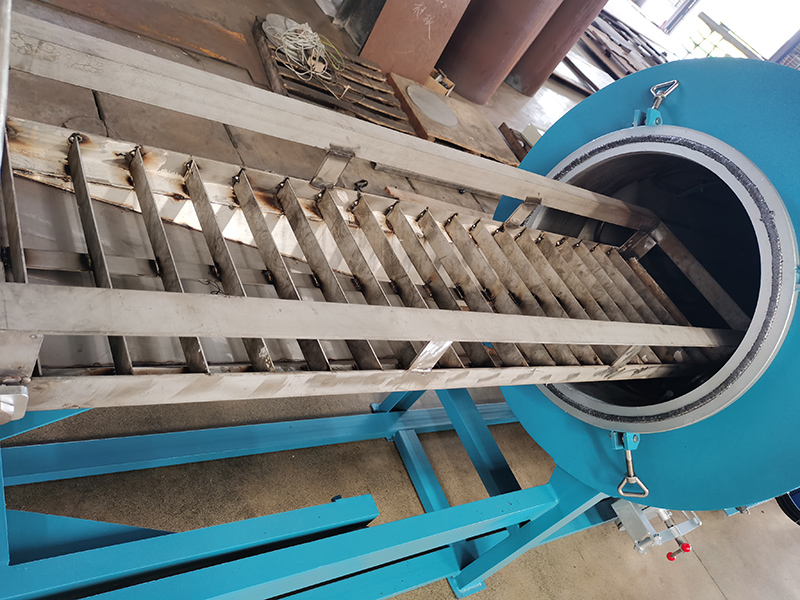
Urethane coatings are widely used across industrial, automotive, and aerospace applications for their exceptional durability, chemical resistance, and strong adhesion to metal substrates. When these coatings reach the end of their service life, or when parts require full reconditioning to remove damaged, cracked, or misapplied layers, traditional stripping methods often struggle with the dense, cross-linked polymer structure of cured urethane. A controlled thermal burn off process provides a reliable, thorough alternative that breaks down even the thickest, most heavily cross-linked urethane layers without the hazards of harsh chemical solvents or the surface damage risks of aggressive mechanical blasting.
Thermal decomposition behavior of cured urethane under controlled heat
Fully cured urethane forms a tightly cross-linked molecular network that is highly resistant to most common solvents and gentle chemical strippers, which is exactly what makes it such a long-lasting protective coating in the first place. When exposed to gradually increasing heat in a low-oxygen environment, this stable polymer structure begins to break down in distinct, predictable phases that operators can carefully manage to avoid unwanted side effects. The first stage of decomposition typically begins between 200°C and 300°C, where residual moisture, unreacted monomer traces, and low-molecular-weight additives in the urethane matrix start to vaporize slowly without triggering sudden, violent outgassing.
As temperatures climb into the 350°C to 450°C range, the primary urethane polymer backbone begins to cleave at its chemical bonds, breaking down into simpler hydrocarbon molecules that turn into vapor rather than remaining as a solid adherent layer on the substrate. Maintaining a carefully restricted oxygen level during this phase is critical, because open flame combustion at this stage would cause localized overheating that can leave stubborn, graphitized carbon deposits fused directly to the metal surface. These hard, black carbon residues are extremely difficult to remove later, and they can create adhesion failures for any new coating applied to the part afterward.
Once the main urethane layer has fully pyrolyzed into gaseous byproducts, a final controlled oxidation phase introduces a limited, regulated flow of fresh air into the chamber. This step burns off any remaining thin carbon film left behind after pyrolysis, converting it into harmless gaseous byproducts and leaving the underlying metal completely clean with no residual urethane or carbon residue. This final phase is carefully timed and temperature limited to ensure the base metal never reaches a temperature high enough to alter its original material properties, surface finish, or critical dimensional tolerances.
Cycle profile tuning for different urethane coating thicknesses and substrates
Not all urethane stripping jobs require the same thermal profile, and tuning the cycle to match the specific characteristics of your parts will deliver far more consistent results than running a single generic program for every load. For thin, single-layer urethane topcoats applied to precision machined or thin-walled metal parts, a gentler, longer low-temperature pyrolysis phase avoids thermal shock that could cause warping or subtle dimensional shift. These cycles use slow, steady heat ramp rates that give the urethane time to decompose evenly across every surface, rather than spiking temperatures quickly that can create uneven stress on delicate components.
For thick, multi-layer urethane buildups that have been baked on over years of heavy industrial service, operators can extend the high-temperature pyrolysis hold phase to give the dense cross-linked polymer more time to fully break down. These heavy coatings often contain high levels of inert pigments, ceramic fillers, and additive particles that do not fully vaporize, leaving only a small amount of fine, powdery ash that wipes away easily after the cycle completes. Many teams running these heavy buildup jobs also add a short pre-heat soak at a mid-range temperature before pushing to full pyrolysis heat, which prevents the thick coating from bubbling, blistering, or forming hard charred patches that stick stubbornly to the metal.
For parts with complex internal geometries, threaded holes, narrow crevices, or tightly stacked assemblies, the cycle profile is adjusted to extend total processing time slightly while maintaining consistent temperature distribution across the entire chamber. This ensures hot air circulates fully into every hard-to-reach feature, breaking down urethane that has seeped into gaps and threads that mechanical blasting or chemical stripping can never fully access. This level of complete penetration eliminates the hidden residual coating spots that would otherwise cause adhesion failure when new urethane is applied, creating a far more reliable final recoat finish.
Post-stripping part handling and routine process optimization
Parts coming out of the thermal process require very minimal post-treatment to be fully ready for inspection and recoating. The vast majority of leftover material on the surface will be a light, dry, powdery ash made up of the inorganic pigments and fillers that were originally mixed into the urethane coating. This residue can be completely removed in seconds with a low-pressure compressed air blowdown, or a quick rinse with plain water that leaves no chemical trace behind, unlike the sticky, solvent-soaked residue left after chemical stripping. Many operators follow this step with a quick visual check under bright light to confirm no tiny flecks of unprocessed urethane remain in deep crevices or threaded features, before moving parts forward to surface preparation and recoating.
Over months of regular operation, small routine adjustments to the process will steadily improve consistency, reduce cycle time, and minimize unnecessary energy use. Many teams keep a simple log tracking cycle parameters for different part types and coating thicknesses, noting how long each stage needs to run to achieve full clean stripping without over-processing. This data lets them trim unnecessary hold times for light coating loads, and extend phases only for the heavy, multi-layer jobs that actually need extra processing time, creating a far more efficient workflow that scales smoothly as stripping volume increases.
Regular monitoring of exhaust flow and secondary combustion performance also ensures all the gaseous byproducts released during urethane decomposition are fully oxidized at high temperature before being released from the system. This eliminates any chance of unprocessed hydrocarbon vapors escaping into the facility workspace, keeping operations fully aligned with local environmental regulations and eliminating the strong, harsh chemical odors that are unavoidable with traditional solvent-based urethane stripping methods. For teams processing large volumes of urethane-coated parts on a recurring basis, this consistent, low-maintenance thermal approach quickly becomes one of the most reliable, low-fuss steps in their entire reconditioning workflow.