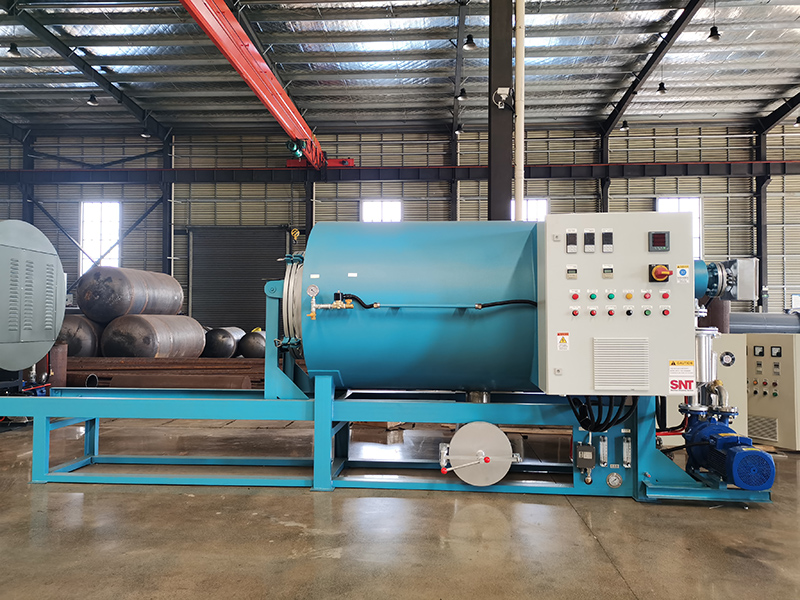
Temperature Parameter Adjustment Tips for Screw Cleaning Furnaces
Temperature control plays a critical role in the cleaning performance of a screw cleaning furnace. Proper parameter adjustment helps remove polymer residue efficiently while reducing the risk of screw deformation, oxidation, or furnace damage.
Understand Material Decomposition Characteristics
Different plastic materials decompose at different temperature ranges. Operators should identify the residue type on the screw surface before adjusting furnace settings.
Incorrect temperature selection may lead to incomplete cleaning or excessive carbonization inside threaded areas.
Match Temperature Settings to Screw Material
Screw materials such as nitrided steel, alloy steel, and stainless steel may respond differently under prolonged high-temperature exposure.
Proper temperature adjustment helps protect surface hardness and reduces the risk of thermal stress.
Avoid Excessive Initial Temperature Settings
Starting with extremely high temperatures may cause rapid decomposition, excessive smoke generation, and uneven heating inside the furnace chamber.
Gradual temperature increases often produce more stable cleaning results.
Heating Curve Adjustment Methods
A controlled heating process improves furnace efficiency and helps maintain consistent cleaning quality.
Increase Temperature Step by Step
Instead of raising the furnace directly to the maximum target temperature, operators should use staged heating procedures.
Progressive temperature increases allow screws and furnace structures to expand more evenly during operation.
Maintain Stable Holding Temperatures
After reaching the target temperature, the furnace should maintain stable thermal conditions for a suitable holding period.
Frequent temperature fluctuations may reduce cleaning consistency and increase energy consumption.
Reduce Sudden Temperature Changes
Rapid heating and cooling cycles may create internal stress on screws and metal parts.
Smooth temperature transitions help minimize surface cracking, deformation, and coating damage.
Temperature Control Techniques for Different Residue Conditions
Residue thickness and contamination levels influence the required heating strategy.
Adjust Parameters for Heavy Carbon Buildup
Screws with thick carbon deposits may require slower heating rates and longer holding periods.
Controlled decomposition helps prevent excessive smoke and uneven residue removal.
Use Moderate Temperatures for Light Residue
For screws with minimal contamination, moderate temperatures may provide sufficient cleaning performance without unnecessary thermal exposure.
Lower thermal stress also helps extend furnace component lifespan.
Monitor Residue Behavior During Operation
Operators should observe smoke conditions, exhaust performance, and furnace stability during heating.
Abnormal residue behavior may indicate that temperature settings require adjustment.
Temperature Sensor and Controller Calibration
Accurate temperature measurement is essential for stable furnace operation.
Inspect Temperature Sensors Regularly
Damaged or contaminated sensors may provide inaccurate readings, leading to overheating or incomplete cleaning cycles.
Routine inspection helps maintain reliable temperature control.
Calibrate Controllers Periodically
Temperature controllers should be calibrated according to maintenance schedules to ensure consistent operation.
Accurate calibration improves cleaning repeatability and reduces unnecessary energy usage.
Monitor Multi-Zone Temperature Consistency
Some screw cleaning furnaces use multiple heating zones. Operators should verify that each zone maintains balanced temperatures during operation.
Uneven heating distribution may affect cleaning quality across long screw surfaces.
Cooling Parameter Adjustment After Cleaning
Cooling control is also an important part of temperature management.
Lower Temperature Gradually After Operation
Natural cooling methods help reduce thermal stress on screws and furnace components.
Forced cooling may increase the risk of deformation or surface cracking.
Maintain Ventilation During Cooling
Ventilation systems should continue operating while the furnace temperature decreases.
Stable airflow supports safer cooling conditions and helps remove residual gases from the chamber.
Avoid Premature Chamber Opening
Opening the furnace door too early may expose hot screws to sudden temperature differences.
Controlled cooling inside the chamber helps maintain surface stability and reduces oxidation risks.