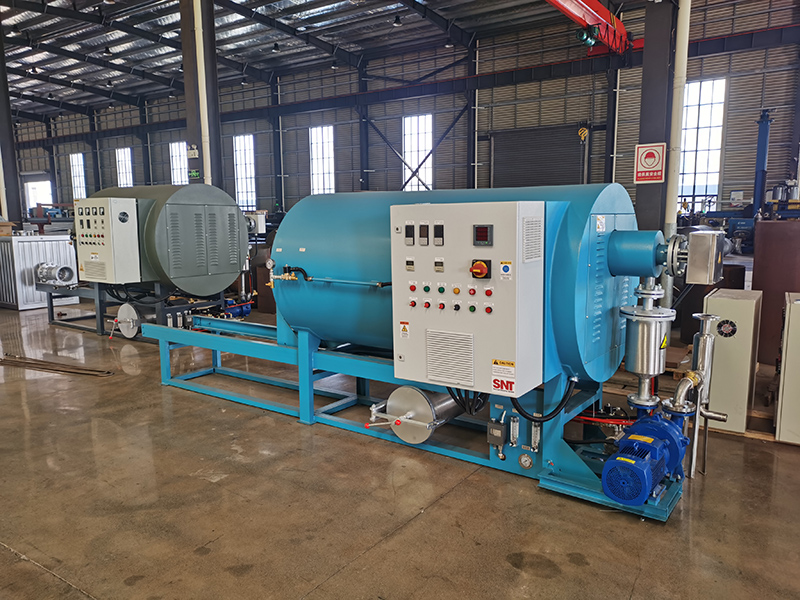
Screw Cleaning Furnace Heating Method Comparison: Which One Actually Wins
Picking the right heating method for a screw cleaning furnace is not a “nice to have” decision — it is the single biggest factor that determines whether your cleaning cycle is repeatable, your screws survive intact, and your energy bill stays under control. Get it wrong and you end up with uneven temperature spikes, oxidized metal surfaces, or worse, a furnace that cannot hold vacuum because the heating system is leaking heat everywhere it should not.
The three dominant heating approaches in screw cleaning furnaces today are electric resistance heating, thermal oil heating, and steam heating. Each one behaves completely differently under vacuum conditions, and the differences matter far more than most buyers realize.
Electric Resistance Heating: The Industry Standard for a Reason
Electric resistance heating uses embedded heating elements — typically防爆电加热管 (explosion-proof electric heating tubes) conforming to national standards like GB3836.1~3-2021 — to radiate heat directly into the furnace chamber. This is by far the most common method in modern vacuum cleaning furnaces, and for good reason.
The temperature control precision is the standout advantage. Quality electric heating systems hold accuracy within ±5°C, and premium units with PLC-controlled multi-stage programs can push that to ±1°C. For screw cleaning, where the process demands a staged ramp — melt residue at around 300°C, then crack and oxidize remaining polymer at 400–500°C — that kind of precision is non-negotiable. A 20°C overshoot during the oxidation stage can destroy the metal surface finish of a 4140 H.T. steel screw, which has a tolerance of just 0.03mm and a straightness requirement of 0.01mm.
Electric heating also responds fast. When the furnace door opens to load or unload screws, the chamber temperature drops. Electric elements recover that temperature in minutes, not hours. This keeps cycle times tight and makes automated loading sequences practical.
The downside is straightforward: electric elements degrade over time. At sustained temperatures above 450°C, the heating tubes lose efficiency and eventually need replacement. Most operators budget for tube replacement every 1,000 to 2,000 hours of operation. It is not a failure — it is scheduled maintenance.
Where Electric Heating Shines
For vacuum screw cleaning specifically, electric resistance heating dominates because it integrates cleanly with vacuum systems. There is no fluid loop to leak, no pump to maintain, and no risk of thermal oil decomposing inside the chamber and contaminating the screws. The sealed furnace chamber stays clean, the vacuum integrity holds, and the whole system runs on simple on-off power control with programmable ramp rates.
Thermal Oil Heating: High Capacity, Higher Complexity
Thermal oil heating circulates heated oil — usually mineral oil below 200°C or organic solvents like diphenyl ether above 200°C — through a jacket surrounding the furnace chamber. The oil absorbs heat from an external burner or electric heater and transfers it evenly to the chamber walls.
The advantage is thermal mass. A thermal oil system changes temperature slowly, which sounds bad until you realize that slow change means incredibly uniform heat distribution. There are no hot spots. For large-capacity furnaces cleaning multiple screw assemblies at once, that uniformity matters. The oil also stores energy efficiently, so once the system reaches operating temperature, it consumes less power to maintain it compared to electric resistance running at full output continuously.
But here is where it gets complicated. The oil loop adds an entire subsystem to your furnace — a circulating pump, expansion tank, filtration system, and leak-prone piping. In a vacuum cleaning furnace, any oil leak into the chamber is catastrophic. Oil vapor under vacuum will coat every screw surface, defeat the entire cleaning purpose, and potentially damage the vacuum pump. Maintenance costs for thermal oil systems run 5 to 8 percent of the purchase price annually, and that is before you factor in oil replacement every few years.
The Temperature Ceiling Problem
Thermal oil systems hit a hard ceiling around 320–350°C depending on the oil type. Above that, the oil starts to crack and lose its heat transfer properties. For screw cleaning processes that require oxidation stages at 400–500°C, thermal oil simply cannot deliver. You end up needing a hybrid system — oil for the low-temperature melt stage, electric for the high-temperature oxidation stage — which doubles your complexity and cost.
Steam Heating: Fast but Blunt
Steam heating injects high-pressure steam directly into the furnace chamber or through a jacket. It heats extremely fast, which makes it attractive for facilities that run short, frequent cleaning cycles and cannot afford long ramp-up times.
The problem is control. Steam is a blunt instrument. It dumps heat into the chamber in large pulses, and fine-tuning the temperature to within ±5°C is nearly impossible without sophisticated modulating valves and feedback loops. For screw cleaning, where the process window between “polymer melts and flows away” and “metal surface begins to oxidize” can be as narrow as 30°C, that lack of precision is dangerous.
Steam also introduces moisture. Even trace amounts of water vapor in a vacuum cleaning furnace interfere with the low-oxygen cracking process. The whole point of vacuum cleaning is to keep oxygen content minimal so the polymer cracks rather than burns. Steam adds both heat and moisture, which can cause incomplete cracking and leave sticky residue on the screw threads.
When Steam Still Makes Sense
If your operation only cleans light residues at temperatures below 250°C — say, routine color changes between similar polymer types — steam can work. It is cheap to install, heats fast, and the precision requirements are lower. But for heavy carbon buildup, cross-linked polymers, or any process pushing above 350°C, steam is the wrong tool.
What Actually Determines the Right Choice
Match the Heating Method to Your Process Temperature
Below 300°C: electric or steam both work. Choose based on whether you need precision (electric) or speed (steam).
300–400°C: electric resistance is the only reliable option. Thermal oil can reach this range but with narrowing margin.
Above 400°C: electric resistance only. Thermal oil cannot go here. Steam will introduce moisture that ruins the vacuum process.
Consider Your Cleaning Volume and Cycle Frequency
High volume, continuous operation favors thermal oil for its thermal stability and lower running cost per hour. But only if your process temperature stays below the oil ceiling.
Frequent short cycles favor electric heating because of its fast ramp-up and cool-down response. A furnace that takes 45 minutes to heat up with thermal oil but only 12 minutes with electric elements changes your entire production schedule.
Do Not Ignore Vacuum Compatibility
This is the factor most buyers overlook. Your heating system must not compromise the vacuum seal. Electric heating has zero fluid paths inside the chamber — it is inherently vacuum-compatible. Thermal oil requires a jacket with welded seams, and every weld is a potential leak point. Steam requires penetrations into the chamber, each one a vacuum risk. For screw cleaning furnaces that operate at 10–100Pa vacuum levels, electric resistance heating is not just convenient — it is the safest engineering choice.
The Hidden Cost of Getting It Wrong
A heating method that cannot hold temperature within the required range does not just give you a bad clean. It changes the metallurgy of your screws. 4140 H.T. steel screws lose their wear resistance when exposed to uncontrolled thermal cycling. The surface hardness drops, the tolerances shift, and you start seeing premature wear in the compression and metering zones. That is not a cleaning problem — that is a heating problem you created by choosing the wrong method.
The same applies to oxidation. If your heating overshoots during the cracking stage, the screw surface develops a blue tint — a visible sign that the metal structure has changed. That screw will never perform the same way again. The cost of replacing a set of precision screws far exceeds the cost difference between heating methods.