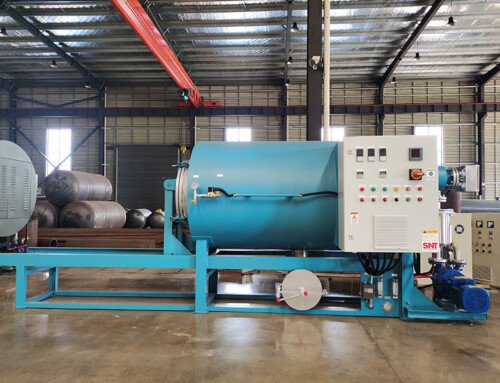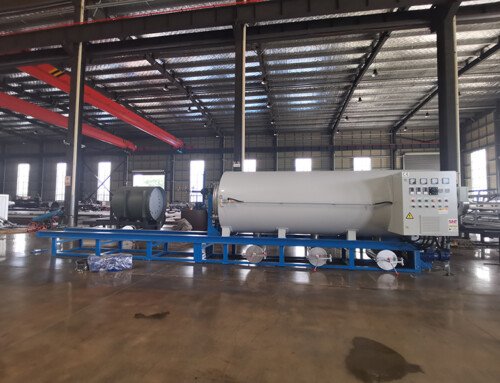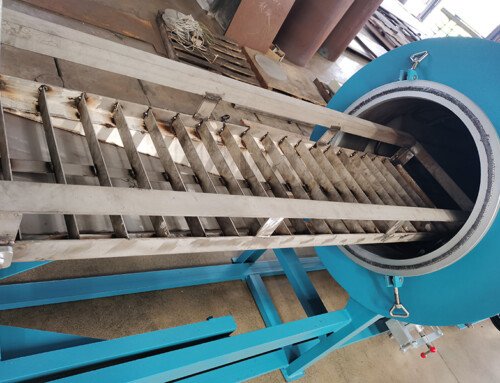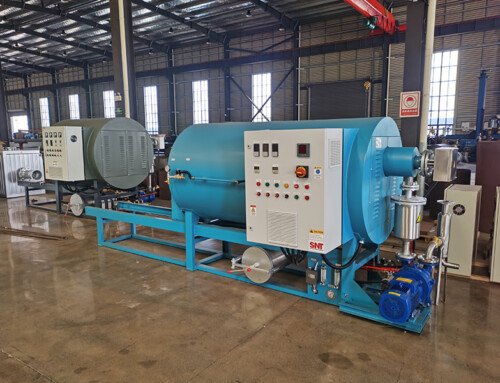
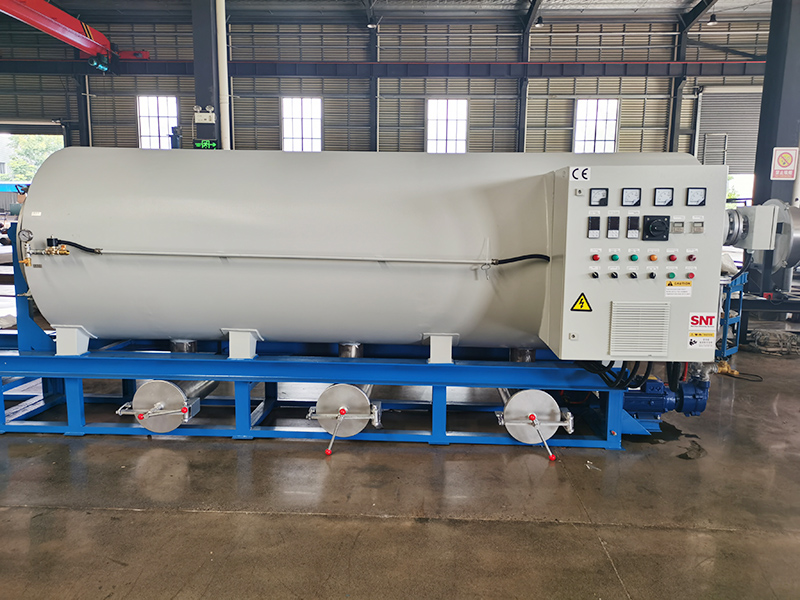
Large Screw Vacuum Cleaning Furnace: How to Pick the Right Machine in 2026
If you are running a production line that chews through dozens of screws, spinnerets, or filter components every single day, a small benchtop unit is not going to cut it. Large-scale screw vacuum cleaning furnaces are a different beast entirely — they demand serious vacuum performance, rock-solid temperature control, and automation that actually works when nobody is watching. Getting this wrong means wasted cycles, damaged workpieces, and a maintenance bill that eats your margin alive.
Here is what actually matters when you are sizing up a large machine.
Matching Chamber Volume to Your Real Throughput
The number one mistake buyers make is looking at the machine spec sheet and ignoring their own batch data. A large furnace with a 1000L chamber is designed for facilities cleaning 100+ parts daily. If you are only running 50 to 60 pieces, you are paying for empty space — literally. The furnace heats air you do not need to heat, pumps vacuum you do not need to pump, and burns electricity for nothing.
On the flip side, undersizing is just as costly. A 500L chamber running at full capacity every cycle means more batches, more downtime between loads, and lower overall throughput. Measure your typical daily volume first, then match the chamber size to that number with about 15% headroom for growth.
Vacuum Level and Pump-Down Speed Are Non-Negotiable
For large machines, the vacuum system is the backbone. You need a final vacuum of 10 Pa or better — anything higher and you risk incomplete polymer decomposition, which means you are cleaning the same part twice. Pump-down time should hit target pressure within 30 minutes. If a supplier quotes 45 or 60 minutes, walk away. That delay compounds over every single cycle, and over a year it adds up to hundreds of lost production hours.
High-precision applications like semiconductor components or medical-grade filters may require vacuum fluctuation within ±2 Pa. That pushes you toward high-precision screw pump groups instead of rotary vane setups. The cost difference is real, but so is the performance gap.
Temperature Control: Where Most Large Machines Fall Short
Here is where cheap large furnaces reveal themselves. Temperature uniformity across the chamber needs to stay within ±3°C, not the loose ±5°C some manufacturers advertise. Why does this matter so much? Because polymer residues decompose at specific temperature windows. If one corner of your chamber runs 10 degrees hotter than another, you get uneven cracking — some parts come out clean, others come out with stubborn residue still clinging to the threads.
Heating Element Layout and Insulation Quality
Large furnaces have more thermal mass, which means heat distribution becomes a real engineering challenge. Look for machines with multi-zone heating and thick silicate aluminum insulation. Some manufacturers cut costs by thinning the insulation layer, which saves money upfront but jacks up energy consumption by 10 to 12% over the machine’s lifetime. At 300 operating days per year, that is a massive hidden cost.
The heating elements themselves should be explosion-proof rated and made from materials that resist coking. Coked elements lose efficiency fast, and replacing them on a large furnace is not a five-minute job.
Automation: The Difference Between a Machine That Runs and One That Runs You
A large screw vacuum cleaning furnace without proper automation is a liability. Manual intervention on a machine that handles 20+ kg per batch means human error creeps in every single cycle — wrong temperature, wrong hold time, wrong vacuum break sequence.
PLC Control Systems Should Handle the Entire Cycle
The minimum you should accept is a PLC-based smart control system with multi-stage programmed heating, automatic constant temperature holding, automatic slag discharge, and cooling linkage. One button press, the machine does the rest. This cuts manual operation by roughly 80%. For a facility running multiple shifts, that is not a nice-to-have — it is the only way to keep output consistent.
Real-time monitoring matters just as much. The system should display temperature, vacuum level, and runtime on screen, and trigger an automatic shutdown if vacuum leaks or temperature spikes. On a large machine where thermal concentration is higher, this is not optional. It is a safety requirement.
Materials and Build Quality: What Lasts Under Daily Abuse
The inner chamber wall should be 310S grade stainless steel. This alloy resists corrosion, does not coke easily, and holds up under repeated heating and cooling cycles. Cheaper furnaces use lower-grade steel that starts flaking after a few hundred cycles, contaminating your workpieces and shortening their service life.
Explosion-proof rating should meet at least Exd II CT4, with IP66 protection as the baseline. If you are processing flammable polymer residues — which you almost certainly are — ask whether the supplier can deliver units rated Ex db IIC T2 to T6 Gb. This covers most chemical and new energy scenarios.
Maintenance Reality Check: What Nobody Tells You Upfront
A large vacuum cleaning furnace is not a set-it-and-forget-it purchase. The vacuum pump oil needs replacing every 500 operating hours — ISO VG100 grade is the standard. Every 1000 hours, run a gas tightness test on the pump. Heating elements should be cleaned monthly, and temperature sensors recalibrated quarterly with error kept within ±1°C.
Do this consistently and your mean time between failures stretches past 8000 hours — about 30% better than neglectful operation. Skip it, and a single equipment failure can cost you 100,000 to 500,000 RMB in lost daily output, according to industry data. Maintenance costs typically run 5 to 8% of the purchase price per year, but they protect you from losses that dwarf that number.
Warranty and Service Response Define Long-Term Cost
Aim for a minimum 5-year warranty with free replacement of core components — heating tubes, vacuum pumps, control systems. The supplier should offer 24-hour technical support and on-site repair within 48 hours for nearby regions. One rubber manufacturer learned this the hard way: a delayed supplier response left their equipment down for 3 days, costing over 150,000 RMB in losses. Do not let that be your story.