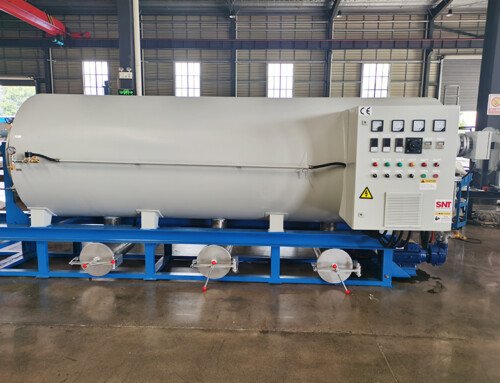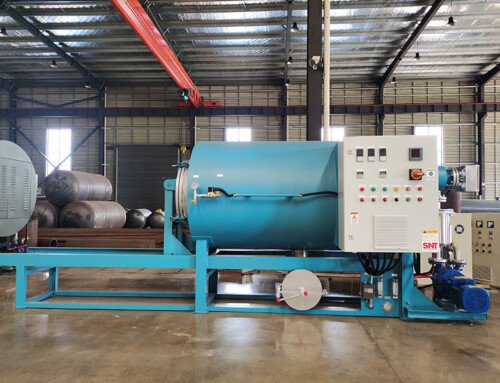
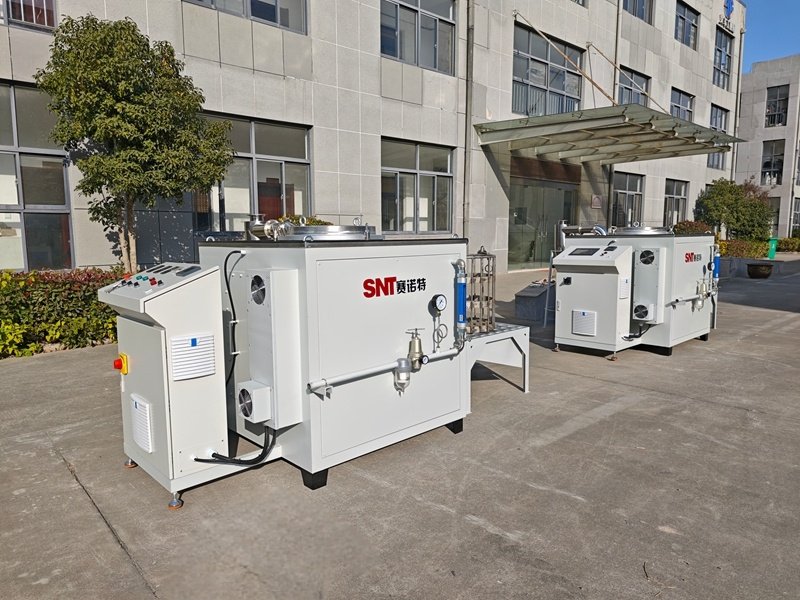
In the manufacturing and processing industries, the removal of stubborn contaminants such as polymers, paints, and epoxy coatings from workpieces has long been a challenge. Traditional cleaning methods often rely on chemical solvents or mechanical abrasion, which not only pose environmental risks but also risk damaging the workpiece surface or leaving residues. Today, the fluidized bed cleaning system is emerging as a game-changing solution, offering efficient, safe, and sustainable cleaning for a wide range of industrial components.
At the core of the fluidized bed cleaning system lies an innovative working principle. The system utilizes a bed of inert granular media, typically aluminum oxide, which is fluidized by a controlled upward flow of heated air. When workpieces contaminated with polymers, paints, or other organic substances are immersed in this fluidized bed, the uniformly heated media transfers thermal energy efficiently to the contaminants. This thermal energy triggers the pyrolysis (thermal decomposition) of polymers and paints, breaking them down into gaseous byproducts that are then safely exhausted and treated. Unlike mechanical cleaning, the fluidized media’s gentle, liquid-like movement ensures comprehensive coverage—even reaching complex geometries and hard-to-access areas such as internal channels, assembled components, and intricate tooling—that traditional methods often miss.
One of the most compelling advantages of the fluidized bed cleaning system is its exceptional efficiency and residue-free performance. For most small to medium-sized workpieces, complete removal of polymers (including halogenated materials like PVC and PTFE) and paints can be achieved in just 30 minutes to 4 hours, significantly reducing machine downtime compared to oven-based or manual cleaning methods. Precise temperature control (typically between 450°C and 600°C) ensures that contaminants are fully decomposed without causing thermal damage or distortion to the workpiece, preserving the integrity and extending the lifespan of tools and components.
Environmental sustainability is another key benefit that sets this technology apart. Unlike chemical cleaning processes that use toxic solvents requiring special disposal, the fluidized bed system operates without harmful chemicals. The gaseous byproducts from pyrolysis can be further treated with optional integrated afterburners or scrubbers, ensuring compliance with strict environmental regulations and minimizing air pollution. This eco-friendly approach not only reduces the carbon footprint of manufacturing operations but also lowers long-term costs associated with chemical waste disposal and worker safety measures.
The versatility of the fluidized bed cleaning system makes it indispensable across multiple industries. In the plastics and injection molding sector, it efficiently cleans injection nozzles, die plates, hot runner manifolds, and extruder screws contaminated with polymer residues. The automotive and aviation industries rely on it for cleaning engine components, pumps, and structural parts free of paint and epoxy coatings. It also serves the metal processing and electronics sectors, where precise, non-abrasive cleaning of delicate components is critical.
As industries worldwide shift toward greener, more efficient manufacturing practices, the fluidized bed cleaning system stands out as a forward-thinking solution. Its ability to deliver fast, residue-free cleaning of polymers and paints, combined with its environmental safety and compatibility with complex workpieces, makes it a valuable asset for businesses looking to improve productivity, reduce costs, and meet sustainability goals. Whether for small-batch tooling maintenance or large-scale production line cleaning, this technology is redefining the standards of industrial surface cleaning.
For manufacturers seeking to upgrade their cleaning processes, the fluidized bed cleaning system offers a proven, reliable alternative to traditional methods. With ongoing advancements in system design—including compact models for small workshops and integrated exhaust treatment systems for large-scale operations—this technology continues to adapt to the evolving needs of modern industry.